Showing posts with label The Sun Daily. Show all posts

20 October 2025

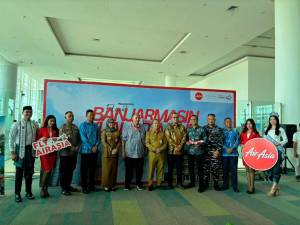
AirAsia strengthens regional connectivity with first direct flight to Banjarmasin

AirAsia strengthens regional connectivity with first direct flight to Banjarmasin

BANJARMASIN: AirAsia Malaysia (AK) today celebrated its inaugural service connecting Kuala Lumpur and Banjarmasin (BDJ), marking the first scheduled international link between Malaysia and South Kalimantan.

As one of the most connected foreign carriers in Indonesia, with AirAsia serving 18 and counting destinations across the country, this route is set to deepen people-to-people ties, boost travel and trade in addition to showcasing Banjarmasin’s unique river culture as well as its growing potential as a must-visit halal-friendly destination.

The timing of this inaugural flight is particularly meaningful as AirAsia was recently honored at the 2025 World Travel Awards Asia and Oceania, hot on the heels of Kuala Lumpur’s highly-covetted recognition as the world’s leading low-cost carrier hub by OAG. This new route will also expand travel options for AirAsia guests from Banjarmasin thanks to the airline’s extensive Fly-Thru network, spanning over 130 global destinations.

AirAsia Malaysia CEO, Datuk Captain Fareh Mazputra said: “Indonesia has always been an important market for us, and this move to provide direct connectivity between Kuala Lumpur and Banjarmasin reinforces our goal to boost regional connectivity and supporting the vibrant communities of South Kalimantan. This is another step to deliver affordable travel experiences that connect people and opportunities across the region. We look forward to making Kuala Lumpur directly accessible for the Banjar community and to welcoming more travellers from across the world to explore the unique travel experiences that Banjarmasin offers.”

South Kalimantan governor, H. Muhidin said: “The inauguration of AirAsia’s first direct international flight to Banjarmasin is significant for South Kalimantan. This new connectivity will not only boost our local economy and tourism sector but also strengthen cultural and trade ties within the region. We warmly welcome AirAsia and look forward to the opportunities this connectivity brings to our people, promoting South Kalimantan as a vibrant, halal-friendly travel destination.”

In October 2024 alone, South Kalimantan recorded nearly 100,000 domestic tourist entries, reflecting a robustly-expanding tourism market.

With the launch of a direct international route to Kuala Lumpur, these numbers are expected to increase exponentially in 2025, boosting both inbound and outbound tourism. In addition to enabling affordable and direct linkage to Malaysia’s capital, this new service will also provide travellers with more seamless and affordable options to visit the other stunning destinations in the country, complementing efforts for the upcoming Visit Malaysia 2026 campaign and supporting the region’s economic growth through halal-friendly travel and trade opportunities.


Source: The Sun Daily

A word from our sponsor:

Need Help With Your Personal Finance / Money Issue or need a coach to help you structure or just want to learn the financial skill to self manage your financial matters and retirement. iLearnFromCloud.com

Need to solve a problem quickly, now you can solve it by learning the art of problem solving Art Of Problem Solving

Feeling hungry. Latest food news from Best Restaurant To Eat Malaysian Food and Travel Blog

Memory loss. Need to organize better. Solve problem fast with Free Mind Mapping Software Mind Mapping 101

Need A Customized System Development for your business or Going Paperless XPERT TECHNOLOGIES - Empowering The Paperless Economy

India’s service sector still has a Trump card, but is it enough?

HONG KONG: India’s long-vaunted services sector has been boosted in recent years by the exponential growth of Global Capability Centres (GCC), multinational corporations’ offshore hubs. However, President Donald Trump’s administration is now threatening to dramatically alter the landscape for Indian workers, even as GCCs face several domestic challenges.

By the end of 2024, India had 1,700 GCCs, wholly owned and controlled by their overseas parent companies. GCCs generated over US$64 billion (RM270 billion) in revenue last year and employed almost 2 million people, accounting for 17.2% of India’s service exports, up from 12.5% in 2015, according to FactSet. India has much to offer global corporations, including a low-cost talent pool of 1.5 million engineering graduates a year, as well as urban workers with English language skills and an efficient digital connectivity infrastructure.

GCCs used to primarily be back-office support hubs. Repetitive jobs like customer support and HR operations represented 60% of their activities in 2010, according to GCC Consulting. But they constitute only around 20% today, giving way to more knowledge-intensive R&D, technology and financial services work.

Nearly one-fifth of the world’s chip design engineers, including those of Intel, Nvidia, Qualcomm and MediaTek, are located in India. Amazon’s largest office in the world in terms of area and headcount is in Hyderabad. And almost 20% of Goldman Sachs’s global staff are in Bengaluru and Hyderabad.

In short, India’s GCCs have become a significant cog in the global economic engine.

However, the US has thrown some rather large spanners in the works that could disrupt India’s relationships with global corporations. First, the administration introduced a new US$100,000 application fee for H-1B visas, over 70% of which were given to workers from India last year. This could shut down one of the main talent channels for US technology companies, driving up IT service costs and increasing the offshoring of services, according to technology research provider Forrester.

On the face of it, this should be good for Indian GCCs. Not only could it increase their revenue pool, as it would likely result in more US companies relying on offshore talent, it could also help India retain more of its skilled workers.

But the US could also hike the cost of offshoring via the recently proposed HIRE Act (Halting Inter-national Relocation of Employ-ment), which seeks to impose a 25% tax on payments by US businesses to foreign entities for services directly or partially benefitting American consumers.

The act may not have enough support to become law. And even if it does, the additional tax would not meaningfully reduce the cost advantage of GCCs compared to paying for the equivalent services in the US or other Western nations. But the proposal of the HIRE Act sends a signal that Washington is becoming increasingly serious about curbing offshoring by US companies. Several Western nations appear to view the US’s growing aversion to overseas talent as an opportunity. Germany’s ambassador to India recently highlighted Germany’s stable immi-gration policies and high-end jobs in a message specifically targeted to “talented Indians”.

Domestic obstacles could also upend the growth of Indian GCCs, most notably the limited availability of workers with the right skill set. India’s largest staffing company TeamLease recently noted that only 45% of India’s engineering graduates each year are meeting industry standards in terms of skill-readiness, a number that’s shrinking further as they struggle to keep up with advancements in artificial intel-ligence.

Collaborations between industry and academia will therefore be essential. While such efforts are being supported by several programmes, this will likely need to be accelerated. India’s GCCs will also need to look beyond the top-tier cities for talent. The Ministry of Electronics and Information Tech-nology’s upcoming GCC policy framework has specific targets for GCCs in tier-2 and tier-3 cities such as Kochi, Jaipur and Indore.

Still, meeting all of the government’s GCC targets will likely be challenging given not only the talent issues, but also the gaps in physical and digital infrastructure outside of the top-tier cities.

GCCs have the potential to continue boosting India’s service exports for years to come. But sustaining this growth will require policy interventions and significant investments. It’s a long road ahead. – Reuters

This article is contributed by Manishi Raychaudhuri, founder and CEO of Emmer Capital Partners Ltd, and former head of Asia-Pacific Equity Research at BNP Paribas Securities.


Source: The Sun Daily

A word from our sponsor:

Need Help With Your Personal Finance / Money Issue or need a coach to help you structure or just want to learn the financial skill to self manage your financial matters and retirement. iLearnFromCloud.com

Need to solve a problem quickly, now you can solve it by learning the art of problem solving Art Of Problem Solving

Feeling hungry. Latest food news from Best Restaurant To Eat Malaysian Food and Travel Blog

Memory loss. Need to organize better. Solve problem fast with Free Mind Mapping Software Mind Mapping 101

Need A Customized System Development for your business or Going Paperless XPERT TECHNOLOGIES - Empowering The Paperless Economy

14 October 2025

Malaysia’s carbon tax – Short-term pressures, long-term positives?

Malaysia’s carbon tax – Short-term pressures, long-term positives?

PETALING JAYA: Economists caution that Malaysia’s plan to roll out a carbon tax in 2026, with initial focus on the steel, cement and energy sectors, may face challenges, particularly in balancing environmental goals with industrial competitiveness.

Prof Geoffrey Williams, economist and founder of Williams Business Consultancy Sdn Bhd, said the policy could result in higher costs for businesses without significantly reducing emissions or raising meaningful revenue.

“There are two main aims of a carbon tax, first to make production of carbon emissions expensive to encourage cleaner business models, or second to raise revenue. A carbon tax in Malaysia will not raise much revenue and old production models will be difficult to change quickly,” he told SunBiz.

He warned that higher costs are likely to be passed down through the supply chain, leading to price increases for consumers and eroding Malaysia’s international competitiveness.

Williams was commenting on Budget 2026 tabled on Friday by Prime Minister and Finance Minister Datuk Seri Anwar Ibrahim, which included plans to roll out a carbon tax in 2026.

The economist said that to protect Malaysia’s competitiveness, the rate should be low and cautioned that it might not push down emissions. He added that revenue raised could be redirected into clean energy incentives, but these are already in place so it is not obvious that this would move the needle.

Anwar said the introduction of the tax is aimed at strengthening Malaysia’s commitment to sustainable development and climate action. The government will align the mechanism with the National Carbon Market Policy and the upcoming Climate Change Bill to ensure effective implementation.

“The carbon tax mechanism will be synchronised with our national carbon market framework and the legislation to be tabled, to guarantee efficient enforcement,” Anwar said, adding that this would support the country’s transition towards low-carbon growth.

Williams also questioned the timing of the measure, arguing that the National Energy Transition Roadmap already provides a comprehensive framework for balancing growth with environmental sustainability.

“There is no obvious economic justification for a carbon tax at the moment and there is an obvious contradiction in taxing carbon from industrial production while subsidising carbon produced at power plants and from subsidised petrol and diesel,” he said.

Offering a different perspective, Taylor’s University research cluster lead for innovative management practices Prof Dr Poon Wai Ching said the introduction of the carbon tax is strategically aligned with Malaysia’s climate commitments and regional market developments.

“Given the rapid development of carbon markets across the region, particularly with the UNFCCC’s operationalisation of Article 6.4 establishing a common global carbon registry in the early part of this year, it is imperative for Malaysia to proactively define its own carbon market strategy. The introduction of a national carbon tax would enable the government to maintain sovereign control over domestic carbon pricing, rather than allowing it to be dictated by external demand dynamics inherent in cap-and-trade systems,” she said.

Poon acknowledged that the implementation of the tax would add additional costs and might induce inflation in certain sectors, but said the long-term benefits outweigh the short-term pressures.

“For export-oriented industries, especially steel, cement, and energy-intensive manufacturing, the ability to demonstrate lower carbon footprints through verifiable carbon offsets will enhance competitiveness in international markets. This is particularly relevant under the EU’s CBAM (European Union Carbon Border Adjustment Mechanism), where Malaysian exporters could qualify for deductions based on verified domestic carbon pricing and mitigation efforts,” she said.

She added that a well-designed carbon tax should be viewed not as a burden, but as a strategic instrument to modernise Malaysia’s industrial base, attract climate-aligned investments, and fulfil national climate commitments.

“A successful carbon tax in Malaysia requires a strategic and gradual approach to balance environmental goals with business competitiveness. This involves a phased implementation with predictable price signals to allow industries time for transformation and investment in cleaner technologies. Key to its success is revenue recycling, where funds are returned to the economy via green technology grants and targeted incentives for energy-intensive sectors,” Poon said.

The Federation of Malaysian Consumers Associations views carbon tax as a long-term positive for households and the environment.

Its CEO, Saravanan Thambirajah, said the tax, although targeted initially at heavy industries, would encourage cleaner production and bring wider benefits to consumers.

“The government’s plan to introduce a carbon tax in 2026 is another important step. While initially focused on heavy industries, it will encourage a shift towards cleaner production and reduce long-term environmental costs. For consumers, this translates into cleaner air, healthier communities, and a more sustainable economy.”

Saravanan noted that complementary measures such as the Solar Accelerated Transition Action Programme – a rooftop solar initiative – rebates for energy-efficient appliances and expanded tax relief for food waste recycling machines would directly help households cut bills and adopt sustainable practices.


Source: The Sun Daily

A word from our sponsor:

Need Help With Your Personal Finance / Money Issue or need a coach to help you structure or just want to learn the financial skill to self manage your financial matters and retirement. iLearnFromCloud.com

Need to solve a problem quickly, now you can solve it by learning the art of problem solving Art Of Problem Solving

Feeling hungry. Latest food news from Best Restaurant To Eat Malaysian Food and Travel Blog

Memory loss. Need to organize better. Solve problem fast with Free Mind Mapping Software Mind Mapping 101

Need A Customized System Development for your business or Going Paperless XPERT TECHNOLOGIES - Empowering The Paperless Economy

13 October 2025

Ringgit holds steady as budget optimism balances stronger US dollar

Ringgit holds steady as budget optimism balances stronger US dollar

KUALA LUMPUR: The ringgit opened flat against the US dollar on Monday morning as investors remained biased towards the greenback. Positive local developments following Budget 2026 helped offset the pressure on the Malaysian currency. At 8 am, the local note was unchanged at 4.2200/2260 against the greenback compared with Friday’s close of 4.2200/2260.

Bank Muamalat Malaysia Bhd chief economist Dr Mohd Afzanizam Abdul Rashid said the recent Budget 2026 announcement showed that the government continues to maintain its fiscal discipline. The fiscal deficit is expected to narrow further to 3.5% of gross domestic product in 2026 from 3.8% this year. “Perhaps there could be some support for the ringgit after experiencing a correction,” he told Bernama. The ringgit is expected to hover around RM4.20 to RM4.21 today.

At the same time, Mohd Afzanizam said the US Dollar Index was on a weaker trajectory at 98.978 points. The index fell 0.58% last Friday after US President Donald Trump threatened to raise import tariffs to 100% on all exports from China to the US. At the opening, the ringgit was lower against a basket of major currencies.

It eased vis-a-vis the Japanese yen to 2.7756/7799 from 2.7618/7659 at Friday’s close. The local currency slipped against the British pound to 5.6295/6375 from 5.6084/6164 and fell against the euro to 4.8960/9030 from 4.8838/8907. The ringgit was mixed against ASEAN currencies.

It declined versus the Singapore dollar to 3.2524/2575 from 3.2494/2543 and weakened against the Thai baht to 12.9186/9457 from 12.8942/9184 at Friday’s close. However, the ringgit was flat vis-a-vis the Indonesian rupiah at 254.6/255.1 from 254.6/255.1. It remained unchanged against the Philippine peso to 7.24/7.26 from 7.24/7.26. – Bernama


Source: The Sun Daily

A word from our sponsor:

Need Help With Your Personal Finance / Money Issue or need a coach to help you structure or just want to learn the financial skill to self manage your financial matters and retirement. iLearnFromCloud.com

Need to solve a problem quickly, now you can solve it by learning the art of problem solving Art Of Problem Solving

Feeling hungry. Latest food news from Best Restaurant To Eat Malaysian Food and Travel Blog

Memory loss. Need to organize better. Solve problem fast with Free Mind Mapping Software Mind Mapping 101

Need A Customized System Development for your business or Going Paperless XPERT TECHNOLOGIES - Empowering The Paperless Economy

Tax Matters – Malaysia charts new course with self-funded Budget 2026

Tax Matters – Malaysia charts new course with self-funded Budget 2026

BUDGET 2026 is a game changer because the government has chosen to fund its expenditure with minimal increases in taxes, and the increases has been confined to foreigners, reducing pollution and minimising the carbon footprint, and discouraging damage to our health.

Generally, the rakyat has not been burdened with any new taxes.

In 2026, the total expenditure of the Budget will be about RM419 billion versus RM412 billion in 2025 with an expected budget deficit of 3.5% amounting to RM74.5 billion. The operating expenditure that will be largely spent on emoluments, debt service charges, subsidies, retirement charges, etc, will amount to RM338 billion, and the development expenditure will be RM81 billion.

The government’s direction

In Prime Minister and Finance Minister Datuk Seri Anwar Ibrahim’s words: “This government chose to improve governance in implementing targeted subsidies without adding burden to the people. This approach has enabled us to combat corruption, curb smuggling, and dismantle cartels.

“We have chosen the long, difficult, and winding road – that of reform, strict fiscal discipline and institutional strengthening, because only this path can ensure the country benefits in the long term.”

Where is the self-funding coming from?

The biggest component will be from the subsidy reduction of diesel and RON95 petrol totalling RM7.5 billion, together with the restructuring of electricity tariffs which will add another RM6 billion. Floating chicken and egg prices will provide further savings of RM2 billion.

The second component will be from the introduction of additional taxes. Carbon tax will be imposed for three industries, – iron, steel and energy – which is intended to assist in meeting the zero-carbon target by 2050. The 2% excess dividend tax introduced last year for individuals receiving dividends from companies in excess of RM100,000 will now be extended to partners of limited liability partnerships (LLP) who receive distributions in excess of RM100,000 annually.

To discourage smokers and drinkers, excise duty on alcohol and tobacco products will be increased.

Stamp duty will be doubled from 4% to 8% for any transfer of residential properties to foreign individuals and companies. This will not affect permanent residents.

Some tax incentives have been reviewed and, in certain cases, reduced to align with the outcome-based approach rather than the blanket approach.

There are many incentives given to the tourism industry to attract tourists as part of the Visit Malaysia 2026 initiative. Incentives have been given to tour operators, organisers of international conferences, trade exhibitions and international arts, cultural, tourism, sports and recreational events. Attracting foreign tourists will being in significant inflows of foreign money with minimal costs. Domestic tourism has also been promoted to increase domestic demand through a tax relief of RM1,000 on the admission to local tourism centres and cultural programmes.

The RM15 billion that will be distributed through Sumbangan Tunai Rahmah and Sumbangan Asas Rahmah in 2026 will have a multiplier effect on the economy which will result in businesses supplying these segments of the population paying extra income taxes and collecting extra Sales and Service Tax.

The extension of tax exemption for foreign-sourced dividend income and capital gains for companies, LLP, trust bodies, cooperatives to 2030 will bring back funds into Malaysia. Unit trust will enjoy a similar extension on their exemption on their foreign sourced income until 2030.

As the saying goes, “There is no gain without pain”. The government needs to increase tax collection to fund the Budget. The 2026 budget for the Inland Revenue Board (IRB) has been increased to RM187 billion from RM177 billion, and Royal Malaysian Customs Department’s budget has been increased to RM83 billion from RM76 billion.

Bearing in mind that no significant new taxes have been introduced, you should expect greater vigilance by both authorities. This simply means that there will be increased frequency of audits and the intensity of checking on the level of compliance will also be increased. It can be anticipated that higher penalties can be expected for cases involving aggressive tax avoidance, fraud, evasion, and negligence. Anyone involved in corruption, smuggling, or counterfeiting will be severely dealt with through increased penalties and perhaps enforcement through the courts.

In this environment, taxpayers must pay much greater attention to compliance. However, you can also expect more disputes with the authorities since tax laws are always subject to multiple interpretations. In the course of improving governance in administering the tax system, it is extremely important that the tax authorities are mindful of the taxpayer’s rights.

Finally, the announcement by the prime minister that he will be expediting tax refunds is extremely welcome as taxpayers are facing cash flow problems in the current turbulent world economy.


Source: The Sun Daily

A word from our sponsor:

Need Help With Your Personal Finance / Money Issue or need a coach to help you structure or just want to learn the financial skill to self manage your financial matters and retirement. iLearnFromCloud.com

Need to solve a problem quickly, now you can solve it by learning the art of problem solving Art Of Problem Solving

Feeling hungry. Latest food news from Best Restaurant To Eat Malaysian Food and Travel Blog

Memory loss. Need to organize better. Solve problem fast with Free Mind Mapping Software Mind Mapping 101

Need A Customized System Development for your business or Going Paperless XPERT TECHNOLOGIES - Empowering The Paperless Economy

Mah Sing says Budget 2026’s housing measures will support homeownership

Mah Sing says Budget 2026’s housing measures will support homeownership

PETALING JAYA: While pledging to narrow the fiscal deficit to 3.5% of gross domestic product next year, Prime Minister Datuk Seri Anwar Ibrahim, when tabling Budget 2026 on Friday, said the Madani government will continue to ease homeownership for the rakyat through extended stamp duty exemptions and higher financing limits for civil servants.

The government announced that the full stamp duty exemption for first-time home purchases of up to RM500,000 will be extended until 2027, while the Public Sector Home Financing Board (LPPSA) loan limit will be raised to RM1 million to facilitate civil servants’ property ownership.

Following the announcement, Mah Sing Group Bhd said the measures would encourage more first-time buyers to enter the property market and improve affordability, particularly for the M40 segment.

Founder and group managing director Tan Sri Leong Hoy Kum said the government’s move to extend the exemption is timely, given the sustained demand for affordable homes.

“Homeownership remains a key aspiration for Malaysians. The continued stamp duty exemption, coupled with LPPSA’s higher loan eligibility, will provide much-needed support to young professionals and families looking to purchase their first property,” he said.

Mah Sing said the government’s allocation of RM2.5 billion to build 20,000 affordable homes under the 1Malaysia Civil Servants Housing Programme and the People’s Housing Programme will also support demand for mass housing projects.

The group noted that Budget 2026’s focus on infrastructure development and public transport connectivity will enhance the attractiveness of township developments.

“Integrated townships that offer connectivity and access to amenities will continue to see healthy demand. We believe these measures will help sustain long-term growth for the property sector,” Leong said.

He added that Mah Sing will continue to launch products in line with market needs, particularly homes priced below RM500,000, which have seen resilient demand despite a challenging economic backdrop.

Budget 2026, is Malaysia’s largest to date and seeks to balance fiscal consolidation with support for growth. The government projected GDP growth of 4% to 5% next year, supported by domestic demand and targeted incentives.

For the property sector, analysts said the combination of housing incentives and broader economic measures is likely to sustain buying interest, particularly among first-time homeowners. However, they cautioned that rising construction costs and interest rates may continue to pose challenges for developers.

Leong said Mah Sing remains committed to aligning its product strategy with national priorities, especially in the affordable housing segment. “By focusing on value-driven homes and leveraging digital innovations in marketing and construction, we aim to make quality housing more accessible to Malaysians.”


Source: The Sun Daily

A word from our sponsor:

Need Help With Your Personal Finance / Money Issue or need a coach to help you structure or just want to learn the financial skill to self manage your financial matters and retirement. iLearnFromCloud.com

Need to solve a problem quickly, now you can solve it by learning the art of problem solving Art Of Problem Solving

Feeling hungry. Latest food news from Best Restaurant To Eat Malaysian Food and Travel Blog

Memory loss. Need to organize better. Solve problem fast with Free Mind Mapping Software Mind Mapping 101

Need A Customized System Development for your business or Going Paperless XPERT TECHNOLOGIES - Empowering The Paperless Economy

Banks laud fiscal discipline, deficit target of 3.5% of GDP by next year

Banks laud fiscal discipline, deficit target of 3.5% of GDP by next year

PETALING JAYA: Banks in Malaysia approve of Budget 2026’s fiscal discipline and the government’s deficit target of 3.5% of gross domestic product (GDP) by next year, calling it a necessary foundation for long-term stability.

Across the board, the banks also praised the government’s continued push for Islamic finance; environmental, social and governance adoption; and digital transformation.

Malayan Banking Bhd (Maybank) president and group CEO and The Association of Banks in Malaysia chairman Datuk Seri Khairussaleh Ramli applauded the government’s broad-based approach, striking a balance between delivering investment stimulus, growth of new economic sectors and social relief while maintaining balance fiscal discipline in which it is on track to meet the Fiscal Responsibility Act’s medium-term target budget deficit of 3% of GDP.

He said Maybank fully supports the government’s direction on cross-border economic leadership, particularly on the development of the Johor-Singapore Special Economic Zone (JS-SEZ), which strengthens Johor’s position as Malaysia’s strategic gateway.

“As an early mover, Maybank has mobilised RM8 billion in terms of financing and investments in the JS-SEZ and helped established two Single-Family Offices (SFO) with 11 more in the pipeline,” Khairussaleh said.

CIMB Group CEO Novan Amirudin commended the government’s commitment to fiscal discipline, with a target of reducing the fiscal deficit to 3.5% in 2026, a key step towards long-term economic resilience.

Amid fierce global competition, he said, the government’s move to champion a high-value economy with the introduction of the Asean Business Entity (ABE) status would help Malaysian firms expand regionally.

He also welcomed the JS-SEZ, stating that CIMB has committed RM10 billion in financing to support it.

“With facilitation from the Iskandar Malaysia Facilitation Centre, supported by the Johor Super Lane and Single-Family Office Incentive Scheme, this effort will continue attracting high-quality investments and talent.”

Public Bank CEO Tan Sri Tay Ah Lek said the RM419 billion expenditure bill was a strong statement of intent that balanced subsidy reforms with consumer welfare, calling it positive for domestic demand and household spending. “Firm focus on fiscal discipline is demonstrated in the lower deficit target of 3.5% to GDP from the expected 3.8% in 2025.”

Tay said savings from subsidy reforms have accorded the government fiscal flexibility to support those in need, a positive for consumer spending and domestic demand.

Affin Group CEO Datuk Wan Razly Abdullah praised the Budget’s fiscal reforms, describing them as a continuation of Malaysia’s steady deficit reduction and structural strengthening.

“The group is encouraged by government’s commitment towards fiscal consolidation, targeting fiscal deficit to narrow steadily from 4.1% of GDP in 2024 and 3.8% of GDP in 2025 to 3.5% of GDP in 2026, with ongoing reforms in revenue enhancement and prudent expenditure management, to align fiscal strategies but ensure an adaptive approach to development projects that generate long term economic growth.”

Hong Leong Bank said the 3.5% deficit target and RM81 billion development expenditure is a decisive step towards fiscal sustainability. The bank lauded new revenue measures and efficiency reforms as positive for Malaysia’s sovereign credit standing.

“The fiscal deficit is expected to further narrow to RM75 billion or 3.5% of GDP next year, from RM77 billion or 3.8% of GDP in 2025, bringing us closer to the <3.0% target under the 13MP. This is certainly a move in the right direction and will be positive for Malaysia’s sovereign rating, currently stands at A- by S&P Global Ratings and A3 by Moody’s Investor Service, both with a stable outlook.”

AmBank Group CEO Jamie Ling praised Budget 2026’s focus on high-growth, high-value sectors including semiconductors, renewable energy and AI-driven MSMEs. “These policies are paramount in positioning the economy to reach an RM2 trillion target by 2030.”

OCBC Malaysia CEO Tan Chor Sen and Standard Chartered Malaysia CEO Mak Joon Nien both welcomed Malaysia’s cross-border ambitions through the Asean Power Grid and the JS-SEZ.

“Budget 2026’s focus on the JS-SEZ, Asean Power Grid and Asean Business Entity reinforces Malaysia’s strategic role as a regional connector. We are ready to support cross-border growth,” said Tan.

Mak said, “Deeply rooted in Asean, we at Standard Chartered are encouraged by the continued progress in cross-border investment zones.”

He added that Budget 2026 strikes a careful balance of today and tomorrow. “The government’s decision to maintain fiscal discipline while investing in the right pillars will define Malaysia’s long-term competitiveness.”

Agrobank CEO Datuk Tengku Ahmad Badli Shah commended the government’s RM1.1 billion allocation for agropreneurs, saying Budget 2026 embodies hope and opportunity for farming communities and strengthens national food security.

“Budget 2026 has allocated RM1.1 billion for Agrobank to support agropreneurs in expanding their operations while advancing automation and mechanisation. This substantial funding will not only empower industry players but also boost productivity and ensure the agricultural sector as a pillar of national food security,“ he said.

In conclusion, as Malaysia targets 4% to 4.5% GDP growth in 2026, the banking industry stands ready to mobilise financing and partnerships to advance the Budget’s ambitions, from green transition and SME empowerment to cross-border economic leadership.


Source: The Sun Daily

A word from our sponsor:

Need Help With Your Personal Finance / Money Issue or need a coach to help you structure or just want to learn the financial skill to self manage your financial matters and retirement. iLearnFromCloud.com

Need to solve a problem quickly, now you can solve it by learning the art of problem solving Art Of Problem Solving

Feeling hungry. Latest food news from Best Restaurant To Eat Malaysian Food and Travel Blog

Memory loss. Need to organize better. Solve problem fast with Free Mind Mapping Software Mind Mapping 101

Need A Customized System Development for your business or Going Paperless XPERT TECHNOLOGIES - Empowering The Paperless Economy

12 October 2025

Bursa Malaysia, Securities Commission laud initiatives to catalyse resilient, inclusive growth

Bursa Malaysia, Securities Commission laud initiatives to catalyse resilient, inclusive growth

PETALING JAYA: Budget 2026, which was tabled on Friday, has drawn positive, optimistic reactions from key capital market institutions, with both Bursa Malaysia and Securities Commission Malaysia (SC) welcoming the government’s targeted initiatives to boost economic resilience and unlock new growth avenues.

Bursa Malaysia praised the Budget’s strategic push for sustainable, technology-led progress, highlighting allocations towards semiconductor development, digital grants and equity programmes as strong signals of the nation’s commitment to nurturing high-impact industries and empowering businesses across the board.

Echoing this sentiment, the SC underscored Budget 2026 as a pivotal moment in shaping an inclusive, innovation-driven capital market.

With measures aligned with national blueprints such as the Madani Economy and the New Industrial Master Plan 2030 (NIMP 2030), the SC highlighted new mechanisms, such as the Asean Business Entity (ABE) status initiative and expanded co-investment funds, as game changers for Malaysia’s mid-tier companies and regional ambitions.

Both regulators affirmed their readiness to support the implementation of these initiatives, ensuring the capital market remains a dynamic enabler of long-term prosperity.

Bursa Malaysia CEO Datuk Fad’l Mohamed said with investments of RM550 million from Khazanah Nasional Bhd and Kumpulan Wang Persaraan into Malaysia’s semiconductor ecosystem to strengthen collaborations between local businesses with multinational companies, Bursa Malaysia is optimistic that this will deepen industrial linkages and enhance Malaysia’s position in the global semiconductor value chain.

Bursa Malaysia also lauds the government’s focus on technology-driven growth, particularly through the Malaysia Digital Accelerator Grant, which allocates RM53 million to accelerate the adoption of emerging technologies.

Fad’l said, “This complements Cradle Fund’s RM55 million for equity investment programmes and innovation workshops, which have now been expanded to the private sector.

“The allocation of RM40 million via government-linked investment companies and government-linked companies, along with Ekuinas’ commitment to grow and scale its investee companies, it will build more competitive Bumiputera businesses.

“The exchange looks forward to working closely with partners and facilitating these companies through our suite of fundraising avenues and services.”

Fad’l said that with board diversity being one of the key pillars of good governance, Bursa Malaysia will continue to work with the SC and ecosystem partners through engagement and advocacy to increase women’s representation on boards, beyond the 30% target already achieved by 45% of public listed companies.

“Bursa Malaysia is committed to supporting our stakeholders in translating the announced measures into tangible outcomes for investors, businesses and the nation. We stand ready as the fundraising platform for all businesses and the preferred marketplace for investors,“ Fad’l said.

Meanwhile, the SC welcomed the Budget 2026 measures to promote sustainable growth by broadening inclusion and unlocking high-growth economic opportunities. It said the capital market remains a vital engine for national growth. As such, the SC welcomes the announcements that will stimulate greater activity in both the public and private markets.

These are primarily aimed at ensuring targeted funding support for regional businesses and MSMEs.

Further, the SC said these measures and initiatives, which are aligned with national blueprints such as the 13th Malaysian Plan, the Madani Economy Framework, the National Energy Transition Roadmap and NIMP 2030 are poised to sustain Malaysia’s economic trajectory.

SC chairman Datuk Mohammad Faiz Azmi said Budget 2026 is a strong statement of intent for the Malaysian capital market to lay a resilient foundation for long-term national prosperity and economic competitiveness.

“Our focus is dual: to raise the ceiling for market growth, while simultaneously raising the floor by making our markets more inclusive. By expanding allocations for mechanisms such as the NIMP Strategic Co-Investment Fund (NIMP CoSIF) and the Malaysia Co-investment Fund (MyCIF), we continue to ensure that capital is directed towards future growth engines.”

Mohammad Faiz said the ABE status initiative will directly empower Malaysian companies to build scale and become regional powerhouses. “The SC is proud to oversee this initiative, which is for listed companies with a strong Asean presence and mid-tier firms with regional potential.”

He added that the success of the Single-Family Office (SFO) Scheme, the expansion of NIMP CoSIF and MyCIF, and the introduction of ABE demonstrate that Malaysia’s capital market is adapting, opening, and leading in a new era of regional capital flows.

The SFO Scheme stands as a powerful example of policy translating into confidence. It targets RM2 billion in assets under management by the end of 2026. In under a year, six family offices have been approved with nearly RM400 million in AUM and many more are preparing to follow.

Mohammad Faiz said the SC is fully committed to implementing these initiatives, which directly support Madani Economy’s aspiration to build a robust, inclusive and high-value economy for all Malaysians.


Source: The Sun Daily

A word from our sponsor:

Need Help With Your Personal Finance / Money Issue or need a coach to help you structure or just want to learn the financial skill to self manage your financial matters and retirement. iLearnFromCloud.com

Need to solve a problem quickly, now you can solve it by learning the art of problem solving Art Of Problem Solving

Feeling hungry. Latest food news from Best Restaurant To Eat Malaysian Food and Travel Blog

Memory loss. Need to organize better. Solve problem fast with Free Mind Mapping Software Mind Mapping 101

Need A Customized System Development for your business or Going Paperless XPERT TECHNOLOGIES - Empowering The Paperless Economy

KWAP: Budget 2026 continues to advance economy Madani vision of building a more competitive, inclusive, sustainable Malaysia

KWAP: Budget 2026 continues to advance economy Madani vision of building a more competitive, inclusive, sustainable Malaysia

PETALING JAYA: The Retirement Fund (Incorporated) (KWAP) said the Budget 2026 continues to advance the economy Madani vision of building a more competitive, inclusive and sustainable Malaysia.

“As we enter the first year of the 13th Malaysia Plan, the Government’s strong commitment to the Belanjawan Rakyat aimed at uplifting livelihoods and enhancing shared prosperity reflects a clear focus on strengthening the nation’s economic foundations while improving the well-being of all Malaysians,” KWAP CEO, Datuk Nik Amlizan Mohamed.

She added through thei GEAR-uP initiatives via Dana Pemacu and Dana Perintis, KWAP remains committed to mobilising capital that strengthens Malaysia’s investment ecosystem and catalyses the next engines of national growth.

To this end, she noted that RM1.2 billion has been allocated under Dana Pemacu to build a vibrant domestic investment landscape, focusing on high-growth sectors such as energy transition, food security, and the digital economy, all of which align with the Budget’s emphasis on innovation-driven and value-creating industries.

Complementing this, Nik Amlizan said the combined investment under KWAP’s Dana Perintis and Khazanah’s Jelawang Capital will increase to RM750 million (from RM550 million) to accelerate Malaysia’s start-up and innovation ecosystem, nurturing enterprises that contribute to technological advancement and job creation.

At the same time, she added KWAP and Khazanah Nasional Berhad will jointly invest RM550 million in the semiconductor ecosystem, a strategic move to deepen collaboration between local firms and multinational players, strengthening Malaysia’s position as a global hub for high-value manufacturing and advanced technology.

“In addition, KWAP is pleased to allocate RM20 million for a micro-financing programme designed to foster entrepreneurship among pensioners, enabling them to remain economically active and supplement their post-retirement income. This reflects our continued commitment as TemanPersaraan Anda,” she said

She also said the Budget’s emphasis on digitalisation opens new opportunities to create a more inclusive and connected economy.

“This ensures that Malaysians across all segments benefit from the nation’s transition towards higher-value growth,” she added.

As we move forward, she said KWAP will continue to invest with purpose – strengthening the nation’s financial resilience while uplifting the lives of those they serve.


Source: The Sun Daily

A word from our sponsor:

Need Help With Your Personal Finance / Money Issue or need a coach to help you structure or just want to learn the financial skill to self manage your financial matters and retirement. iLearnFromCloud.com

Need to solve a problem quickly, now you can solve it by learning the art of problem solving Art Of Problem Solving

Feeling hungry. Latest food news from Best Restaurant To Eat Malaysian Food and Travel Blog

Memory loss. Need to organize better. Solve problem fast with Free Mind Mapping Software Mind Mapping 101

Need A Customized System Development for your business or Going Paperless XPERT TECHNOLOGIES - Empowering The Paperless Economy

06 October 2025

Budget 2026 expected to fine-tune Sales and Service Tax implementation: Expert

Budget 2026 expected to fine-tune Sales and Service Tax implementation: Expert

KUALA LUMPUR: Budget 2026 is expected to focus on refining or fine-tuning the implementation of the Sales and Service Tax (SST), which came into effect on July 1, rather than introducing further significant changes to the framework.

Ernst & Young Tax Consultants Sdn Bhd partner, indirect tax, Yeoh Cheng Guan, said key areas likely to be addressed include the expansion of the business-to-business (B2B) exemption coverage.

He stated that the B2B exemption currently applies only when a taxable person acquires the same type of taxable service that they provide, which limits the scope of the exemption.

“It is hoped that the exemption will be expanded such that it applies to all categories of services acquired by a taxable person from suppliers or subcontractors, as long as the service is acquired for onward provision of services to the end-customer and not for own consumption.

“Further sector-specific policies and clarifications can also be anticipated as industry players actively engage with the authorities to share their views and seek practical guidance and concessions. Sectors for which policy refinements are expected include construction,” he told SunBiz.

Yeoh said these refinements will help maintain the SST regime as fair, efficient and aligned with Malaysia’s broader economic goals.

He explained that the SST forms the core of Malaysia’s indirect tax system.

Reintroduced in 2018 to replace the Goods and Services Tax (GST), SST consists of a single-stage sales tax on manufacturers and importers and a service tax on specified local and foreign services.

Designed to be simple yet equitable, SST exempts essential goods and services while taxing discretionary items to ensure a fair, progressive burden. It is a single-stage tax, meaning – unlike GST or Value-Added Tax – it becomes a cost to the payer.

To reduce cascading effects, the government provides B2B exemptions and group relief for service tax.

Yeoh said while Budget 2025 introduced significant SST reforms, including review of the sales tax rates and scope expansion of service tax to sectors such as rental or leasing, construction, education, financial services and healthcare, Budget 2026 presents an opportunity for the government to refine and rebalance the framework to serve the business community better.

To that end, Yeoh said, several targeted measures and incentives should be considered.

Budget 2026 could introduce clearer and broader B2B exemptions, particularly for industries with extended value chains such as construction and logistics, to reduce compliance friction, minimise tax cascading and improve cost efficiency.

He said it could also raise the registration thresholds for service tax – as was done for rental and leasing services (from RM500,000 to RM1 million) – in more sectors to ease the entry burden on smaller, growing businesses, allowing them to focus on recovery, reinvestment and expansion.

In addition, transitional rules and sector-specific clarifications should be provided to address ambiguities in service classification, tax treatment, and documentation, especially for mixed-service providers and complex industries, such as construction, where disputes are common.

“The government could further consider targeted SST exemptions or rebates for strategic sectors aligned with national priorities, such as digitalisation, green technology, and export-oriented services, to stimulate investment and competitiveness.

“Finally, it should institutionalise stakeholder engagement mechanisms to ensure SST policies remain adaptive, inclusive, and responsive to evolving business needs,“ Yeoh said.

Policymakers should consider broadening and relaxing the conditions of B2B exemptions to reduce tax-on-tax effects and enhance supply chain efficiency, while also providing clear, consistent, plain-language guidance and sector-specific policies to minimise compliance ambiguity, he added.

They should extend transitional reliefs and penalty waivers through voluntary disclosure programs to support businesses adapting to the expanded scope, and introduce a voluntary Indirect Tax Governance Framework to encourage proactive compliance and risk management.

Yeoh said these measures would not only ease the compliance burden but also reinforce the government’s commitment to a fair and business-friendly tax environment.

“SST remains central to Malaysia’s fiscal strategy, reflecting a global shift toward consumption-based taxes. For businesses, compliance readiness and proactive engagement are key, while Budget 2026 offers a chance to refine B2B exemptions and sector clarity to keep SST a driver of sustainable growth – not a barrier,” Yeoh said.


Source: The Sun Daily

A word from our sponsor:

Need Help With Your Personal Finance / Money Issue or need a coach to help you structure or just want to learn the financial skill to self manage your financial matters and retirement. iLearnFromCloud.com

Need to solve a problem quickly, now you can solve it by learning the art of problem solving Art Of Problem Solving

Feeling hungry. Latest food news from Best Restaurant To Eat Malaysian Food and Travel Blog

Memory loss. Need to organize better. Solve problem fast with Free Mind Mapping Software Mind Mapping 101

Need A Customized System Development for your business or Going Paperless XPERT TECHNOLOGIES - Empowering The Paperless Economy

US’s Vertiv to set up manufacturing facility in Johor to anchor expansion in Southeast Asia

US’s Vertiv to set up manufacturing facility in Johor to anchor expansion in Southeast Asia

PETALING JAYA: Vertiv Holdings Co, an American multinational provider of critical infrastructure and services for data centres, communication networks and commercial and industrial environments, is setting up a new facility in Johor to anchor its expansion in Southeast Asia.

Vertiv Asia vice-president Paul Churchill said Vertiv has been steadily strengthening its presence across Asia, and Malaysia is a key market in that strategy.

“We are establishing a manufacturing facility in Johor to scale our regional production capabilities and respond to growing demand for digital infrastructure across Southeast Asia. Our investment in Malaysia is part of our broader strategy to build an integrated network of operations in Southeast Asia,” he told SunBiz.

Churchill said Malaysia offers a strong foundation for investment, bringing together supportive government policies, demand from hyperscalers and cloud providers, cost competitiveness and a deepening pool of skilled talent.

“These strengths make it an ideal location for developing the next generation of critical infrastructure,” he said, adding that Malaysia’s rise as a strategic force in Southeast Asia’s technology landscape has not gone unnoticed on the global stage.

“The country is no longer just a consumer of digital services, but a builder of the systems, technology and platforms that power them.”

“Beyond its strength in manufacturing, Malaysia has consistently drawn strong interest from global technology leaders including Microsoft, Google, and Amazon Web Services, alongside an expanding ecosystem of cloud and AI providers, hyperscalers, and infrastructure partners,” Churchill said.

Between January and mid-April 2025, Malaysia recorded RM16.2 billion in digital investments, with more than 60% directed towards data centre and cloud developments.

Johor is at the centre of this growth, with 30 projects completed or under way and 20 more pending approval. This reinforces its emergence as a key digital corridor in the region.

Churchhill said the government’s proactive approach is helping accelerate this progress.

“Policies such as the Cyber Security Act 2024, the Data Sharing Act and the creation of the National AI Office provide a strong regulatory framework that helps build confidence among companies looking to invest in the nation.”

“National efforts that include active public-private partnerships to build AI-ready talent are also key factors that help position Malaysia for long-term success in this field,” he emphasised

Vertiv is committed to enabling a more environmentally responsible future by delivering critical digital infrastructure that is not only highly reliable but also energy and water-efficient, Churchill emphasised.

“Malaysia is a key partner in this journey, and we look forward to supporting the country’s continued leadership in shaping Southeast Asia’s digital economy.”

Alongside the upcoming Johor facility, Vertiv has launched the Vertiv Academy in the Philippines and opened an office in Indonesia, with the goal of expanding its services and technical capabilities, while simultaneously developing local talent which in turn builds long-term resilience within the digital ecosystem in the region.

Across the region, Churchill said, demand for AI-ready data centres is rising sharply with Southeast Asia’s data centre capacity projected to grow by nearly 1.5 times, driven by AI workloads that require higher power density, efficient cooling, and smarter energy management.

“Vertiv is responding to this shift by investing in advanced infrastructure technologies, including liquid cooling, modular and microgrid-powered facilities, heat reuse strategies, and advanced energy management systems,” he added.

Churchill said these these innovations are designed to support the performance and sustainability needs of high-density environments, ensuring data centres are equipped to meet the growing demands of AI across the region, while also being kinder to the environment.


Source: The Sun Daily

A word from our sponsor:

Need Help With Your Personal Finance / Money Issue or need a coach to help you structure or just want to learn the financial skill to self manage your financial matters and retirement. iLearnFromCloud.com

Need to solve a problem quickly, now you can solve it by learning the art of problem solving Art Of Problem Solving

Feeling hungry. Latest food news from Best Restaurant To Eat Malaysian Food and Travel Blog

Memory loss. Need to organize better. Solve problem fast with Free Mind Mapping Software Mind Mapping 101

Need A Customized System Development for your business or Going Paperless XPERT TECHNOLOGIES - Empowering The Paperless Economy

Tax Matters – Responsible tax management best defence against audits

Tax Matters – Responsible tax management best defence against audits

THE frequency and intensity of tax audits by the Inland Revenue Board of Malaysia (IRB) is on the increase. There is a perception that if an audit has been started, you cannot close it without paying additional taxes. This is not a true reflection of the current environment.

The IRB knows that whatever it does, it has to do it within the law and cannot arbitrarily impose taxes. It is not uncommon to find situations where an audit is closed without any additional taxes.

The “secret” to avoiding any additional taxes is being prepared on the tax sensitive areas surrounding your business. In many instances, the taxpayers make mistakes in the basic areas such as the claims for capital allowances, claiming deductions that is not in accordance with the law, accelerating tax claims into an earlier period versus the later period, deferring income to a later period, lack of understanding in differentiating capital versus revenue expenditure, attempting to get a tax deduction on provisions of expenditure, failing to deduct withholding taxes, etc.

Where is the focus of the IRB?

All the above items would be seen as the “low hanging fruits” for the IRB. The reason for regarding the above as “low hanging fruits” is because it is very easy for the IRB to pick up the errors if they did the basic reconciliation between your tax returns, accounts, tax computations the general ledger and the underlying documents.

The majority of these errors will get picked up. An example would be if an item has been claimed as revenue expenditure, but it may contradict the underlying descriptions in your general ledger and the supporting documents such as the invoices, purchase orders, etc.

Another common example would be incorrect claims for capital allowances or tax depreciation where the taxpayers may attempt to claim the write-offs at a higher rate of 20% versus 14%. This can be quickly verified with the underlying documents. The failure to disclose the deferred income is not difficult to identify because if one looks at the balance sheet and reconciles it with the legal and underlying documents, it may become clear that such income that is kept in the balance sheet as a liability should have been recorded as income in the profit and loss account.

Another “low hanging fruit” is the completeness of the declaration of the benefits-in-kind and perquisites. Very often this is an area that received little attention from the taxpayers.

The IRB has enough simple issues to unearth before it moves on to the complex areas such as aggressive tax planning, tax avoidance scheme, transfer pricing, domestic source versus foreign source, etc. Abusing the use of tax shelters and shifting profits into the tax shelters both locally and overseas without substance would be a little bit more difficult for the IRB.

What should taxpayers do to avoid the problem?

Although taxpayers in most instances are not tax experts, they should exercise tax stewardship by asking the basic questions to their tax agents and doing the back of the envelope calculation. The starting point for a corporate entity would be to take apply the 24% standard corporate tax rate (excluding SMEs) to the net profit and compare it against the computed tax liability.

In the event the tax rate is higher or lower than the 24%, as the board of directors or the owner of the company, you should ask the person responsible for your tax affairs the reasons for the discrepancy and ensure the explanation given is plausible in commercial and legal terms.

The other behaviour that is required by the owners of the business is to ensure that the issues highlighted above have been addressed by your management throughout the year. In case your management hasn’t got the necessary expertise, you must seek help from your tax consultants on more complex matters and for other straightforward issues, you may even approach the IRB for assistance.

This article is contributed by Thannees Tax Consulting Services Sdn Bhd managing director SM Thanneermalai (www.thannees.com).


Source: The Sun Daily

A word from our sponsor:

Need Help With Your Personal Finance / Money Issue or need a coach to help you structure or just want to learn the financial skill to self manage your financial matters and retirement. iLearnFromCloud.com

Need to solve a problem quickly, now you can solve it by learning the art of problem solving Art Of Problem Solving

Feeling hungry. Latest food news from Best Restaurant To Eat Malaysian Food and Travel Blog

Memory loss. Need to organize better. Solve problem fast with Free Mind Mapping Software Mind Mapping 101

Need A Customized System Development for your business or Going Paperless XPERT TECHNOLOGIES - Empowering The Paperless Economy

Cathay Pacific strengthens footprint across Malaysia, rides on strong tourism rebound

Cathay Pacific strengthens footprint across Malaysia, rides on strong tourism rebound

KUALA LUMPUR: Hong Kong flag carrier Cathay Pacific is strengthening its presence in Malaysia, leveraging the country’s travel and tourism sector, which is set to rebound strongly in 2025 with projected contributions of RM332.2 billion, or 11.3% of gross domestic product.

Malaysia’s passenger traffic outlook is forecast to climb to 112.9 million movements this year, underpinned by pent-up international demand and Malaysia’s strategic position as a regional gateway.

At the same time, inbound arrivals are surging – 24.5 million visitors in the first seven months of 2025 alone – setting a strong foundation for the country’s flagship Visit Malaysia 2026 campaign.

“The optimism we see in the market is encouraging, not only out of Kuala Lumpur but also in secondary cities. We want to ensure more travellers can connect easily through Hong Kong to our network of over 100 destinations worldwide,” Cathay Group area head, Singapore and Malaysia, Nicolas Masse told SunBiz.

He noted strong demand from Malaysians for travel to Mainland China, Taiwan, Japan and the Americas, underscoring the need for seamless, reliable connections.

Currently, the Cathay Group operates flights linking Hong Kong with Kuala Lumpur, Penang, Subang and, soon, Kota Kinabalu, strengthening its footprint across Malaysia.

“We see our role as more than providing capacity – we want to be the airline of choice, combining connectivity with service and value,” Masse said.

“As Malaysia looks ahead to welcoming 35.6 million tourists by 2026, Cathay Pacific is committed to supporting that growth by bringing the world to Malaysia and taking Malaysia to the world.”

On the regional market, Masse said Asia’s aviation sector is entering a new growth cycle, with global passenger volumes in 2025 expected to surpass pre-Covid pandemic levels.

For Cathay Pacific, the region remains at the heart of its strategy, with Malaysia standing out as a key growth market.

“Travel demand here is resilient, spanning both leisure and business and, crucially, it extends beyond Kuala Lumpur and Penang.

“That’s why we’re investing in secondary gateways such as Subang and soon Kota Kinabalu, which will be served by our low-cost carrier HK Express,” Masse said.

At the same time, Cathay Pacific is building a broader lifestyle ecosystem that goes beyond flights.

Through the Cathay Pacific membership programme, travellers can now earn and redeem rewards across hotels, retail outlets and shopping destinations in Malaysia, including Mitsui Outlet Park KLIA and LaLaport BBC.

“Our goal is to create value not just in the air, but in our customers’ everyday lives,” Masse said. “By integrating travel with lifestyle partnerships, we are ensuring that the Cathay Pacific brand is part of more meaningful moments for our members.”

Masse noted that corporate travel out of Malaysia and Singapore is steadily regaining momentum as companies return to face-to-face engagements across the region.

“We are seeing encouraging signs that business travel is making a strong comeback, and the outlook remains positive as regional economies continue to reopen,” Masse said.

To meet this demand, Cathay Pacific is enhancing the premium travel experience with investments in comfort, productivity and connectivity.

“Corporate travellers want seamless journeys that allow them to work effectively on the go,” explained Masse.

“That’s why we have invested in lounges at our Hong Kong hub and key airports, while also ensuring 100% Wi-Fi and seatback entertainment across our fleet.”

Meanwhile, the airline is rolling out its new Aria Suite in business class on retrofitted Boeing 777-300ER aircraft, with an all-new lie-flat business class seat for Airbus A330s to debut in 2026.

In addition, regional business class cabins on select A330-300s and 777-300s are being refreshed with upgraded designs and features by the end of this year.

Flexibility remains another priority for business travellers, particularly SMEs and growing companies.

Cathay Pacific has revamped its Business Plus programme, allowing firms to pool Asia Miles into a dedicated corporate account and redeem them for tangible benefits such as lounge passes, priority baggage and even travel upgrades.

“The goal is to create value not just for the individual traveller, but also for the business as a whole,” Masse said. “By pairing flexibility with premium experiences, we are positioning Cathay Pacific as the airline of choice for corporate travel in this region.”

Since taking on the role of area manager for Malaysia and Singapore, Masse has set his sights on strengthening Cathay Pacific’s foundations for sustainable growth in both markets.

A key priority is enhancing connectivity and choice for travellers.

“From October, we are excited to offer Penang customers greater flexibility with additional options to Hong Kong,” said Masse.

The city’s current seven weekly services will be complemented by two daily codeshare flights with HK Express, providing more seamless connections through Cathay Pacific’s Hong Kong hub to its global network.

Cathay Pacific’s cargo business continues to play a vital role in the airline’s strategy, with Penang marking 25 years of Cathay Cargo freighter operations in 2025.

“We are proud to continue supporting Malaysia’s high-value exports as we celebrate this milestone,” Masse noted.

Looking ahead, Cathay Pacific is preparing to mark its 70th anniversary of serving Kuala Lumpur in 2027, underscoring its long-term commitment to Malaysia as a key market within the region.


Source: The Sun Daily

A word from our sponsor:

Need Help With Your Personal Finance / Money Issue or need a coach to help you structure or just want to learn the financial skill to self manage your financial matters and retirement. iLearnFromCloud.com

Need to solve a problem quickly, now you can solve it by learning the art of problem solving Art Of Problem Solving

Feeling hungry. Latest food news from Best Restaurant To Eat Malaysian Food and Travel Blog

Memory loss. Need to organize better. Solve problem fast with Free Mind Mapping Software Mind Mapping 101

Need A Customized System Development for your business or Going Paperless XPERT TECHNOLOGIES - Empowering The Paperless Economy

05 October 2025

NexG awarded RM733m contract to supply next-gen national identity cards

NexG awarded RM733m contract to supply next-gen national identity cards

PETALING JAYA: NexG Bhd’s wholly owned subsidiary, Datasonic Technologies Sdn Bhd, has received and accepted a six-year contract from National Registration Department under the Ministry of Home Affairs for the supply of Malaysia’s national identity card solutions including MyKad, MyTentera and MyPOCA.

The contract, which will commence on June 1, 2026, carries a total value of about RM733 million. It follows the RM1.73 billion Malaysia international passport supply contract secured on Aug 29.

NexG, through its subsidiary, has been the provider of MyKad solutions since 1999, and the new contract reflects the government’s trust in the group to safeguard and modernise the nation’s identity infrastructure.

Under the new contract, the government will introduce a next-generation upgraded MyKad, representing a significant step forward in strengthening identity security and accelerating Malaysia’s digital transformation.

The upgraded MyKad is not just an identity card, but a secure national digital key and the foundation of Malaysia’s digital footprint. With enhanced durability and multi-layered security features, it is designed to resist forgery, protect against tampering, and ensure long-term reliability while enabling the rakyat to participate securely in the digital economy.

This infrastructure is expected to benefit Malaysians in meaningful ways, including access to tiered and targeted subsidies across fuel, food, transport, education and welfare; secure and transparent delivery of financial aid and welfare benefits, reducing the risk of fraud or leakage; the ability to perform digital transactions and biometric verification across banks, telcos, insurers and fintechs; easier access to government services digitally, such as renewals, permits and applications; seamless integration into healthcare, transport and smart city solutions, where one ID unlocks multiple essential services.

The next-generation upgraded MyKad will complement this initiative by providing Malaysians with a secure physical and digital foundation that aligns with the government’s broader vision for a secure, inclusive and future-ready digital ecosystem.

NexG executive chairman and group CEO Datuk Abu Hanifah Noordin said: “The award of the MyKad contract is not just another project for NexG – it is a national milestone. It reflects the government’s vision and commitment to provide Malaysians with a next-generation identity card that goes beyond identification. This new generation MyKad will be a secure and powerful tool for the rakyat, ensuring that financial aid, subsidies, and essential services are delivered fairly, transparently, and without leakage. By investing in this new generation MyKad, the government is strengthening national security while empowering every Malaysian to participate fully in the digital economy.”

“Coupled with the RM1.73 billion passport contract, the back-to-back award of these two national ID projects gives NexG long-term earnings visibility and stability for at least the next six years. More importantly, it provides the foundation for us to bring homegrown Malaysian innovation of global standards to the world. We are ready to expand into Asean and Africa, offering secure identity and digital trust solutions that showcase Malaysia’s capability to lead in mission-critical national infrastructure.”

Together, the RM2.4 billion in back-to-back passport and MyKad contracts provide NexG with a recession-proof foundation of recurring revenue, ensuring resilience through economic cycles and stable earnings visibility for the years ahead. This strong base enables NexG to invest confidently in innovation, expand its portfolio of secure identity and digital trust solutions, and create long-term value for stakeholders.


Source: The Sun Daily

A word from our sponsor:

Need Help With Your Personal Finance / Money Issue or need a coach to help you structure or just want to learn the financial skill to self manage your financial matters and retirement. iLearnFromCloud.com

Need to solve a problem quickly, now you can solve it by learning the art of problem solving Art Of Problem Solving

Feeling hungry. Latest food news from Best Restaurant To Eat Malaysian Food and Travel Blog

Memory loss. Need to organize better. Solve problem fast with Free Mind Mapping Software Mind Mapping 101

Need A Customized System Development for your business or Going Paperless XPERT TECHNOLOGIES - Empowering The Paperless Economy

29 September 2025

ASNB declares RM896 million income distribution for ASM 3 at 4.75 sen per unit

ASNB declares RM896 million income distribution for ASM 3 at 4.75 sen per unit

KUALA LUMPUR: Amanah Saham Nasional Bhd has declared an income distribution of RM896.01 million for its fixed price fund Amanah Saham Malaysia 3 for the financial year ending September 30, 2025.

The income distribution will benefit 717,446 ASM 3 unitholders who collectively hold 19.16 billion units.

In a statement, Permodalan Nasional Bhd said the income distribution of 4.75 sen per unit reflects the fund’s ability to sustain its dividend at the same level as the previous financial year.

The fund outperformed its benchmark Maybank 12-Month Fixed Deposit return of 2.40% by 235 basis points for the financial year to-date up to September 24, 2025.

“This strong result stands out amid a challenging domestic market, with the FBMKLCI still negative year-to-date,“ PNB said.

“Despite market volatility, ASM 3 remained resilient and delivered consistent returns, reinforcing its strength in uncertain conditions.”

The income for ASM 3 is derived from realised gains, dividend income and other sources of income from both domestic and international investments.

ASM 3 has delivered commendable gains for unitholders this financial year, reflecting the strength of PNB’s disciplined investment approach and long-term strategy.

The fund’s performance is supported by continued asset diversification with increased exposure to fixed income instruments that provide stability and consistent returns.

The income distribution for ASM 3, computed based on the average minimum monthly balance held throughout the fund’s financial year, will be automatically reinvested as additional units into unitholders’ accounts on October 1, 2025.

Transactions for ASM 3 at ASNB branches and agents, including all online channels and internet banking, have been temporarily suspended from September 28-30, 2025.

Unitholders may resume transactions at myASNB portal or via myASNB mobile application, or at any ASNB branches or its agents nationwide starting October 1, 2025. – Bernama


Source: The Sun Daily

A word from our sponsor:

Need Help With Your Personal Finance / Money Issue or need a coach to help you structure or just want to learn the financial skill to self manage your financial matters and retirement. iLearnFromCloud.com

Need to solve a problem quickly, now you can solve it by learning the art of problem solving Art Of Problem Solving

Feeling hungry. Latest food news from Best Restaurant To Eat Malaysian Food and Travel Blog

Memory loss. Need to organize better. Solve problem fast with Free Mind Mapping Software Mind Mapping 101

Need A Customized System Development for your business or Going Paperless XPERT TECHNOLOGIES - Empowering The Paperless Economy

Ringgit flat against US Dollar amid mixed US Fed signals

Ringgit flat against US Dollar amid mixed US Fed signals

KUALA LUMPUR: The ringgit opened flat against the US dollar on Monday as traders remained cautious amid mixed signals from the United States Federal Reserve (US Fed) officials on the interest rate outlook.

At 8.01 am, the local note was at 4.2200/2250 similar to Friday’s close at 4.2200/2250.

Bank Muamalat Malaysia Bhd chief economist Dr Mohd Afzanizam Abdul Rashid said traders and investors remained divided on whether the Fed would prioritise growth or inflation, creating uncertainty that has limited the upside for emerging market currencies, including the ringgit.

He said the US dollar has also gained momentum, with the US Dollar Index (DXY) trading above the 98-point level.

“On that note, the ringgit is expected to trade within the RM4.22 to RM4.23 range today,” he told Bernama.

At the opening, the ringgit was lower against a basket of major currencies.

It eased to 2.8265/8301 against the Japanese yen from 2.8171/8206 at Friday’s close, slipped to 5.6599/6666 against the British pound from 5.6345/6412, and declined to 4.9416/9475 versus the euro from 4.9281/9340.

The local note was mostly lower against ASEAN currencies.

It fell to 3.2680/2721 against the Singapore dollar from 3.2630/2671 and depreciated to 13.0849/1081 against the Thai baht from 13.0587/1069 previously.

However, it traded unchanged against the Indonesian rupiah at 252.1/252.5 and the Philippine peso at 7.25/7.27 from Friday’s close. – Bernama


Source: The Sun Daily

A word from our sponsor:

Need Help With Your Personal Finance / Money Issue or need a coach to help you structure or just want to learn the financial skill to self manage your financial matters and retirement. iLearnFromCloud.com

Need to solve a problem quickly, now you can solve it by learning the art of problem solving Art Of Problem Solving

Feeling hungry. Latest food news from Best Restaurant To Eat Malaysian Food and Travel Blog

Memory loss. Need to organize better. Solve problem fast with Free Mind Mapping Software Mind Mapping 101

Need A Customized System Development for your business or Going Paperless XPERT TECHNOLOGIES - Empowering The Paperless Economy

Tax Matters – Best practices for handling transfer pricing in intra-group loans

Tax Matters – Best practices for handling transfer pricing in intra-group loans

INTRA-GROUP financing (IGF) has become one of the most scrutinised areas in taxation. The taxman looks at these transactions as a form of financial assistance that should be analysed accurately. The aim of the taxman is to ensure the “real” IGF transaction, i.e. loan, is identified and priced accordingly.

In the area of IGF, loans and advances provided within the group are the most significant financial transactions that occurs in practice. The tax authorities are focusing on this area as they are attempting to ensure that there is no abuse of the use of the loan financing to shift profits to either offshore locations where the taxes are much lower than Malaysia or to tax shelters within Malaysia.

It’s not uncommon to find many tax shelters in Malaysia and they usually arise due to tax holiday (pioneer status, investment tax allowance, loss carried forwards, etc.)

It is the right of the taxpayer to allocate the profits which are commercially justifiable and meet the arm’s length test between the different entities within the group. The tax authorities scrutinise such allocations to ensure that excessive profits are not shifted unreasonably to the tax shelters within Malaysia or outside Malaysia.

The reason loans are given greater emphasis by the tax authorities is that the interest payable on the loans is tax deductible while dividends paid from share capital are not deductible. There is a tendency for the overzealous tax manager in any conglomerate to pump in extra financing so that they can obtain tax deduction on the interest and reduce the overall tax liability.

How should taxpayers avoid “the cat and mouse game”?

Generally, taxpayers and tax authorities are on the same page – to pay the correct amount of tax. The underlying principle that must be met by the taxpayers to satisfy the tax authorities is to organise an IGF loan that will meet the arm’s length test i.e. the IGF loan transaction should be reflective of a similar transaction occurring between two independent parties in the open marketplace.

The first consideration should be whether the amount of debt raised within the group can be substantiated with the characteristics of a debt. Some of the characteristics will be the right to receive regular interest payments, predetermined repayment date, no right to vote, etc.

Even though an IGF has been labelled as loan, if the characteristics do not meet the loan criteria, then the transaction will be regarded as infusion of capital and interest payable will be recharacterised and therefore, not be tax deductible.

A common problem faced by many Malaysian conglomerates is the provision of interest free loans. In such a circumstance, the determination of whether it is a loan or equity is critical in determining the arm’s length nature of the capital structure.

Once you have determined the proportion of the acceptable loan to capital that will meet the arm’s length test, the next steps will be to determine the arm’s length interest rate that should be charged on the IGF loan. In determining the arm’s length rate, you are encouraged to use the accepted transfer pricing methodologies, and the most common one would be a comparable price of a similar transaction available in the marketplace or a cost-plus method. You are entitled to use other methodologies, but you must be able to show that the methodology is acceptable in the marketplace.

To avoid disputes with the authorities, the quantum of the debt versus equity and the pricing of the debt should be reflective of what happens in the open marketplace and it is absolutely key to prepare the necessary documentation to support each step of the analysis so that when the tax authorities come in they are convinced that you will give them the comfort that as a taxpayer you have taken the necessary steps to prove that your transaction meet the arm’s length test.

This article is contributed by Thannees Tax Consulting Services Sdn Bhd managing director SM Thanneermalai (www.thannees.com).


Source: The Sun Daily

A word from our sponsor:

Need Help With Your Personal Finance / Money Issue or need a coach to help you structure or just want to learn the financial skill to self manage your financial matters and retirement. iLearnFromCloud.com

Need to solve a problem quickly, now you can solve it by learning the art of problem solving Art Of Problem Solving

Feeling hungry. Latest food news from Best Restaurant To Eat Malaysian Food and Travel Blog

Memory loss. Need to organize better. Solve problem fast with Free Mind Mapping Software Mind Mapping 101

Need A Customized System Development for your business or Going Paperless XPERT TECHNOLOGIES - Empowering The Paperless Economy

28 September 2025

Land disposal gain lifts MCE Holdings FY25 Patami to RM23.9 million

Land disposal gain lifts MCE Holdings FY25 Patami to RM23.9 million

PETALING JAYA: MCE Holdings Bhd achieved revenue of RM152.60 million for the full year ended July 31, 2025 (FY25), compared with RM155.66 million in FY24, while profit after tax and minority interest (Patami) rose to RM23.91 million from RM15.96 million in FY24, boosted by a one-off gain from the disposal of land.

Excluding this item, Patami was RM17.59 million, representing a 10.2% increase year-on-year, driven by stable contributions from the group’s core automotive business, improved operating efficiency and higher interest income from healthy cash flow.

The group declared a second interim dividend of 4 sen per share, payable on Nov 14. Including the first interim dividend of 6 sen per share paid on May 15, this brings the total payout for FY25 to 10 sen per share.

The board determined the payout after considering the group’s financial performance, which included the one-off gain from the disposal of land, enabling a higher distribution this year.

The decision also took into account ongoing investments, such as the commissioning of the MCE Auto Hub in Serendah and expansion into new original equipment manufacturing and international markets.

For the fourth quarter (Q4) of FY25, the group reported revenue of RM40.08 million, representing an 8.5% increase from RM36.95 million in the same quarter of FY24.

However, higher staff and administrative costs from recruitment and preparation for the commissioning of the MCE Auto Hub in Serendah, a transitional expense ahead of its commissioning in the last quarter of calendar year 2025, resulted in Patami of RM3.42 million compared with RM4.14 million previously.

This transitional period will pave the way for expanded production capacity and the manufacture of higher-value automotive electronic components such as infotainment systems, digital displays and ADAS (Advanced Driver Assistance System) modules, including key parts for Perodua’s first electric vehicle, which is expected to enhance margins and move the group further up the automotive industry value chain.

MCE Holdings group managing director Dr Goh Kar Chun said the company closed FY25 with a resilient and stable set of results despite the challenges of a volatile operating environment.

“This performance reflects the strength of our core automotive parts business and the discipline of our team in managing costs and efficiencies. Looking ahead, we have a healthy pipeline of projects, including supply agreements covering both electric and internal combustion engine vehicles. These contracts, which commence in FY26, will provide clear earnings visibility and reinforce MCE’s role as a trusted partner to domestic and global automotive players.”


Source: The Sun Daily

A word from our sponsor:

Need Help With Your Personal Finance / Money Issue or need a coach to help you structure or just want to learn the financial skill to self manage your financial matters and retirement. iLearnFromCloud.com

Need to solve a problem quickly, now you can solve it by learning the art of problem solving Art Of Problem Solving

Feeling hungry. Latest food news from Best Restaurant To Eat Malaysian Food and Travel Blog

Memory loss. Need to organize better. Solve problem fast with Free Mind Mapping Software Mind Mapping 101

Need A Customized System Development for your business or Going Paperless XPERT TECHNOLOGIES - Empowering The Paperless Economy

Economists predict no major tax changes in Budget 2026, wider CGT scope

Economists predict no major tax changes in Budget 2026, wider CGT scope

KUALA LUMPUR: Economists anticipate that Budget 2026 will avoid introducing major changes to the taxation system to maintain consumer and investor confidence amidst United States tariff implementation.

MBSB Investment Bank Bhd Research director and head Imran Yassin Yusof suggested the government might consider expanding the capital gains tax scope to cover gains from the disposal of shares listed on Bursa Malaysia.

“Currently, CGT covers the gains from the disposal of unlisted shares and the disposal of foreign capital assets,” he said.

Imran added that any expansion would require a further impact study and has a low probability of being tabled in the upcoming budget.

He also identified other possible new taxes including inheritance tax, sin tax, or health taxes such as a tobacco tax.

Economist Doris Liew expects the budget to focus on enhancing dividend and capital gains tax enforcement rather than introducing major new levies.

“With limited fiscal space for new taxes in 2026, the budget is likely to rely on incremental compliance improvements, such as widening the tax net via e-invoicing and tax identification number registration and digitalisation of tax administration,” Liew said.

She further noted the budget is likely to expand non-tax revenue through levies, fees and asset monetisation.

Liew expressed that the implementation of a carbon tax, a recurring proposal, might face significant hurdles related to competitiveness and regulatory readiness.

“In terms of readiness, Malaysia’s regulatory and monitoring frameworks remain immature,” she said, adding that any carbon tax would likely start as a pilot for listed companies.

Imran stated that MBSB Research does not foresee any individual tax rate revisions, including for the top 20% income earners, following Bank Negara Malaysia’s pre-emptive policy easing.

“In other words, we do not expect any major changes to the taxation system as higher taxes could result in slower spending next year,” he explained.

Liew concurred that corporate tax would almost certainly remain unchanged as Malaysia seeks to preserve investor confidence following recent trade slowdowns.

August 2025’s trade eased 1.9% year-on-year to RM247.07 billion, with export growth slowing to 1.9% from 6.8% in July.

Liew described the government’s challenge as ‘walking a tightrope between fiscal consolidation and growth support’.

“On one hand, higher revenue is needed to close deficits and fund social spending, on the other, tariff-related export weakness, elevated food and energy costs and looming global supply chain uncertainty through 2027 argue against new burdens on firms or households,“ she said.

Imran emphasised that while broadening the tax base is positive, enhancing tax compliance and curbing evasion are equally critical.

Both economists do not anticipate further expansion of the sales and service tax coverage in the upcoming budget.

Prime Minister Datuk Seri Anwar Ibrahim is scheduled to table Budget 2026 in Parliament on October 10. – Bernama


Source: The Sun Daily

A word from our sponsor:

Need Help With Your Personal Finance / Money Issue or need a coach to help you structure or just want to learn the financial skill to self manage your financial matters and retirement. iLearnFromCloud.com

Need to solve a problem quickly, now you can solve it by learning the art of problem solving Art Of Problem Solving

Feeling hungry. Latest food news from Best Restaurant To Eat Malaysian Food and Travel Blog

Memory loss. Need to organize better. Solve problem fast with Free Mind Mapping Software Mind Mapping 101

Need A Customized System Development for your business or Going Paperless XPERT TECHNOLOGIES - Empowering The Paperless Economy