03 January 2021

Mexico farm lobby blasts ban on GMO corn; organic growers welcome it

A farmer holds a corn cob in Otzolotepec, on the outskirts of Mexico City, February 7, 2017. — Reuters pic

MONTERREY (Mexico), Jan 3 — Mexico’s main agricultural lobby yesterday criticised the government’s decision to ban genetically modified corn, while organic growers hailed the move that should protect smaller farmers.

Mexico will “revoke and refrain from granting permits for the release of genetically modified corn seeds into the environment,” stated a decree issued Thursday evening, which also mandated the phase out of GMO corn imports by 2024.

Proponents of GMO corn say the ban on domestic cultivation would limit the options of Mexican farmers, while phasing out its importation could imperil the food chain.

“The lack of access to production options puts us at a disadvantage compared to our competitors, such as corn farmers in the United States,” said Laura Tamayo, spokeswoman for Mexico’s National Farm Council.

“On the other hand, the import of genetically modified grain from the US is essential for many products in the agrifood chain,” added Tamayo, also a regional corporate director for Bayer, whose agrochemical unit Monsanto makes weedkiller Roundup and the GMO corn designed to survive application of the pesticide.

Opponents of genetically modified crops celebrated the ban.

“It’s a huge victory,” said Homero Blas, head of Mexico’s Organic Producers’ Society.

Opponents of GMO crops say they contaminate age-old native varieties of corn and encourage the use of dangerous pesticides that endanger public health and harm biodiversity.

Mexico is largely self-sufficient in white corn used to make the country’s staple tortillas, but depends on imports of mostly GMO yellow corn from the United States for livestock feed.

It was unclear whether the decree will phase out imported GMO corn for livestock, or whether the rules will only apply to corn grown for human consumption.

The rules mandate a phase out by 2024 of the use of the herbicide glyphosate, used in Roundup, the same year that Mexican President Andres Manuel Lopez Obrador leaves office.

Bayer agreed to pay as much as US$10.9 billion to settle close to 100,000 US lawsuits claiming that Roundup caused cancer. — Reuters


Source: Malay Mail

US closes key money-laundering, tax evasion channel

A new US law has closed off a major avenue for global money laundering and tax evasion. — AFP file pic

WASHINGTON, Jan 3 — A major avenue for global money laundering and tax evasion has been closed off by a new law requiring disclosure of owners of US shell companies used to hide billions of dollars.

The Corporate Transparency Act was included in the US defence appropriations bill passed into law by Congress late Friday, overriding President Donald Trump’s veto.

The law forces “beneficial owners” behind shell companies to report their identities to the US Treasury’s Financial Crimes Enforcement Network, or FinCEN.

While the law still grants them protection from public knowledge — only the Treasury and law enforcement will be able to access the FinCEN database — transparency advocates say it is a huge step against kleptocrats, organized crime and rich tax evaders who have been able to anonymously wash their suspect wealth through the world’s largest economy.

“For years, experts routinely ranked anonymous shell companies ... as the biggest weakness in our anti-money laundering safeguards,” said Ian Gary, executive director of the FACT Coalition, which lobbied for the legislation.

“It’s the single most important step we could take to better protect our financial system from abuse.”

The United Nations estimates that US$800 billion to US$2 trillion is laundered through the global financial system every years.

While much of the attention on has focused on tax havens like Panama and the Cayman Islands, experts say that the size of the US economy, and its ability to absorb billions of dollars without notice, has made it crucial for converting illicit funds into legitimate assets.

In early 2020 the Tax Justice Network ranked the Cayman Islands and the United States as the global leaders in helping people conceal their finances from law and tax enforcement.

Property and art

Gary Kalman, the US director of Transparency International, said the Corporate Transparency Act was “foundational” for fighting money laundering.

Despite geopolitical tensions, he pointed out that money has flowed into the United States from China and Russia because it was the easiest place to launder it, through properties, corporate assets, securities and art.

“We are the easiest place in the world to set up an anonymous company,” he told AFP before the law had passed.

“We are the dream of any kleptocrat or criminal to hide money.”

By forcing company owners to divulge their identities, he said, the US is establishing a “global norm” for the world’s financial system.

“By choking off access to the advanced economies, you are making it much harder. You are upping the cost and the likelihood of getting caught,” he said.

The legislation sets penalties for not reporting a company’s beneficial owners of up to two years in jail and a US$10,000 fine.

FACT said the law could result in a sharp drop in all-cash business transactions, especially in real estate, a favoured way for outsiders to move large sums into the US economy.

FACT also says that anonymous companies underpin trade in counterfeit luxury goods, pharmaceuticals and industrial equipment.

The legislation isn’t perfect, say analysts. The FinCEN database will not be open to the public or media, whose efforts have produced the biggest stories about money laundering.

For example, the International Consortium of Investigative Journalists was behind the explosive release in 2016 of the Panama Papers, some 11.5 million documents detailing secret companies set up in the Central American country.

In that case, enforcement authorities around the world made use of the files made public by reporters, which showed prominent politicians, celebrities and business people hiding money offshore.

Although they will have all the new data, the US Treasury and law enforcement have limited capacity to comb through files themselves.

“We think that the database should be public,” said Kalman. — AFP


Source: Malay Mail

02 January 2021

Bitcoin passes US$30,000 for the first time

The first decentralised cryptocurrency surpassed US$30,823.30 at 1313 GMT. — Reuters pic

PARIS, Jan 2 — Bitcoin, the leading virtual currency, saw its price pass US$30,000 (RM120,675) today for the first time in just its latest record high.

The first decentralised cryptocurrency surpassed US$30,823.30 at 1313 GMT, according to data compiled by the Bloomberg news agency, having broken US$20,000 on December 16.

Analyst Timo Emden noted that “the appetite for risk”, which is reflected in buying of bitcoin, “remains unshakeable”.

“More historic highs could follow,” the Germany-based analyst added.

Just 12 years old, bitcoin has seen a meteoric rise since March, when it stood at US$5,000, spurred by online payments giant PayPal saying it would enable account holders to use cryptocurrency.

After PayPal’s announcement in October, analysts at investment banking giant JPMorgan Chase compared the cryptocurrency to gold.

“Bitcoin could compete more intensely with gold as an ‘alternative’ currency over the coming years given that millennials will become over time a more important component of investors’ universe,” they said.

A number of central banks have meanwhile responded to the rise of cryptocurrencies and the dwindling global use of cash by announcing plans for bank-backed digital units.

Several central banks including those of China and Sweden—but also the US Federal Reserve—are also testing digital applications in response to Facebook’s recent moves to produce its own digital unit, Libra.

Unregulated by any central bank, bitcoin emerged as an attractive option for investors with an appetite for the exotic—although criminals have also picked up on its under-the-radar appeal.

Debate has meanwhile raged over the status of the digital asset, launched in late 2008, as to whether it should be seen as a form of money, an asset or a commodity.

After the unit surpassed US$1,000 for the first time in 2013, it increasingly began to attract the attention of financial institutions and has experienced wild price swings. — AFP               


Source: Malay Mail

New Year Opec+ meeting to decide production levels

The Opec+ ministerial meeting comes after oil consumption tanked in 2020 due to the Covid-19 pandemic and a price war between Saudi Arabia and Russia. — Reuters pic

LONDON, Jan 2 — Members of the Opec group of oil producers and their partners will meet via videoconference on Monday to decide on production levels for February, hoping to turn the corner on a difficult year.

The Opec+ ministerial meeting comes after oil consumption tanked in 2020 due to the Covid-19 pandemic and a price war between Saudi Arabia and Russia.

Despite a pick up in prices towards the end of last year, the market levels for black gold remain uncertain.

After their last summit, from November 30-December 3, the Opec+ members agreed to increase production by half a million barrels per day in January.

Also at that meeting the 13 members of the Opec cartel, led by Saudi Arabia, and their six allies, led by Russia, agreed to meet at the beginning of each month in order to decide on any adjustments to production volumes for the following month.

Russia and Saudi Arabia are respectively the second and third biggest oil producers in the world after the United States.

The decision illustrates Opec’s desire to maintain a strong influence on the oil market and the gravity of the situation for crude producers last year.

‘Remaining demand uncertainty’ -

Before the pandemic, Opec members were content with two summits per year at the organisation’s headquarters in Vienna.

“Finally, we saw a strong demonstration of Opec+ will and capability to manage the market, laying the groundwork for Brent’s recovery to over US$50 per barrel despite remaining demand uncertainty in the market,” JBC Energy analysts said in a statement.

The two contracts of reference, North Sea Brent Crude and West Texas Intermediate (WTI) crude both ended the week around the US$50 per barrel level, far lower than the prices seen at the start of 2020 but well up on the lows seen last year.

In March, Moscow and Riyadh embarked on a brief but intense oil price war which led prices to plummet.

On April 20, West Texas Intermediate (WTI) crude collapsed to minus US$40.32 per barrel — meaning producers paid buyers to take the oil off their hands.

The climate between the two oil giants has eased since then, with the Russian and Saudi energy ministers meeting in mid-December in a display of unity.

It remains difficult, however, to predict the evolution in demand as governments begin rolling out vaccination programmes against the coronavirus.

Last month Opec predicted a slight rebound in the market while noting continued uncertainties, particularly in the transport sector.

Despite the heft of the Opec+ countries, countries outside the system have a major impact on the oil market; principally the United States which is still producing 11 million barrels of crude per day.

Even within its ranks, Opec will have to pay attention to developments in the three members which have been granted exemptions from quotas — Libya, Iran and Venezuela.

Libya’s production had been almost wiped out by civil conflict but has spiked since October after the signing of a ceasefire deal. — AFP


Source: Malay Mail

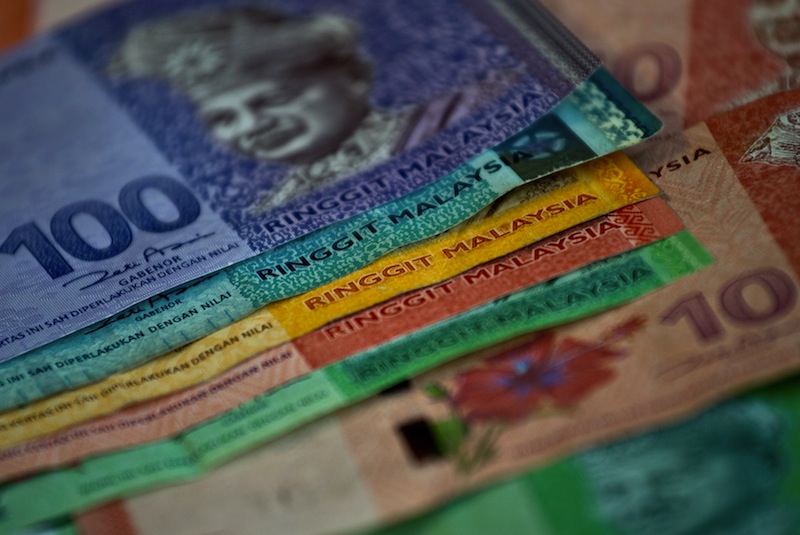
Ringgit expected to strengthen to 4.0 against US dollar next week

The local currency was also traded firmer against other major currencies except for the Singapore dollar. — AFP pic

KUALA LUMPUR, Jan 2 — The ringgit is expected to trade higher against the US dollar next week, on positive Covid-19 vaccine sentiment and better performance in crude oil prices, said an analyst.

Axi chief global market strategist Stephen Innes said as commodities are expected to fly out of the new year gates, particularly for the higher oil prices, they provide a double whammy of support for the local unit.

“The ringgit has been an underdog most of the year but its strong beta to commodity markets are now making it a leader of the pack.

“And it suggests the ringgit could be poised to test the key psychological 4.0 level against the US dollar, possibly as soon as next week,” he told Bernama.

Throughout this week, the ringgit continued to make inroads against the greenback, marking 10-consecutive weekly gain versus the US dollar, even as the local note marched upwards in tandem with rising oil prices.

The heightened risk appetite also served as tailwinds for Asian currencies with many reaching multi-year highs over recent weeks.

The local market was closed on Friday for New Year holiday and will resume trading on Monday, Jan 4, 2021.

On a Thursday-to-Thursday basis, the ringgit was 390 basis points higher against the US dollar at 4.0200/0250 versus 4.0590/0620 in the previous week.

The local currency was also traded firmer against other major currencies except for the Singapore dollar.

It appreciated against the Japanese yen to 3.9018/9078 from 3.9153/9193, improved versus the British pound to 5.4905/4977 from 5.5186/5243 and gained against the euro to 4.9358/9427 from 4.9479/9528 from last Thursday.

The ringgit, however, depreciated against the Singapore dollar to 3.0395/0444 from 3.0537/0571 previously. — Bernama


Source: Malay Mail

Bursa Malaysia to see cautious trading in first week of 2021

Bursa Malaysia trading was range-bound for the week just ended, mainly driven by year-end window dressing activities. — Bernama pic

KUALA LUMPUR, Jan 2 — The local stock market is likely to usher in the first trading week of 2021 on a cautious trading mode as investors seek fresh market catalysts.

OANDA senior market analyst Jeffrey Halley said the trajectory of Covid-19 cases in Malaysia continued to weigh on Bursa Malaysia sentiment, and it would likely to do so into next week unless a marked improvement was seen over the New Year break.

He noted that gains would be capped at 1,660 with the FTSE Bursa Malaysia KLCI (FBM KLCI) potentially dropping to 1,620.

At those levels, and with investors returning to work in the New Year, value buyers should emerge, putting a floor under any further sell-offs, added Halley.

“If the US Republicans hold Georgia in the US Senate election on Wednesday (Malaysian time) equity markets should rally, lifting Bursa Malaysia too,” Halley told Bernama, adding that the 1,700 level should be broken in January, but it was unlikely to be next week.

“The 1,700 level is more likely to be tested in the second half of the month,” he added.

Halley pointed out that regional equities elsewhere would need to rally, and Malaysia needed to avoid a post-holiday spike in Covid-19 for that to happen.

“The main factor driving markets next week is the Georgia Senate election in the US on Wednesday (Malaysian time). A surprise win by the Democrats will likely provoke a sharp retreat by equities globally.

“However, I expect the effects to be transitory, and for Malaysia’s equity rally to resume in earnest in the second week of January, presuming that the Covid-19 situation domestically does not deteriorate badly. Large-scale lockdowns will delay the rally resumption,” he said.

Bursa Malaysia trading was range-bound for the week just ended, mainly driven by year-end window dressing activities.

On Thursday, the key index was weighed down by persistent selling activities in heavyweights including Sime Darby Plantation due to a ban imposed by the US Customs and Border Protection (CBP) on its products over allegations of forced labour in its production process.

Sime Darby Plantation lost 18 sen to RM4.99, while the Plantation Index trimmed 109.97 points to 7,302.84.

In September 2020, the CBP had issued a withheld release order against FGV Holdings Bhd.

On a Thursday-to-Thursday basis, the benchmark FBM KLCI decreased 13.96 points to 1,627.21 from 1,641.17 last week.

On the scoreboard, the FBM 70 rose 30.3 points to 15,142.84, the FBM ACE Index strengthened 77.39 points to 10,734.69, the FBM Emas Index fell 48.99 points to 11,761.93, the FBMT 100 Index erased 67.94 points to 11,501.99, and the FBM Emas Shariah Index reduced 124.03 points to 13,159.15.

Sector-wise, the Plantation Index contracted 114.44 points to 7,302.84, the Industrial Products and Services Index added 2.22 points to 178.11, while the Financial Services Index increased 56.18 points to 15,316.55.

The Energy Index advanced 16.92 points to 896.39, the Healthcare Index gave up 100.81 points for 3,571.55, and the Technology Index added 2.31 points to 69.72.

Weekly turnover jumped to 31.20 billion units worth RM14.88 billion from 28.99 billion units worth RM14.05 billion last week.

Main Market volume went up to 18.76 billion shares valued at RM12.5 billion from 17.26 billion shares valued at RM10.7 billion previously.

Warrants turnover, however, nosedived to 1.61 billion units worth RM264.98 million from 7.85 billion units worth RM364.77 million in the previous week.

The ACE Market volume advanced to 10.83 billion shares valued at RM3.11 billion from 9.52 billion shares valued at RM2.99 billion previously. — Bernama


Source: Malay Mail

‘Show must go on’: Smooth start at Channel freight helps dispel Brexit fears

Lorries disembark a freight train at the Eurotunnel terminal at Folkestone, Southeast England, on December 31, 2020. — AFP pic

CALAIS (France), Jan 2 — A steady flow of trucks in and out of France helped dispel fears of a chaotic start to Britain’s first hours outside the EU customs union, with a high-tech smart border system smoothing crossings by tunnel and sea.

Lorries crossed into France and left the country for the United Kingdom at Calais through the Channel Tunnel while dozens more were carried on ferries, without any reports of major issues.

On the other side of the Channel at the English port of Dover, a steady stream of lorries arrived and departed with police on hand to ensure drivers could prove a negative result for Covid-19.

Almost 200 lorries passed through the tunnel after Britain formally left the EU customs union and single market at midnight in the final act of its exit from the European Union, operator Getlink said.

The first ferry to set sail for France under the new arrangements, The Pride of Kent of P&O Ferries, meanwhile docked in Calais mid-morning.

Jean Michel Thillier, the regional customs director in Calais, said the IT systems had worked perfectly after dry runs and €13 million (RM63.4 million) of investment.

“Three years of work have borne fruit,” he said, touting a “completely new computer system” and “major adjustments in terms of infrastructure”.

A spokesperson for the Getlink operator which runs the Tunnel told AFP: “The traffic was strong enough for an exceptional and historic night, everything went well.”

Calais port president Jean-Marc Puissesseau expressed regret over the sentimental changes of Britain leaving the customs union but added in English: “That is life! The show must go on!”

‘A privilege’

French officials have insisted that disruption at the frontier in Calais in northern France is being minimised by a so-called “smart border”. Hauliers are required to enter information about their freight online in advance with only a rapid scan needed at the border.

Once this is done the trucks can either be waved through with a green light or subjected to extra checks if given an orange one.

Officials also say that British businesses have also stockpiled for January, which is also a relatively quiet month with little activity after Christmas.

The first vehicle to pass through heading for Britain was a heavy goods vehicle from Romania carrying post and parcels, which was symbolically given the go-ahead by Calais mayor Natacha Bouchart.

“I am very happy, it is a privilege for me,” said its driver Toma Moise, 62.

Bouchart, who pressed the button allowing the lorry to leave, said it was a “historic moment” adding that going back to customs checks after the UK’s near half century of EU membership “will have consequences whose range we don’t yet know”.

‘No backlog’

There had been immense bottlenecks of traffic after France briefly closed the border in late December when a new coronavirus variant was found in Britain.

But with all drivers coming in now taking tests before entering France, the backlog was cleared just in time for the completion of Brexit.

The first to submit to a check on entering France was a lorry driven by Ukrainian Viktor who smiled and noted that “colleagues from England said ‘congratulations’ to me, because I’m the first driver”.

Of the 36 trucks disembarking from the Pride of Kent, which left from Dover, three were told to stop for additional checks, the AFP correspondent said.

In Dover, the driver of a red van with Polish number plates was one of very few turned away for not having a Covid-19 test result, and was redirected to sites north of the port where rapid testing is being conducted.

“It’s good to see the port’s done its job and there’s no backlog,” Alan Leigh, 52, told AFP while taking an early New Year’s Day stroll on the famous white cliffs above the Dover docks as the ship left on the outbound trip.

However, those involved in cross-Channel trade still fear potential trouble in the coming weeks and months, as customs checks and more paperwork for European travel and trade are needed for the first time in decades.

Some 70 per cent of trade between Britain and the EU passes through the French ports of Calais and Dunkirk. On average, 60,000 passengers and 12,000 trucks pass through daily. — AFP


Source: Malay Mail

Tencent games reinstated on Huawei app store

A sign of Tencent is seen during the third annual World Internet Conference in Wuzhen town of Jiaxing, Zhejiang province November 16, 2016. — Reuters pic

BEIJING, Jan 1 — Tencent’s online games were removed and then reinstated on Huawei’s app store today in a dispute over revenue sharing by the Chinese companies.

Huawei was insisting on a 50 per cent cut of Tencent’s game sales on the app store and the Tencent games were removed because the companies had been unable to agree a deal, a Tencent source said.

Tencent sells some of the top-ranked online games worldwide while Huawei has a 41.4 per cent share of the China mobile phone market and 14.9 per cent of the global market, data from market researchers IDC and Canalys shows.

The games were reinstated on the app store after further negotiations, Tencent said, adding that “both sides will continue to work together to bring better experiences and services to consumers”.

Huawei did not immediately respond to a request for comment.

A number of game developers have opposed Huawei’s revenue demands, including Shanghai-based Mihoyo, which last year decided not to place its hit game Genshin Impact on Huawei’s app store because of the sales commission structure. — Reuters


Source: Malay Mail

01 January 2021

African free trade bloc opens for business, but challenges remain

Ghana president Nana Akufo-Addo (left) at Gambia's Independence day ceremony at Independence Stadium, in Bakau, Gambia February 18, 2017. He was present at the online launch of the AfCFTA today. — Reuters pic

JOHANNESBURG, Jan 1 — African countries began officially trading under a new continent-wide free trade area today, after months of delays caused by the global coronavirus pandemic.

But experts view the New Year’s Day launch as largely symbolic with full implementation of the deal expected to take years.

The African Continental Free Trade Area (AfCFTA) aims to bring together 1.3 billion people in a US$3.4 trillion (RM13.6 trillion) economic bloc that will be the largest free trade area since the establishment of the World Trade Organisation.

Backers say it will boost trade among African neighbours while allowing the continent to develop its own value chains. The World Bank estimates it could lift tens of millions out of poverty by 2035.

“There is a new Africa emerging with a sense of urgency and purpose and an aspiration to become self-reliant,” Ghana’s President Nana Akufo-Addo said during an online launch ceremony.

But obstacles — ranging from ubiquitous red tape and poor infrastructure to the entrenched protectionism of some of its members — must be overcome if the bloc is to reach its full potential.

Trade under the AfCFTA was meant to be launched on July 1 but was pushed back after Covid-19 made in-person negotiations impossible.

However, the pandemic also gave the process added impetus, said Wamkele Mene, Secretary-General of the AfCFTA Secretariat.

“Covid-19 has demonstrated that Africa is overly reliant on the export of primary commodities, overly reliant on global supply chains,” he said. “When the global supply chains are disrupted, we know that Africa suffers.”

Every African country except Eritrea has signed on to the AfCFTA framework agreement, and 34 have ratified it. But observers such as W. Gyude Moore — a former Liberian minister who is now a senior fellow at the Center for Global Development — say the real work begins now.

“I would be surprised if they can have everything set up within 24 months,” he told Reuters. “For long-term success, I think we’ll need to look at how long it took Europe. This is a multi-decade process.”

‘We must start somewhere’

Historic challenges including Africa’s poor road and rail links, political unrest, excessive border bureaucracy and petty corruption will not disappear overnight.

And an annex to the deal outlining the rules of origin — an essential step for determining which products can be subject to tariffs and duties — has not been completed yet.

Meanwhile, 41 of the zone’s 54 member states have submitted tariff reduction schedules.

Members must phase out 90 per cent of tariff lines — over five years for more advanced economies or 10 years for less developed nations. Another 7 per cent considered sensitive will get more time, while 3 per cent will be allowed to be placed on an exclusion list.

Finalising those schedules and communicating them to businesses must be done quickly, said Ziad Hamoui of Borderless Alliance, a group that campaigns for easier cross-border trade.

But efforts to implement the deal will also likely face resistance from countries’ domestic interest groups. Fears of losing out to more competitive neighbours initially made some countries, including West African giant Nigeria, sceptical of the pan-African project.

Still, proponents of the zone are confident that initial steps towards its implementation will already allow member states to quickly boost intra-African trade.

“Economic integration is not an event. It’s a process,” said Silver Ojakol, chief of staff at the AfCFTA Secretariat. “We must start somewhere.” — Reuters


Source: Malay Mail