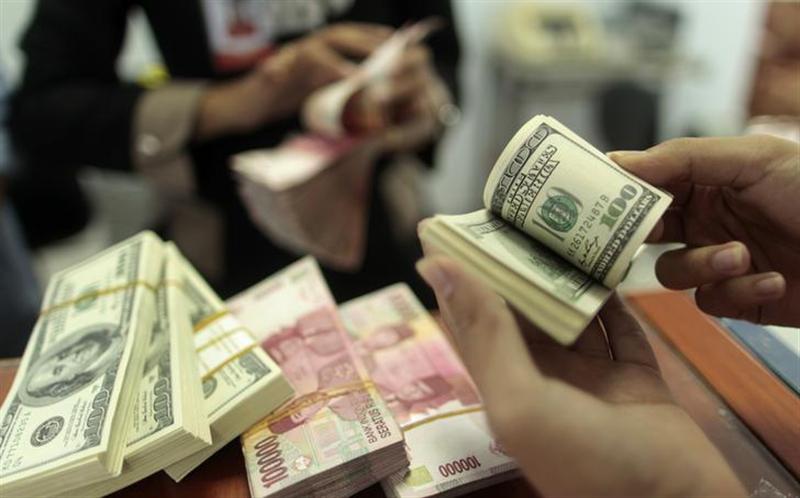
SINGAPORE: Silver prices surged to a five-month high on Monday, silver-mining stocks leapt and coin-selling websites were swamped as small-time investors piled in to the metal, the latest focus of a retail-trading frenzy that has set financial markets on edge.
Organised in online forums and traded with fee-free brokers, such as Robinhood, the phenomenon has driven a 1500% rally in the shares of videogame retailer GameStop as the crowd targets assets that big fund managers had bet against.
Since mid last week, thousands of Reddit posts and hundreds of YouTube videos have encouraged small investors to buy silver, partly in the belief that lifting its physical price could hurt large investors who had made paper bets that it would fall.
Spot silver leapt as much as 7.4% in early trade on Monday to $28.99 an ounce, taking gains to about 15% since last Wednesday and the price to its highest since mid August.
Silver-tracking exchange-traded funds in Japan and Australia also jumped and small Sydney-listed miners soared, while broader markets fell as the frenzy jangled investor nerves.
Money Metals, an online exchange for precious coins and bullion, posted an "EXTREME DEMAND ALERT" banner across its homepage, and capped orders at $10,000. Rival SD Bullion warned of shipping delays due to "unprecedended demand".
"The Reddit crowd has turned its sights on a bigger whale in terms of trying to catalyse something of a short squeeze in the silver market," said Kyle Rodda, an analyst at brokerage IG Markets in Melbourne.
"This is their big, bold Moby Dick moment," he said.
The popularity of dabbling in stockmarkets has grown globally during the COVID-19 pandemic as volatility, stimulus cheques and lockdowns have driven account openings and investment.
The trend has turbocharged a long equities rally, and begun to make brokers in places like South Korea a little worried as investor loan volumes rise to record highs.
The craze hit fever pitch last week when the GameStop pile-on resulted in a "short squeeze," which turned price gains stratospheric as hedge funds with bets against the stock desperately bought it at big prices to close their positions.
"The turnover suggests that it's not just Redditers that are involved now," said Michael McCarthy, strategist at broker CMC Markets in Sydney.
"Having said that, the 5% gain in silver prices is a very solid lift, particularly when gold prices are static, it certainly does suggest that the impact of messaging in social media is becoming much more significant."
Among some of the strongest small mining stock gains were Thomson Resources, which soared as much as 60% - or eight Australian cents - and Investigator Resources Ltd which jumped nearly 40%.
Both are explorers which did not produce silver for sale in 2020. - Reuters
The dollar index was little changed at 90.58 early today, holding on to last week’s gain of about half a per cent, as Asian stocks traded weaker for a fifth session.— Reuters pic
TOKYO, Feb 1 — The safe-haven dollar found support at the start of a new week with traders remaining wary amid the battle on Wall Street between hedge funds and retail investors.
Wrangling over the size of President Joe Biden’s fiscal stimulus package and delays to vaccine rollouts also weighed on sentiment, stoking demand for safer assets.
“What happens in the next one day to one week to one month is probably in the hands of risk sentiment,” said Ray Attrill, head of forex strategy at National Australia Bank in Sydney.
“If we do see a deeper equity correction, I’ve got no doubt that the US dollar can show a little bit more strength.”
The dollar index was little changed at 90.58 early today, holding on to last week’s gain of about half a per cent, as Asian stocks traded weaker for a fifth session.
The gauge has been largely range-bound in recent weeks, after bouncing from a nearly three-year low of 89.206 at the start of the year.
Investors are trying to evaluate whether an almost 7 per cent selloff in 2020 — driven by expectations of a global pandemic recovery amid massive fiscal spending and continued ultra-easy monetary policy — is likely to continue.
A group of Republican senators are urging Biden, a Democrat, to significantly downsize his proposed US$1.9 trillion (RM7.6 trillion) pandemic relief package, and have floated a US$600 billion alternative.
Elsewhere, Wall Street is bracing for more volatility after retail investor groups that organised via social media targeted hedge fund short positions, with some traders worried that the wild swings in GameStop and other stocks could foreshadow a market correction.
The dollar slipped 0.1 per cent to ¥104.63 (RM4.04), further retreating from the 2-1/2-month high of 104.94 touched on Friday.
The euro was little changed at US$1.2132, as it continued to dither in a narrow range.
The riskier Aussie dollar dipped following new signs of weakness in the recovery in China, a key customer for Australian commodities.
Australia’s currency sank as low as 76.06 US cents early in the session before recovering to be little changed at 76.307 cents.
Data from the weekend showed China’s factory recovery slowed in January, hobbled by a wave of coronavirus infections. — Reuters
Shell announced in October it would increase its spending on low-carbon energy to 25 per cent of overall capital expenditure by 2025 and the sources said that would translate into more than US$5 billion (RM20.2 billion) a year, up from US$1.5 billion to US$2 billion now. — Reuters pic
LONDON, Feb 1 — Royal Dutch Shell is betting on its expertise in power trading and rapid growth in hydrogen and biofuels markets as it shifts away from oil, rather than joining rivals in a scramble for renewable power assets, company sources said.
Shell and its European rivals are seeking new business models to reduce their dependency on fossil fuels and appeal to investors concerned about the long-term outlook for an industry under intense pressure to slash greenhouse gas emissions.
Shell will present its strategy on February 11 and unlike Total and BP the company will focus more on becoming an intermediary between clean power producers and customers than investing billions in renewable projects, the sources said, giving previously unreported details of the plan.
Shell announced in October it would increase its spending on low-carbon energy to 25 per cent of overall capital expenditure by 2025 and the sources said that would translate into more than US$5 billion (RM20.2 billion) a year, up from US$1.5 billion to US$2 billion now.
The Anglo-Dutch company will, however, keep its overall oil and gas output largely stable for the next decade to help fund its energy transition, though gas is set to become a bigger part of the mix, the sources told Reuters.
A Shell spokeswoman declined to comment on the details of the company’s new strategy ahead of its February announcements.
BP, meanwhile, plans to slash its oil output by 40 per cent by 2030 and has swept aside its core oil and gas exploration team to focus on renewables, with spending on low-carbon energy set to rise 10-fold to US$5 billion over the coming decade.
While Europe’s big oil firms are all rolling out strategies to survive in a low-carbon world, investors and analysts remain sceptical about their ability to transform centuries-old business models and triumph in already crowded power markets.
Power trading
Central to Shell’s plans are its experience in trading all types of energy from oil to natural gas to electricity and its vast retail network, which has more outlets than either of the world’s two biggest food chains, Subway and McDonald’s.
Shell is already the world’s leading energy trader, an activity it calls “marketing”. It trades about 13 million barrels of oil a day, or 13 per cent of global demand before the pandemic, using one of the biggest fleets of tankers.
It is the top trader of liquefied natural gas (LNG), buys and sells power, biofuels, chemicals and carbon credits, and now aims to use its pole position to snare a large chunk of the fast-growing low-carbon power market.
“The future of energy is particularly bright for our marketing and our customer-facing businesses where we already have scale. So we will accelerate a growth plan which is already underway,” Chief Executive Ben van Beurden said in October.
Trading has been key for oil majors for decades, allowing them to use their global operations to quickly take advantage of changes in supply and demand. Shell’s trading helped it avoid its first-ever quarterly loss in the second quarter of 2020 even as consumption plummeted due to the coronavirus epidemic.
Nevertheless, analysts say Shell’s trading division will face a challenge because it is heavily reliant at the moment on sales of refined fossil fuel products, which also account for a large proportion of its carbon emissions.
“Shell faces difficult choices on how to balance its trading cash flow that leverages oil products while still having carbon-intensive operations,” JP Morgan analyst Christyan Malek said. “But because of their scale, customer base and distribution, they can be much more flexible.”
Hydrogen hubs
At the same time, Shell plans to boost its consumer base by expanding its electricity supply business for homes and its network of electric vehicle charging points, as well as signing long-term corporate power purchase agreements (PPA).
Shell already has 45,000 retail outlets worldwide, far more than its European rivals, and it is planning to add another 10,000 by 2025.
As a major biofuel producer, Shell wants to ramp up its production of fuel made from plants and waste as an alternative source of energy for transportation, the sources said.
Shell’s is also betting on future growth in hydrogen, the sources said. While still a niche market, hydrogen has attracted huge interest in recent months as a clean alternative to natural gas for heavy industry and transportation.
Hydrogen, and so-called green hydrogen which is made solely with renewable power, comes with high costs and infrastructure challenges though Shell is already investing.
Its push will centre initially on Europe, where it is developing a hydrogen hub in Hamburg, Germany, and it is one of several firms developing a hub in Rotterdam in the Netherlands. It is also looking to expand into the United States and Asia.
The US state of California, for example, is backing the rollout of hydrogen fuel cell vehicles to help achieve its climate goals while countries such South Korea and Japan are betting heavily on hydrogen as an alternative fuel.
The sources did not give any targets for increases in Shell’s production of either hydrogen or biofuels.
Like Shell, rivals including BP, Total, Italy’s Eni and Spain’s Repsol also plan to expand in hydrogen and biofuels markets, as well as add electric vehicle charging points to generate new revenue away from oil.
Competitive edge?
However, Shell won’t chase the same ambitious targets some of its European rivals have for adding wind and solar generation capacity and will prioritise trading and selling electricity instead, the sources said.
Shell is wary about investing heavily in renewable projects where it won’t have any particular competitive edge over other oil companies or utilities, such as Spain’s Iberdrola and Denmark’s Orsted that are already becoming significant green energy producers.
Shell will still expand its renewable capacity, especially in offshore wind farms where it believes it has an advantage after years of operating offshore oilfields, but the business will centre on profitability rather than size, the sources said.
“Shell will have some volumetric targets but that is not the focus,” a senior company official told Reuters. “A single focus on the volume of renewable energy generating capacity could be dangerous and lead us to some bad deals.”
BP wants to boost its renewable generation capacity 20 fold by 2030 while Total is aiming to have 100 gigawatts (GW) of gross renewable energy generation capacity by 2030.
Investors are concerned, however, that they may struggle to hit their profit projections by investing in costly renewable projects which typically have lower rates of return than oil.
Shell provided some details on its new strategy on October 29, including a plan to narrow its oil and gas production to nine hubs, cut the number of refineries to six from 14 and boost its marketing business.
The company also announced plans to cut its workforce by up to 9,000 employees, or about 10 per cent, by August this year as part of a broad cost-cutting review known as Project Reshape. — Reuters
Dealers were also warily awaiting new developments in the headline-grabbing battle between retail investors and funds that specialise in shorting stocks. — Reuters pic
SYDNEY, Feb 1 — Asian shares wavered today amid worries that problems with vaccine rollouts combined with new strains of Covid-19 will delay a global economic recovery that has already been baked into the market’s rich valuations.
MSCI’s broadest index of Asia-Pacific shares outside Japan fell 0.4 per cent, following four straight sessions of losses. Japan’s Nikkei bounced 0.4 per cent, after shedding almost 2 per cent on Friday.
Futures for the S&P 500 lost another 0.7 per cent in heavy trade, while NASDAQ futures fell 0.9 per cent.
Dealers were also warily awaiting new developments in the headline-grabbing battle between retail investors and funds that specialise in shorting stocks.
US hedge funds bought and sold the most stock in more than 10 years amid wild swings in GameStop Corp, according to an analysis by Goldman Sachs Inc
Talk today was that silver was the new target for the retail crowd as the metal jumped 5.7 per cent to a six-month high .
Yet many analysts see this entertaining episode as a sideshow compared to signs of a loss of momentum in the United States and Europe as coronavirus lockdowns bite.
Indeed, a survey from China yesterday showed factory activity grew at the slowest pace in five months in January as restrictions took a toll in some regions.
Neither was the news on vaccine rollouts positive, especially given doubts about whether they will work on new Covid strains.
“It is these considerations, not what is happening to a video gamer retailer day to day, that has weighed on risk assets,” said John Briggs, global head of strategy at NatWest Markets. “So much of the market’s valuations, risk in particular, is premised on the fact we can see a light at the end of the Covid tunnel.”
Doubts have also emerged about the future of President Joe Biden’s US$1.9 trillion (RM7.68 trillion) relief package, with 10 Republican senators urging a US$600 billion plan.
The jitters in stocks caused only a brief ripple in bonds with Treasury yields actually rising late last week, perhaps a refection of the tidal wave of borrowing underway.
A record US$1.11 trillion of gross Treasury issuance is slated for this quarter, up from US$685 billion the same time last year.
Early today, US 10-year yields held at 1.07 per cent and near the recent 10-month top of 1.187 per cent.
Higher yields combined with the more cautious market mood have seen the safe-haven dollar steady above its recent lows. The dollar index stood at 90.628, having bounced from a trough of 89.206 hit early in January.
The euro idled at US$1.2121, well off its recent peak at US$1.2349, while the dollar held firm at ¥104.74.
Gold followed silver higher to US$1,853 an ounce, but has repeatedly stalled at resistance around US$1,875.
Global demand concerns kept oil prices in check. US crude eased 30 cents to US$51.90 a barrel, while Brent crude futures dropped 20 cents to US$54.84. — Reuters
Over 90 million iPhone handsets shipped worldwide in the fourth quarter of 2020. — Picture courtesy of Apple
SAN FRANCISCO, Feb 1 — Apple enjoyed record performance in the final quarter of 2020, shipping over 90 million iPhone handsets worldwide.
Over the same period, the American manufacturer shipped more smartphones than Samsung, the market leader.
The colossal and immediate success of the iPhone 12 also shows strong consumer appetite for 5G-compatible handsets.
According to the latest figures from IDC, almost 386 million smartphones were shipped worldwide in Q4 2020, up from 370 million one year ago, making a 4.3 per cent increase.
The market therefore finished the year on a high note, after a disastrous first half.
Apple stood out this quarter, leading the way over its eternal rival Samsung, while Huawei shipments collapsed, particularly outside Asia.
The world’s top smartphone seller not so long ago, the Chinese manufacturer has now been overtaken by Xiaomi and Oppo.
The world’s top 5 smartphone sellers, Q4 2020
1. Apple, 90.1 M devices shipped (+22.2 per cent year-on-year)
2. Samsung, 73.9 M (+6.2 per cent)
3. Xiaomi, 43.3 M (+32 per cent)
4. Oppo, 33.8 M (+10.7 per cent)
5. Huawei, 32.3 M (-42.4 per cent) — AFP-Relaxnews
Exxon and Chevron’s shares nosedived last year after a Saudi-Russian price war and fallout from the novel coronavirus outbreak caused the value of oil to crater. Exxon’s stock was hit hardest, as investors raised concerns about the company’s long-term profitability and spending decisions. ― Reuters pic
NEW YORK, Feb 1 — The chief executives of ExxonMobil Corp and Chevron Corp held preliminary talks in early 2020 to explore combining the two largest US oil producers in what would have been the biggest merger of all time, according to people familiar with the matter.
The discussions, which are no longer active, are indicative of the pressure the energy sector’s most dominant companies faced as the Covid-19 pandemic took hold and crude prices plunged.
The talks between Exxon Chief Executive Darren Woods and Chevron CEO Mike Wirth were serious enough for legal documents involving certain aspects of the merger discussions to be drafted, one of the sources said. The reason the talks ended could not be learned.
The sources requested anonymity because the matter is confidential. Exxon and Chevron, which have market capitalisations of US$190 billion (RM768 billion) and US$164 billion (RM662.9 billion), respectively, declined to comment.
Exxon and Chevron’s shares nosedived last year after a Saudi-Russian price war and fallout from the novel coronavirus outbreak caused the value of oil to crater. Exxon’s stock was hit hardest, as investors raised concerns about the company’s long-term profitability and spending decisions.
In their talks, the CEOs of Exxon and Chevron envisioned achieving synergies through massive cost cuts to help weather the downturn in energy markets, one of the sources said. At the end of 2019, Exxon employed about 75,000 people and Chevron roughly 48,000.
Following the aborted talks with Exxon, Chevron went on to acquire oil producer Noble Energy in a US$5 billion cash-and-stock deal that was completed in October.
A proposed combination last year would almost certainly have triggered an intense antitrust review by the US Justice Department, a process that typically takes months to complete. And such a review would also potentially have run up against last November’s US presidential election, raising additional uncertainty about how soon such a deal might be cleared, if at all.
Now, under the Biden administration, the window might be all but closed as Democrats historically have been less sympathetic to such deals, one of the sources said. President Joe Biden has put climate change at the forefront of his agenda, promoting jobs in renewable energy as opposed to traditional ones in the oil sector.
Biden recently formally revoked the permit to build the Keystone XL oil pipeline. General Motors last week said it would aim to stop selling vehicles powered by gasoline and diesel, which rely on oil, by 2035.
The White House and Justice Department did not immediately respond to requests for comment.
News of the unsuccessful talks emerged as Exxon has come under pressure from some of its shareholders over its strategic direction.
Engine No. 1, a investment firm based in San Francisco, last week nominated four directors to Exxon’s board and is pushing the company to spend its cash better, preserve its dividend, and invest more in clean energy. Exxon is also in the crosshairs of hedge fund D.E. Shaw, which is pressuring the company to cut costs and improve performance.
Exxon reports fourth-quarter results on February 2. Chevron last week reported a surprise US$11 million fourth-quarter loss as low margins on fuel, acquisition costs and foreign currency effects overwhelmed improved drilling results.
Combined giant
A combined Exxon-Chevron would be eclipsed in size only by Saudi Aramco, which boasts a roughly US$1.8 trillion market value and has previously pushed many US drillers to the financial brink by flooding the market with oil.
Despite inevitable antitrust concerns, the companies could argue a merger would represent the United States’ best shot at taking on the Saudi state-owned conglomerate and the world’s other largest state-backed oil producers, one of the sources said.
Last year’s Saudi-Russian oil price war, for instance, highlighted the vulnerability of US producers to foreign governments that can effectively dictate the price of crude by forcing energy companies they back to boost or cut output.
US oil companies each compete among one another and set their own varying production targets, with limited ability of Washington to intervene.
Exxon and Chevron, with their powerful balance sheets, withstood turmoil in energy markets following the pandemic that forced some smaller independent oil and gas producers to file for bankruptcy protection.
Yet they also felt the pain. Demand for oil evaporated in early 2020 as governments imposed travel restrictions and stay-at-home orders to slow the Covid-19 pandemic’s spread.
At one point in April, the price of US West Texas Intermediate (WTI) crude futures turned negative for the first time ever, signifying sellers needed to pay buyers to take the commodity off their hands. Prices have since rebounded to roughly US$52 a barrel.
Exxon and Chevron have both cut jobs over the past year. Exxon late last year left its dividend flat after boosting the shareholder payout each year since 1982. — Reuters
Robert Gosling (left) and Simon Spurrell (right) of Hartington Creamery pose holding cheese at the Creamery near Matlock in the Derbyshire Dales January 26, 2021. — AFP pic
LONDON, Feb 1 — A tangle of post-Brexit paperwork, duties and taxes is disrupting commercial ties between Britain and the European Union that have often taken years to build, piling extra costs on small firms that can make cross-Channel trade unprofitable.
Changes since the UK’s departure from the bloc’s single market and customs union on January 1 have made it “commercially and practically impossible for us to continue actually shipping to the EU”, laments cheesemaker Simon Spurrell.
Owner of the Hartington Creamery, which produces crumbly, flavourful Stilton cheese, Spurrell must now include a food health certificate signed by a veterinarian with each order sent to the bloc.
Regardless of the package size, one slab of the geographically-protected treat or a whole crate, the cost of the certificate is the same — £180 (RM997).
A big price to pay for the creamery, which previously relied on EU customers for around one-fifth of online sales.
“We may just have to abandon the EU market completely until both sides come to their senses,” said Spurrell, who is now eyeing sales into North America to help fill the gap.
The food certificate, which applies also to meat and fish products, is not the only bitter-tasting financial consequence served up by Brexit — even though Britain struck a tariff-free trade deal with the EU.
British customers purchasing goods from the EU with a sale price of more than £135 (152 euros, US$185) are in some cases having to pay so-called import value-added tax (VAT) of around 20 per cent.
They may have to also pay customs duties and higher courier charges.
The result is that some EU-based companies, mainly small ones, have decided to stop selling products to buyers in Britain.
‘Reality of Brexit’
“It certainly isn’t a tariff but nevertheless it’s going to have an implication for UK customers and make goods from the EU more expensive,” said Gary Rycroft, a partner at law firm Joseph A Jones & Co in Lancaster, northern England.
“In that sense, it’s a protectionist policy because it’s creating a barrier to trade.
“That’s the reality of Brexit,” the consumer affairs legal expert told AFP.
For businesses, there is also the headache of “rules of origin”, bringing new charges levied on goods exported from the UK that have been made with imported materials.
“We’re hearing from increasing numbers of small exporters who are struggling with rising courier costs, customs declarations, rules of origin requirements, duties and VAT charges,” according to Mike Cherry, national chair at British lobby group The Federation of Small Businesses.
Around 20 per cent of small and medium-sized enterprises have suspended exports to the EU owing to the new rules, revealed a recent study by UK accountants UHY Hacker Young.
“What we have... seen is EU customers desperate to get the goods that they need from the UK,” noted VAT specialist Michelle Dale at the company.
And “there are still a lot of shipments not leaving the EU”, she added.
Dale expressed optimism for the future however.
“As people get used to the information that is required and the freight companies become more familiar with doing the import declaration and export declaration, things will begin to pick up again.” — AFP
Shares in GameStop, a major video game retailer that has been financially ailing, soared during the Reddit group’s massive buying initiative — mounted in protest against the hedge funds’ betting on GameStop’s demise. — Reuters pic
WASHINGTON, Feb 1 — Progressive US senators Bernie Sanders and Elizabeth Warren called on Sunday for action against what they said were the Wall Street abuses by hedge funds revealed by the recent frenzy over GameStop shares.
“We need an SEC investigation,” Warren told CNN, referring to the federal Securities and Exchange Commission.
“What’s happening with GameStop is just a reminder of what’s been going on on Wall Street now for years,” the Democratic senator said.
“It’s a rigged game, and it’s been a set of players who come in and manipulate the market.”
Amateur investors who organised over Reddit and other online forums have in recent days targeted shares of companies including GameStop that had been “short-sold” by hedge funds in a bet that the price of the shares would fall.
The Reddit group’s tactics caused massive spikes in share prices.
The SEC said Friday that it was “closely monitoring and evaluating the extreme price volatility of certain stocks’ trading prices” and would “act to protect retail investors when the facts demonstrate abusive or manipulative trading activity that is prohibited” by federal law.
But Warren called for more decisive action.
“It is time for the SEC to get off their duffs and do their jobs,” said Warren, whose national profile rose when she led a push for tougher financial regulations following the meltdown of 2007-2008.
“We need more regulation about market manipulation.”
Independent senator Bernie Sanders was similarly critical.
“I have long believed that the business model of Wall Street is flawed,” he told ABC’s “This Week.”
“We have to take a very hard look at the kind of illegal activities and outrageous behaviour on the part of the hedge funds and other Wall Street players.”
Shares in GameStop, a major video game retailer that has been financially ailing, soared during the Reddit group’s massive buying initiative — mounted in protest against the hedge funds’ betting on GameStop’s demise.
To cover their losses, the hedge funds had to buy back, at higher prices, shares they had sold.
Brian Deese, a top economic advisor to President Joe Biden, said Sunday that the SEC was “focused on understanding fully what happened here.”
“We’re going to look at those issues and certainly understand fully this particular episode and the broader questions there,” he told CNN.
But he said the new administration was concentrating first on alleviating the economic pain flowing from the Covid-19 pandemic.
“Our immediate focus here is on taking the action we need to put a floor under this economic crisis.” — AFP
A logo of Xiaomi is seen at Xiaomi's tablet launch event in Beijing, May 15, 2014. ― Reuters pic
HONG KONG, Jan 31 — Chinese smartphone maker Xiaomi Corp said today that its legal complaint against the US Department of Defence and the Treasury Department was to protect the company’s interests, in a notice on the Hong Kong stock exchange.
The company filed a complaint in a Washington district court on Friday against the US Defence and Treasury Departments, seeking to remove the Chinese smartphone maker from an official list of companies with ties to China’s military.
Xiaomi said the US decision to include the company as a “communist Chinese military company” was “factually incorrect” and said it had asked the courts to declare the decision illegal.
The Defence Department, under the Trump administration in mid-January, added Xiaomi and eight other companies to the list, which requires American investors to divest their holdings in the firms by a set deadline. Xiaomi has said that 75 per cent of the company’s voting rights, under a weighted structure, were held by co-founders Lin Bin and Lei Jun, with no ownership or control from an individual or entity affiliated with the military. — Reuters