Signage can be seen outside a Topshop and Topman store, owned by Arcadia Group, in central London, Britain June 5, 2019. — Reuters
LONDON, Feb 1 — ASOS has bought the Topshop, Topman, Miss Selfridge and HIIT brands from the administrators of Philip Green’s collapsed Arcadia group for £265 million (RM1.47 billion), the British online fashion retailer said today.
The deal for Arcadia’s prized brands does not include its stores, putting thousands of jobs at risk. — Reuters
India, which has the world’s second highest coronavirus caseload after the United States, and currently spends about 1 per cent of gross domestic product on health, among the lowest for any major economy. — Reuters pic
NEW DELHI, Feb 1 — Unveiling an annual budget on Monday aimed at reviving an economy that plunged into deepest recorded slump amid the coronavirus pandemic, Finance Minister Nirmala Sitharaman proposed doubling healthcare spending to 2.2 trillion Indian rupees (RM121 billion).
The government will launch a new federal health scheme with an outlay of around 641 billion Indian rupees (US$8.80 billion) over the next six years, she told parliament kicking off her budget speech.
India, which has the world’s second highest coronavirus caseload after the United States, and currently spends about 1 per cent of gross domestic product on health, among the lowest for any major economy.
“The investment on health infrastructure in this budget has increased substantially,” said Sitharaman as lawmakers thumped their desks in approval.
The world’s second-most populous country has begun a huge vaccination drive and a steep fall in new coronavirus cases over the past few months is supporting an economic recovery.
“There are signs that the political, economic and strategic relations in the post Covid era are changing and...India is well well-poised to be the land of promise and hope.”
The economy is projected to contract 7.7 per cent in the current fiscal year ending in March but then gather steam in 2021/2022 to hit 11 per cent, which would make it the world’s fastest growing major economy ahead of China’s estimated 8.1 per cent pace.
Still, it would take the economy two years to reach pre-pandemic levels, the government said.
India’s blue-chip NSE Nifty 50 and S&P BSE Sensex indexes extended gains to around 1.4 per cent each as Sitharaman laid out her proposals. The Indian rupee was marginally stronger at 72.86 against the dollar, while the 10-year bond yield slipped to 5.89 per cent. — Reuters
Japan saw factory activity slip back into contraction as a new state of emergency, rolled out in January, hit operating conditions, PMI data showed on Monday. — Reuters pic
TOKYO, Feb 1 — Manufacturing in China and Japan suffered in January amid a resurgence in coronavirus infections, while South Korea and Taiwan saw improvements, underscoring the fragile and uneven nature of the region’s economic recovery.
Factory activity quickened in major chip exporters South Korea and Taiwan, as they benefited from continued brisk demand for semiconductors crucial to work-from-home IT goods.
But China’s manufacturing activity expanded at the slowest pace in seven months in January, weighed down by falling export orders.
Japan also saw factory activity slip back into contraction as a new state of emergency, rolled out in January, hit operating conditions, PMI data showed today.
“PMI readings for Asia suggest that manufacturing sectors improved further in most places. Buoyant global demand for electronics should continue to support the sector for at least the next few months,” said Alex Holmes, emerging Asia economist at Capital Economics.
Takeshi Okuwaki, an economist at Dai-ichi Life Research Institute in Tokyo, said Japanese manufacturers may slash output as the state of emergency will unavoidably hurt the economy.
“A shortage of chip supply will take time to fix, which will also weigh on Japan’s automobile production,” he said.
China’s Caixin/Markit Manufacturing Purchasing Managers’ Index (PMI) dropped to 51.5 last month, its lowest level since June last year and easing from December’s reading of 53.0.
Although it remains above the 50 mark that separates growth from contraction, the index was below a median market forecast for a reading of 52.7.
The survey broadly aligned with Beijing’s official PMI yesterday, which showed the recovery in factory activity slowing as local Covid-19 cases rose.
Japan’s final au Jibun Bank PMI fell to 49.8 in January from the previous month’s 50.0 reading, as fresh state of emergency measures in areas accounting for 55 per cent of the country’s population hurt employment and output.
That was in stark contrast to South Korea, where factory activity rose at its fastest pace in a decade thanks to soaring exports.
Separate data showed South Korea’s exports jumped 11.4 per cent in January from a year earlier to mark a third straight month of gains due in part to surging sales of memory chips.
South Korea experienced its third and strongest wave of infections this winter but is seeing a gradual decline in new cases.
In India, factory activity expanded at its strongest pace in three months in January, fuelled by a continued recovery in demand and output.
Manufacturing activity in Indonesia increased at a faster pace in January than in December, and such activity stopped contracting in the Philippines.
But activity shrank in Malaysia and rose at a slower pace in Vietnam, the PMI data showed.
China’s economy expanded at a faster-than-expected rate of 6.5 per cent in the fourth quarter last year, as factories raced to fill overseas orders amid a surging pandemic.
But recovery hopes are being dampened by a sharp increase in Covid-19 cases as authorities impose lockdown measures to curb the spread of the virus in the country’s north. — Reuters
This photo illustration shows the logos of video game retail store GameStop and trading application Robinhood in a computer and on a mobile phone in Arlington, Virginia on January 28, 2021. ― AFP pic
NEW YORK, Feb 1 — On three hours of sleep a night and with no time to eat, one New York-based hedge fund manager overseeing billions in assets called last week the most stressful of his life.
“Nothing was making sense anymore,” he said, as he watched the stock of GameStop Corp soar, while he bet it would fall.
Wednesday was the worst. Fuelled by chatter on Reddit and other social media to take on Wall Street, investors used venues like online trading app Robinhood to bid up the brick-and-mortar retailer. GameStop surged 135 per cent, on its way to gaining more than 1,500 per cent in January without any change in its business outlook. Hedge funds scrambled. By this point trading had become so unpredictable across all sectors that funds were forced to dump their winning stocks to balance out their portfolios.
“It’s time to cut out,” the manager said he told his team. “Let’s live for another day.”
The experience of this manager and a handful of others interviewed by Reuters over the last days, who all requested anonymity for fear of personal threats from retail investors, is a keyhole into a week of losses on Wall Street they say was far worse for them than last year’s historic pandemic sparked sell-off.
As a new week of trading begins, it remains to be seen how long the Reddit-fuelled rally in traditionally unloved stocks will last.
More immediately, it could mean more market losses if hedge funds have to keep selling to meet redemptions or right their portfolios. Longer term, they may have to shift strategies to find their footing and turn the tide to their advantage.
“What is not clear as yet is whether this disruption will evolve into a market accident,” said Mohamed El-Erian, chief economic advisor of Allianz.
Crowded trade
The extent of losses has exposed a big weakness on Wall Street. Analytics firm S3 said GameStop short sellers had mark-to-market losses of nearly US$20 billion so far this year.
Several hedge fund managers said the idea to short GameStop had long been a favourite at exclusive “idea dinners”, where fund managers swap their best trades.
Managers also noted traders, many of whom who work at multi-strategy funds that employ pods of portfolio managers, traders and analysts, often know each other well and may compare notes.
Gabe Plotkin’s Melvin Capital, one of the funds gored most by GameStop’s gains, took a US$2.75 billion bailout from his one-time mentor Steve Cohen and Citadel’s Ken Griffin. The funds involved have taken a dent: Cohen’s Point72 Asset Management lost roughly 15 per cent in January partly because of its investment in Melvin. Melvin’s assets slid during the month from around US$12.5 billion to US$8 billion, a source familiar with the situation said.
Maplelane Capital, another fund that bet against GameStop, had lost roughly 45 per cent in January, a person familiar with the fund’s returns said. Even Viking Global Investors, one of the world’s best-performing hedge funds, was off some 7 per cent, people familiar with the returns said.
Representatives for Plotkin, Cohen and Griffin declined to comment.
“Being short consensus stocks is just bad business,” said Dinakar Singh, a former Goldman Sachs trader who now runs hedge fund Axon Capital and was not short the stock. “It is great while it is working but when it isn’t anymore one guy’s problem triggers everyone’s headache. It becomes a circular disaster.”
Investing ‘insanity’
Fund managers said the week’s experience is changing the way they do business. Citron’s Andrew Left, who ignited the retail trading frenzy by publicly detailing GameStop’s issues, acknowledged defeat by Friday. He had covered his positions, taken a loss, and said he will stop publishing short-seller reports, a strategy that earned him millions and made him a prominent name in the industry.
Hedge funds will also be much more cautious about having short positions going forward for fear of becoming a “mindless target”, said one former hedge fund manager, adding that “kind of defeats the purpose of hedge funds.” Traditionally hedge funds promised investors a cushion against market declines by being able to sell short and make money when stocks drop.
Funds are also less likely to use trading strategies such as put options, a kind of derivative that has to be disclosed and that Melvin and Maplelane used, the managers said.
At the same time, though, one thing will not change: Wall Street thinking of new ways to make money again.
Already the tide started to turn somewhat late in the week for hedge funds as Robinhood and other some online brokerages used by millions of retail investors restricted trading in the stock.
Many hedge funds still remain on the other side of the GameStop trade, with the number of shares shorted having dropped only 8 per cent during the week as firms like Melvin covered positions.
One New York-based banker said his clients were looking for other possible targets of retail trading frenzy and positioning themselves ahead of it to make money if the eye of Reddit turned that way. “People have spent all week running their screens on other situations that might fit this criteria,” the banker said. “You’re going to see more of it.”
“This isn’t investing, this is insanity,” said Kyle Bass, founder, Hayman Capital Management LP. “A month, two months from now, I will be flabbergasted if GameStop isn’t below US$100.” — Reuters
Microsoft CEO Satya Nadella contacted Prime Minister Scott Morrison within days to make clear Microsoft’s Bing search engine could expand if Google exits. — Reuters pic
SYDNEY, Feb 1 — Microsoft has a “Plan B available” if Google follows through on threats to leave Australia over plans to compel digital giants to pay news organisations for content, local media reported today.
Australia’s government has designed a mandatory news media bargaining code that would force Facebook and Google to compensate local publishers for hosting news stories on their platforms.
Both US tech firms have threatened to block key services in Australia if the new law goes ahead.
Google Australia managing director Mel Silva last week told a parliamentary inquiry the company would withdraw its popular Search function from Australia if the code becomes law.
Microsoft CEO Satya Nadella contacted Prime Minister Scott Morrison within days to make clear Microsoft’s Bing search engine could expand if Google exits, The Australian reported.
The pair spoke last week, the newspaper said, with Nadella reportedly saying Microsoft had a “Plan B available”.
Treasurer Josh Frydenberg has confirmed the call, saying the government was in detailed discussions with “players across the industry”.
Australia has reserved the right to impose the code on other platforms and it is unclear whether Microsoft’s MSN service, which links to local news stories, could be affected in the future.
“With respect to the current controversy over a potential code of conduct governing Google and Facebook, Microsoft is not directly involved and we wouldn’t want to comment on that ongoing process,” a Microsoft spokesperson said in a statement.
Facebook CEO Mark Zuckerberg has also been lobbying Australia, contacting Frydenberg last week to discuss the code and its impact on the social media giant.
Frydenberg told the ABC it was a “very constructive discussion” but “Zuckerberg didn’t convince me to back down”.
Facebook has warned it could block Australian users from sharing local news stories on its platform.
“I don’t dismiss the threats but I’m not intimidated by them either,” Frydenberg said.
“What I do know is that media businesses should be paid for content. And what I do know is that... whether it’s on this issue, whether it’s on cyber bullying or terrorist content on the internet, we have been prepared to take on the digital giants.”
The law would require Google and Facebook to strike commercial agreements with news organisations or enter mandatory arbitration over the size of payments if they fail to agree.
The world-first proposal is being closely watched as governments grapple with how best to curb the growing power of tech giants.
While it has attracted wide backing from local media outlets, the US government has urged Australia to abandon the “burdensome” plan and World Wide Web inventor Tim Berners-Lee has warned it could make the internet “unworkable”. — AFP
The craze hit fever pitch last week when the GameStop pile-on resulted in a 'short squeeze,' which turned price gains stratospheric as hedge funds with bets against the stock desperately bought it at big prices to close their positions. — Reuters pic
SINGAPORE, Feb 1 — Silver prices surged to a five-month high today, silver-mining stocks leapt and coin-selling websites were swamped as small-time investors piled in to the metal, the latest focus of a retail-trading frenzy that has set financial markets on edge.
Organised in online forums and traded with fee-free brokers, such as Robinhood, the phenomenon has driven a 1500 per cent rally in the shares of videogame retailer GameStop as the crowd targets assets that big fund managers had bet against.
Since mid last week, thousands of Reddit posts and hundreds of YouTube videos have encouraged small investors to buy silver, partly in the belief that lifting its physical price could hurt large investors who had made paper bets that it would fall.
Spot silver leapt as much as 7.4 per cent in early trade today to US$28.99 (RM117.19) an ounce, taking gains to about 15 per cent since last Wednesday and the price to its highest since mid-August.
Silver-tracking exchange-traded funds in Japan and Australia also jumped and small Sydney-listed miners soared, while broader markets fell as the frenzy jangled investor nerves.
Money Metals, an online exchange for precious coins and bullion, posted an “EXTREME DEMAND ALERT” banner across its homepage, and capped orders at US$10,000. Rival SD Bullion warned of shipping delays due to “unprecedended demand”.
“The Reddit crowd has turned its sights on a bigger whale in terms of trying to catalyse something of a short squeeze in the silver market,” said Kyle Rodda, an analyst at brokerage IG Markets in Melbourne.
“This is their big, bold Moby Dick moment,” he said.
The popularity of dabbling in stockmarkets has grown globally during the Covid-19 pandemic as volatility, stimulus cheques and lockdowns have driven account openings and investment.
The trend has turbocharged a long equities rally, and begun to make brokers in places like South Korea a little worried as investor loan volumes rise to record highs.
The craze hit fever pitch last week when the GameStop pile-on resulted in a “short squeeze,” which turned price gains stratospheric as hedge funds with bets against the stock desperately bought it at big prices to close their positions.
“The turnover suggests that it’s not just Redditers that are involved now,” said Michael McCarthy, strategist at broker CMC Markets in Sydney.
“Having said that, the 5 per cent gain in silver prices is a very solid lift, particularly when gold prices are static, it certainly does suggest that the impact of messaging in social media is becoming much more significant.”
Among some of the strongest small mining stock gains were Thomson Resources, which soared as much as 60 per cent — or eight Australian cents — and Investigator Resources Ltd which jumped nearly 40 per cent.
Both are explorers which did not produce silver for sale in 2020. — Reuters
SINGAPORE: Silver prices surged to a five-month high on Monday, silver-mining stocks leapt and coin-selling websites were swamped as small-time investors piled in to the metal, the latest focus of a retail-trading frenzy that has set financial markets on edge.
Organised in online forums and traded with fee-free brokers, such as Robinhood, the phenomenon has driven a 1500% rally in the shares of videogame retailer GameStop as the crowd targets assets that big fund managers had bet against.
Since mid last week, thousands of Reddit posts and hundreds of YouTube videos have encouraged small investors to buy silver, partly in the belief that lifting its physical price could hurt large investors who had made paper bets that it would fall.
Spot silver leapt as much as 7.4% in early trade on Monday to $28.99 an ounce, taking gains to about 15% since last Wednesday and the price to its highest since mid August.
Silver-tracking exchange-traded funds in Japan and Australia also jumped and small Sydney-listed miners soared, while broader markets fell as the frenzy jangled investor nerves.
Money Metals, an online exchange for precious coins and bullion, posted an "EXTREME DEMAND ALERT" banner across its homepage, and capped orders at $10,000. Rival SD Bullion warned of shipping delays due to "unprecedended demand".
"The Reddit crowd has turned its sights on a bigger whale in terms of trying to catalyse something of a short squeeze in the silver market," said Kyle Rodda, an analyst at brokerage IG Markets in Melbourne.
"This is their big, bold Moby Dick moment," he said.
The popularity of dabbling in stockmarkets has grown globally during the COVID-19 pandemic as volatility, stimulus cheques and lockdowns have driven account openings and investment.
The trend has turbocharged a long equities rally, and begun to make brokers in places like South Korea a little worried as investor loan volumes rise to record highs.
The craze hit fever pitch last week when the GameStop pile-on resulted in a "short squeeze," which turned price gains stratospheric as hedge funds with bets against the stock desperately bought it at big prices to close their positions.
"The turnover suggests that it's not just Redditers that are involved now," said Michael McCarthy, strategist at broker CMC Markets in Sydney.
"Having said that, the 5% gain in silver prices is a very solid lift, particularly when gold prices are static, it certainly does suggest that the impact of messaging in social media is becoming much more significant."
Among some of the strongest small mining stock gains were Thomson Resources, which soared as much as 60% - or eight Australian cents - and Investigator Resources Ltd which jumped nearly 40%.
Both are explorers which did not produce silver for sale in 2020. - Reuters
The dollar index was little changed at 90.58 early today, holding on to last week’s gain of about half a per cent, as Asian stocks traded weaker for a fifth session.— Reuters pic
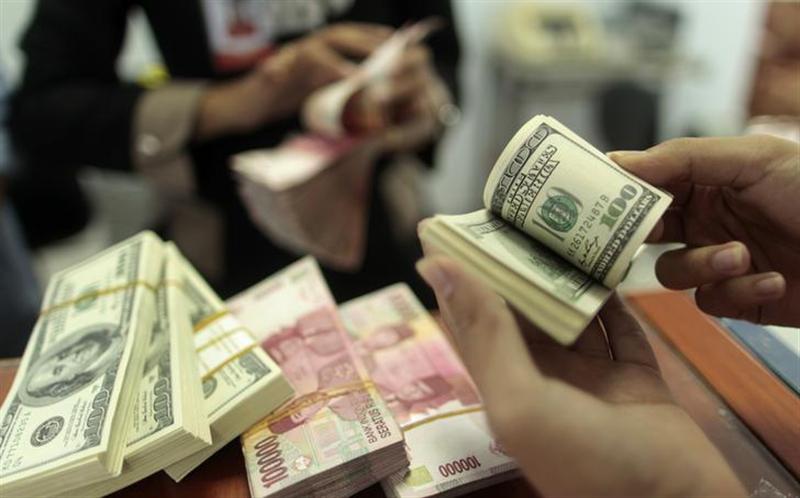
TOKYO, Feb 1 — The safe-haven dollar found support at the start of a new week with traders remaining wary amid the battle on Wall Street between hedge funds and retail investors.
Wrangling over the size of President Joe Biden’s fiscal stimulus package and delays to vaccine rollouts also weighed on sentiment, stoking demand for safer assets.
“What happens in the next one day to one week to one month is probably in the hands of risk sentiment,” said Ray Attrill, head of forex strategy at National Australia Bank in Sydney.
“If we do see a deeper equity correction, I’ve got no doubt that the US dollar can show a little bit more strength.”
The dollar index was little changed at 90.58 early today, holding on to last week’s gain of about half a per cent, as Asian stocks traded weaker for a fifth session.
The gauge has been largely range-bound in recent weeks, after bouncing from a nearly three-year low of 89.206 at the start of the year.
Investors are trying to evaluate whether an almost 7 per cent selloff in 2020 — driven by expectations of a global pandemic recovery amid massive fiscal spending and continued ultra-easy monetary policy — is likely to continue.
A group of Republican senators are urging Biden, a Democrat, to significantly downsize his proposed US$1.9 trillion (RM7.6 trillion) pandemic relief package, and have floated a US$600 billion alternative.
Elsewhere, Wall Street is bracing for more volatility after retail investor groups that organised via social media targeted hedge fund short positions, with some traders worried that the wild swings in GameStop and other stocks could foreshadow a market correction.
The dollar slipped 0.1 per cent to ¥104.63 (RM4.04), further retreating from the 2-1/2-month high of 104.94 touched on Friday.
The euro was little changed at US$1.2132, as it continued to dither in a narrow range.
The riskier Aussie dollar dipped following new signs of weakness in the recovery in China, a key customer for Australian commodities.
Australia’s currency sank as low as 76.06 US cents early in the session before recovering to be little changed at 76.307 cents.
Data from the weekend showed China’s factory recovery slowed in January, hobbled by a wave of coronavirus infections. — Reuters
Shell announced in October it would increase its spending on low-carbon energy to 25 per cent of overall capital expenditure by 2025 and the sources said that would translate into more than US$5 billion (RM20.2 billion) a year, up from US$1.5 billion to US$2 billion now. — Reuters pic
LONDON, Feb 1 — Royal Dutch Shell is betting on its expertise in power trading and rapid growth in hydrogen and biofuels markets as it shifts away from oil, rather than joining rivals in a scramble for renewable power assets, company sources said.
Shell and its European rivals are seeking new business models to reduce their dependency on fossil fuels and appeal to investors concerned about the long-term outlook for an industry under intense pressure to slash greenhouse gas emissions.
Shell will present its strategy on February 11 and unlike Total and BP the company will focus more on becoming an intermediary between clean power producers and customers than investing billions in renewable projects, the sources said, giving previously unreported details of the plan.
Shell announced in October it would increase its spending on low-carbon energy to 25 per cent of overall capital expenditure by 2025 and the sources said that would translate into more than US$5 billion (RM20.2 billion) a year, up from US$1.5 billion to US$2 billion now.
The Anglo-Dutch company will, however, keep its overall oil and gas output largely stable for the next decade to help fund its energy transition, though gas is set to become a bigger part of the mix, the sources told Reuters.
A Shell spokeswoman declined to comment on the details of the company’s new strategy ahead of its February announcements.
BP, meanwhile, plans to slash its oil output by 40 per cent by 2030 and has swept aside its core oil and gas exploration team to focus on renewables, with spending on low-carbon energy set to rise 10-fold to US$5 billion over the coming decade.
While Europe’s big oil firms are all rolling out strategies to survive in a low-carbon world, investors and analysts remain sceptical about their ability to transform centuries-old business models and triumph in already crowded power markets.
Power trading
Central to Shell’s plans are its experience in trading all types of energy from oil to natural gas to electricity and its vast retail network, which has more outlets than either of the world’s two biggest food chains, Subway and McDonald’s.
Shell is already the world’s leading energy trader, an activity it calls “marketing”. It trades about 13 million barrels of oil a day, or 13 per cent of global demand before the pandemic, using one of the biggest fleets of tankers.
It is the top trader of liquefied natural gas (LNG), buys and sells power, biofuels, chemicals and carbon credits, and now aims to use its pole position to snare a large chunk of the fast-growing low-carbon power market.
“The future of energy is particularly bright for our marketing and our customer-facing businesses where we already have scale. So we will accelerate a growth plan which is already underway,” Chief Executive Ben van Beurden said in October.
Trading has been key for oil majors for decades, allowing them to use their global operations to quickly take advantage of changes in supply and demand. Shell’s trading helped it avoid its first-ever quarterly loss in the second quarter of 2020 even as consumption plummeted due to the coronavirus epidemic.
Nevertheless, analysts say Shell’s trading division will face a challenge because it is heavily reliant at the moment on sales of refined fossil fuel products, which also account for a large proportion of its carbon emissions.
“Shell faces difficult choices on how to balance its trading cash flow that leverages oil products while still having carbon-intensive operations,” JP Morgan analyst Christyan Malek said. “But because of their scale, customer base and distribution, they can be much more flexible.”
Hydrogen hubs
At the same time, Shell plans to boost its consumer base by expanding its electricity supply business for homes and its network of electric vehicle charging points, as well as signing long-term corporate power purchase agreements (PPA).
Shell already has 45,000 retail outlets worldwide, far more than its European rivals, and it is planning to add another 10,000 by 2025.
As a major biofuel producer, Shell wants to ramp up its production of fuel made from plants and waste as an alternative source of energy for transportation, the sources said.
Shell’s is also betting on future growth in hydrogen, the sources said. While still a niche market, hydrogen has attracted huge interest in recent months as a clean alternative to natural gas for heavy industry and transportation.
Hydrogen, and so-called green hydrogen which is made solely with renewable power, comes with high costs and infrastructure challenges though Shell is already investing.
Its push will centre initially on Europe, where it is developing a hydrogen hub in Hamburg, Germany, and it is one of several firms developing a hub in Rotterdam in the Netherlands. It is also looking to expand into the United States and Asia.
The US state of California, for example, is backing the rollout of hydrogen fuel cell vehicles to help achieve its climate goals while countries such South Korea and Japan are betting heavily on hydrogen as an alternative fuel.
The sources did not give any targets for increases in Shell’s production of either hydrogen or biofuels.
Like Shell, rivals including BP, Total, Italy’s Eni and Spain’s Repsol also plan to expand in hydrogen and biofuels markets, as well as add electric vehicle charging points to generate new revenue away from oil.
Competitive edge?
However, Shell won’t chase the same ambitious targets some of its European rivals have for adding wind and solar generation capacity and will prioritise trading and selling electricity instead, the sources said.
Shell is wary about investing heavily in renewable projects where it won’t have any particular competitive edge over other oil companies or utilities, such as Spain’s Iberdrola and Denmark’s Orsted that are already becoming significant green energy producers.
Shell will still expand its renewable capacity, especially in offshore wind farms where it believes it has an advantage after years of operating offshore oilfields, but the business will centre on profitability rather than size, the sources said.
“Shell will have some volumetric targets but that is not the focus,” a senior company official told Reuters. “A single focus on the volume of renewable energy generating capacity could be dangerous and lead us to some bad deals.”
BP wants to boost its renewable generation capacity 20 fold by 2030 while Total is aiming to have 100 gigawatts (GW) of gross renewable energy generation capacity by 2030.
Investors are concerned, however, that they may struggle to hit their profit projections by investing in costly renewable projects which typically have lower rates of return than oil.
Shell provided some details on its new strategy on October 29, including a plan to narrow its oil and gas production to nine hubs, cut the number of refineries to six from 14 and boost its marketing business.
The company also announced plans to cut its workforce by up to 9,000 employees, or about 10 per cent, by August this year as part of a broad cost-cutting review known as Project Reshape. — Reuters