Britain's Prime Minister Boris Johnson insisted the new vessel’s role will be “distinct” from those of forerunners, 'reflecting the UK’s burgeoning status as a great, independent maritime trading nation'. — Reuters pic
Subscribe to our Telegram channel for the latest updates on news you need to know.
LONDON, May 31 — Britain will build what it is calling a new “national flagship” vessel to host trade events and promote its post-Brexit interests around the world, Prime Minister Boris Johnson announced Saturday.
The ship will provide a global platform for high level trade negotiations as well as British businesses’ products, his office said, as the United Kingdom seeks new trading ties after leaving the European Union last year.
It will also be expected to play a role in delivering the country’s foreign and security policies, including by hosting summits and other diplomatic talks.
It will be the first so-called national flagship in service since 1997, when the Royal Yacht Britannia was decommissioned.
However, Johnson insisted the new vessel’s role will be “distinct” from those of forerunners, “reflecting the UK’s burgeoning status as a great, independent maritime trading nation”.
“Every aspect of the ship, from its build to the businesses it showcases on board, will represent and promote the best of British — a clear and powerful symbol of our commitment to be an active player on the world stage,” he said in a statement.
The ship’s construction is expected to begin in 2022 and be completed within four years, with its costs confirmed following a competitive tendering process, according to Johnson’s office.
The vessel, yet to be named, will be crewed by the Royal Navy and earmarked for around 30 years’ service.
The government is likely to face calls to name it after Prince Philip, Queen Elizabeth II’s late husband and a former navy commander, who died in April aged 99.
Britain formally left the EU after nearly five decades of membership in January 2020, and quit its single market and customs union at the start of this year.
It has replicated or rolled over existing trade agreements with the bloc, Japan and several other countries, but is yet to strike an entirely new deal with any country.
London is currently in advanced discussions with Australia and has held initial talks with India, New Zealand and the United States about future pacts. — AFP
This picture shows the swimming pool of a luxury villa for sale on one of the Palm Jumeirah man-made island, on the coast of the Gulf emirate of Dubai, on May 19, 2021. — AFP pic
Subscribe to our Telegram channel for the latest updates on news you need to know.
DUBAI, May 31 — Dubai’s property market is powering out of a six-year malaise as “lockdown dodgers” and wealthy international investors drive a buying frenzy that is breaking records and fuelling an economic recovery.
Luxury villas are the hottest segment in the market, with European buyers in particular seeking homes on Dubai’s signature Palm Jumeirah man-made island, as well as golf course estates.
Dubai’s rollercoaster property market, which had been in steady decline since 2014, went into flatline after Covid-19 hit last year and the emirate slammed shut its borders, said Zhann Zochinke, chief operating officer of consultancy Property Monitor.
“Then straight after that lockdown period we started to see transaction volumes increase, and they really haven’t stopped since,” he told AFP.
“We’re now seeing record month-on-month gains and transaction volumes.”
The Gulf emirate became one of the first destinations to reopen to visitors last July, pairing the open-door policy with strict rules on masking and social distancing, and an energetic vaccination programme which has produced some of the highest inoculation rates globally.
Despite a surge in coronavirus cases in the new year after holidaymakers descended en masse, life has continued largely as normal with restaurants and hotels open, and few of the restrictions that have blighted life elsewhere.
“The lockdown dodgers from other countries? I think we’re seeing a lot of that there,” Zochinke said, adding that other draws were more relaxed residency rules and a decision to allow full foreign ownership of firms.
‘Not just a construction site’
The flood of arrivals has regenerated the tourism industry, long an economic mainstay of Dubai which has little of the oil wealth that powers its neighbours, and helped business activity recover to pre-Covid levels in April, according to IHS Markit.
“Travel and tourism firms recorded the most notable bounce in performance, amid increasing hopes of a rise in tourism activity later in the year, boosted by the rapid vaccine roll-out,” said the research firm’s economist David Owen.
After years of torpor when homeowners watched their equity drain away, the surge in luxury properties above 10 million dirhams (RM11.2 million) has been striking, with 90 transactions in April compared to around 350-400 on a regular yearly basis, according to Property Monitor.
A mansion on the Palm has sold for 111.25 million dirhams, the highest price reached in years in the precinct which features 16 “fronds” lined with show-stopping houses and supercars parked in the driveways.
The highest-priced property now available on the block is a vast Italian-inspired modern villa positioned at the end of one of the fronds, complete with 180 degree beach frontage, which is being offered for 100 million dirhams.
After it languished on the market during the gloomy days at the height of the pandemic, the developers are hoping that one of the new breed of cashed-up Europeans will be tempted by the infinity pool, private cinema, and acres of marble and glass.
“I think people have started to realise that Dubai is not just a construction site anymore, which it was maybe 10 years ago when we had the most amount of cranes in the world,” said Matthew Bate, CEO of BlackBrick, one of the agencies representing the property.
‘Covid opened the doors’
“People are now looking at Dubai and saying — I’m going to make this my primary home. I can work from Dubai and still manage business in Europe or North America or Asia,” he said.
“So I think what Covid ultimately did, it opened the doors for us to the rest of the world.”
In a market where many fortunes have been made and lost, there is nervousness about whether the recent giddy rises can be sustained.
Sales of properties above 10 million dirhams rose 6.7 per cent in April compared to the previous month, and 81 villas were sold on the Palm in April alone compared to 54 in all of 2020, according to Property Monitor.
Even with the remarkable gains, the market is still off its highs of 2014, and the apartment market is trailing far behind.
The financial services firm Morgan Stanley, however, said in a recent report that the rally isn’t likely to stop soon.
“Robust demand, peaking supply growth and long lead times for new projects could lead to a tighter-than-expected market over the next several years,” it said.
It credited “a wave of government reforms over the past 12 months, attractive mortgage rates, and a shift in demand patterns due to Covid-19”. — AFP
Sanjeev Gupta's Liberty Steel company — one of the world's largest steel empires — faces an uncertain future, after announcing plans to sell three of its UK plants. — AFP pic
Subscribe to our Telegram channel for the latest updates on news you need to know.
LONDON, May 31 — Sanjeev Gupta’s Liberty Steel company — one of the world’s largest steel empires — faces an uncertain future after announcing plans to sell three of its UK plants.
Liberty employs 3,000 UK workers and parent company Gupta Family Group (GFG) Alliance has 35,000 employees around the world, with metalworks and mines in Europe, the United States and Australia.
Gupta was once seen as the saviour of British steelmaking but is now fighting for survival following the collapse of its main lender Greensill Capital and fraud allegations.
The Indian-British billionaire has insisted none of his 12 UK sites will close.
Yet this week’s decision to sell three plants in northern and central England plunges 1,500 jobs into uncertainty and comes after three of GFG’s French auto parts factories sought bankruptcy protection last month.
Clive Royston, who represents the Community trade union at Liberty’s Stocksbridge site in northern England, said he wants Liberty to be a “responsible seller” and find a buyer who will “not just strip off assets”.
“We’re worried and don’t have any details. It’s hard because they (workers) are asking questions and I can’t answer,” he told AFP.
Liquidity crisis
Supply chain finance firm Greensill contributed to GFG’s expansion through short-term corporate loans and avoided the stricter regulations imposed on traditional banks.
But its abrupt collapse in March triggered a liquidity crisis at GFG as creditors sought to recall their loans.
It has been reported that Greensill had £3.5 billion (RM20.5 billion) of exposure with GFG.
Greensill’s lawyers claimed its demise could threaten 50,000 jobs worldwide.
Liberty has reportedly not repaid an £18-million loan to Metro Bank, which accuses it of breaching “covenants and restrictions”. Liberty denies the claims.
Negotiations with Swiss banking giant Credit Suisse, which had 10 billion euros of exposure with Greensill, continue.
The UK government rebuffed Liberty’s request for a £170-million bailout due to concerns over opaque corporate structure and governance.
‘Red Flag’ -
The risky nature of supporting distressed companies means investors either make huge profits or lose their whole investment, said Dirk Jenter, of the London School of Economics and Political Science.
As sustaining firms can be investors’ best way to recoup their loans, “they (Liberty) are scrambling for money and trying to sell their most liquid assets. It’s an attempt to buy time to keep the company alive,” he added.
Gupta was the majority owner of the indebted Wyelands Bank, which was probed by the Bank of England in 2019 and wound down in March amid allegations of favouring Gupta’s associates.
This month, the UK’s Serious Fraud Office opened an investigation against GFG for alleged fraud, fraudulent trading and money laundering, including its financing activities with Greensill.
Jenter said this investigation and allegations of providing fake invoices would deter potential investors and compound Liberty’s financial woes.
“It’s a red flag. It would take an extraordinarily courageous investor to rely on the numbers provided by Liberty. It makes risking equity almost impossible,” he told AFP.
‘A foundational industry’
Union representative Royston said coronavirus “crippled” Stocksbridge, which supplies the hard-hit aerospace sector, and stressed the need to protect jobs that have defined the region despite several ownership changes over the years.
“There’s not much industry around us. Stocksbridge has been built around the plant. As a lad, you follow your father into the steelworks,” he added.
David Bailey, from the University of Birmingham business school, said all British steel manufacturers faced broader challenges, including higher electricity prices and business rates.
A longstanding glut in the global steel market and Chinese dumping have also undercut British steelmakers.
“You might have a period where companies are successful for a while, then these problems raise their heads again. Liberty ran into issues that are more structural,” he said.
“They were far too reliant on Greensill when it went under and left themselves too exposed.”
Bailey believes the British government should intervene with an American-style conservatorship — whereby the state runs and reforms companies before returning them to the private sector — to improve competitiveness and prevent damage to related industries.
“There’s a big threat to jobs and this is a foundational industry. We should be doing more to preserve it,” he said.
UK business minister Kwasi Kwarteng recently told lawmakers nationalisation was “unlikely”.
Government support for steelmakers is linked with decarbonisation as the sector pursues an 80-per cent reduction in carbon emissions by 2035.
Liberty has committed to achieving carbon neutrality by 2030 by using more scrap metal and electric arc furnaces powered by renewable energy sources. — AFP
Closed factories meant sales at Ferrari tumbled 10 per cent last year, to 9,119. — Reuters pic
Subscribe to our Telegram channel for the latest updates on news you need to know.
PARIS, May 31 — The global rebound from the coronavirus pandemic is revving luxury carmakers’ sales to never-before-seen heights, as order books at the likes of Lamborghini, Ferrari and Rolls-Royce burst with demand from the world’s wealthy.
Just like regular earners around the world, the richest cut back on consumption during 2020, with “double-digit” falls in sales for makers of the most coveted cars, says Felipe Munoz of market research firm Jato Dynamics.
But “customers for these cars were not as exposed as others” to the crisis’ financial fallout, he adds.
For the wealthy, “most of the problem was that they couldn’t get out of their houses,” Munoz says. “They postponed their purchases.”
The rebound for exclusive cars was already underway in the final quarter of 2020 as they reached for their platinum credit cards again, cushioning the pandemic blow by comparison to mass-market manufacturers.
Annual sales last year at Volkswagen-owned Lamborghini sped past their 2019 record to 7,430 vehicles, driven by the Italian manufacturer’s hefty Urus SUV clocking in at around €200,000 (RM1 million).
Closed factories meant sales at Ferrari tumbled 10 per cent last year, to 9,119.
But bosses say the black-horse brand now has an “order book at record levels”, powered by the 450,000-euro SF90 Stradale — the carmaker’s first plug-in hybrid — as well as the windscreen-free two-seater Monza, believed to cost around 1.7 million euros.
Ferrari hopes to top the 10,000-unit mark next year, when it becomes the final luxury producer to offer an SUV with the “Purosangue”.
‘Time to enjoy life’
“The luxury market still has very specific rules and customers,” Deloitte car industry analyst Guillaume Crunelle says.
“Behaviour is much more linked to personal situations, how their wealth is developing, rather than market trends.”
After a year with less consumption, “there is quite some money around to be spent,” Rolls-Royce chief executive Torsten Muller-Otvos tells AFP.
Nevertheless, the BMW subsidiary’s boss also sees the aftereffects of the pandemic in people’s buying patterns.
“Quite a lot of our clients said that Covid taught them that life can end easily tomorrow and now is time to enjoy your life.”
This week the historic British brand launched a yacht-inspired model, the “Boat Tail”, of which it has so far built just three units — and won’t reveal the price.
Muller-Otvos says that the new car is “much more refined” than its last custom build, the Sweptail, which cost in the region of US$13 million (RM53.7 million).
Going to China
Rolls-Royce’s one-offs notwithstanding, most even among the priciest manufacturers swept along in trends like the unstoppable march of the SUV — and an environment-conscious turn to electrification, Deloitte’s Crunelle points out.
Jato Dynamics’ analysis showed that sports cars made up just five per cent of luxury sales last year, while SUVs’ market share outpaced coupes for the first time.
In Britain, Bentley and McLaren laid off thousands of workers as the virus outbreak began — only for Bentley to book record sales of 11,000 units driven by the 200,000-euro Bentayga SUV.
Rolls-Royce saw its best-ever quarter in early 2021, powered by its New Ghost coupe and 2.6-tonne, 350,000-euro Cullinan SUV — the most expensive on the market.
And James Bond favourite Aston Martin has returned from the brink of bankruptcy with its almost equally chunky DBX.
Looking ahead, “production for this year is fully booked,” Rolls-Royce’s Muller-Otvos says.
Europe and North American remain solid markets for luxury brands, but China is where most of the growth can be found.
“It’s the world’s top region for wealth building, and cars are still a very potent mark of status,” Crunelle says.
Munoz predicts that “with more and more millionaires and billionaires (in China) each year, the trend is likely to continue”. — AFP
PETALING JAYA: The Covid-19 pandemic and movement control order (MCO) have helped to accelerate the digital transformation of businesses in Malaysia and led to a change in corporate gifting patterns, with companies leaning towards e-gifts.
To many businesses, gifting is a way of establishing and maintaining the relationship with their customers. When businesses embrace digital transformation, corporate gifting is included in the process.
E-gift provider Giftee Malaysia Sdn Bhd’s director, Ryo Okubo (pix), said digitalising gifts creates value and new opportunities for companies and can solve problems that people are unable to do. For example, the conventional promotional campaign uses physical vouchers and manpower is required to distribute paper vouchers. It can be difficult to track paper vouchers when it comes to distribution and redemption.
“The e-gift system makes tracking easy as inventory management, printing, physical distribution are no longer required. Thus, promotional campaigns can be conducted at lower cost. The pandemic and MCO made people realise the value of digital gifts and digitalising businesses,“ Okubo told SunBiz.
He explained that during MCO, there are limitations to visiting or gathering during festive celebrations. People realise that instead of bringing or sending physical gifts, digital gifts become a useful solution due to its convenience. Hence, people, including corporations, are realising that digital gifts are one of the ways to send gifts and show their appreciation, especially during the MCO, to one another.
Giftee Malaysia is a subsidiary of Japan’s Giftee Inc, which is listed on the Tokyo Stock Exchange. Giftee Malaysia paves way for digital gift transition for companies in Malaysia, with its platform providing a total end-to-end solution from e-gift issuance to distribution. Giftee Malaysia has worked with 16 Malaysian brands such as Grab and Tealive in developing e-gifts.
An e-gift is an electronic ticket that can be exchanged for a product or service at a restaurant, café or other retail outlets and can be sent easily by e-mail and social media platforms.
Okubo said Malaysia’s market size for the gifting industry is estimated at US$1 trillion to US$3 trillion (RM4.1 trillion to RM12.4 trillion), which accounts for one-third of the gifting industry size in Japan.
“Malaysia’s gross domestic product growth is dynamic for our business as there are many gifts occasions daily from festive seasons to special occasions such as Hari Raya, Lunar New Year, birthdays and others.”
Okubo said the company is expanding its business in Asean with Giftee Malaysia as its focal point due to the country’s high proficiency in English and high smart devices penetration rate.
“Malaysia is suitable for foreigners as English is widely spoken, culturally diverse, and the smart devices penetration rate is around 93% in the country,“ he said.
He noted that many Malaysian companies want to digitalise their gifting services but do not know how and this is where Giftee comes into play.
Giftee’s Malaysia office was set up in 2018 and Okubo joined the company in 2019 to expand its overseas market. He observed that up to now, digital gifting is still not widely adopted in Malaysia.
However, Okubo pointed out that the e-wallet adoption rate is higher in Malaysia than in Japan and that Japan is still catching up as Malaysians use e-wallets more frequently.
“In the future, Japan may use Malaysia as a case study as its digitalisation speed is faster than Japan and the fastest to adapt to digitalisation in the region,” he said.
PETALING JAYA: Selected manufacturing and manufacturing-related services (MRS) sectors are allowed to operate during the movement control order (MCO) nationwide from June 1 to 14, 2021, subject to approval letter from the Ministry of International Trade and Industry (Miti) that can be downloaded from the Covid-19 Intelligent Management System (CIMS) 3.0.
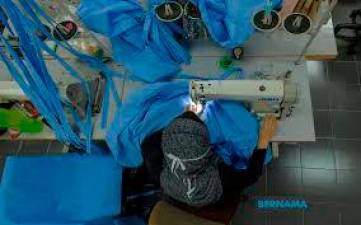
Sectors that are allowed to operate with a 60% workforce are aerospace (including maintenance, repair and overhaul); food and beverage; packaging and printing materials; personal care products and cleaning supplies; healthcare and medical care including dietary supplement; personal protective equipment (including rubber gloves, and fire safety equipment); medical equipment components; electrical and electronics; oil and gas (including petrochemical and petrochemical products); chemical products; machinery and equipment; textiles for manufacturing of PPE only; and production, distillation, storage, supply and distribution of fuels and lubricants.
Sectors that are allowed to operate with a 10% workforce are automotive (vehicles and components); iron and steel; cement; glass and ceramics.
“The manufacturing and MRS sectors that are allowed to operate are to ensure minimal disruption to the supply chain of critical parts, components and finished products. This is essential to support the continued operations of critical infrastructures and front-liners such as security, healthcare systems, information and communications and as well as ensure adequate supply of basic necessities for the rakyat,” Miti said in a statement today.
Effective yesterday, manufacturing companies that have already registered with CIMS 3.0 are required to download the new Miti approval letter and where necessary, update their workers’ list. For manufacturing companies that have yet to register, submission can be made starting 1pm tomorrow.
In addition, workers in the manufacturing and MRS sectors will be required to present Miti’s approval letter, together with their company-issued letter of employment or staff identification card, to the enforcement authorities to enable their movement to and from their work premises. The current standard operating procedures (SOPs) on work force capacity remains at 60%.
Manufacturers in sectors allowed only for warm idle mode are also required to download the Miti approval letter via CIMS 3.0, subject to a maximum workforce capacity of 10%.
“Manufacturing and MRS sectors that are allowed to operate must ensure strict adherence to the SOPs by the National Security Council and Miti. Failure to comply with the SOPs is a serious offence and may result in fines and/or closure of premises. To ensure effective compliance with the SOPs, comprehensive and stringent enforcement will be carried out by federal and state enforcement agencies,” added Miti.
THE coming full lockdown will have a severe impact on the majority of businesses particularly SMEs and the services sector.
Although many businesses have migrated parts of their operations into the virtual arena, it will not be “business as usual” during the full lockdown since many businesses still require interactions with people on a face-to-face basis. Equally important is the fact that businesses are keeping hardcopy records or in servers at the offices which cannot be accessed remotely.
In the event the tax authorities decide to audit or investigate businesses, taxpayers will face problems in responding within the short timeframe the tax authorities are now becoming accustomed to. It is not uncommon for the Inland Revenue Board (IRB) to request replies from taxpayers to be supplied within seven, 14 or 21 days. Usually, these requests require voluminous documentation to be provided to them as a starting point and thereafter to reply to the issues raised by the IRB.
Once the tax authorities ask questions, taxpayers will have difficulties in providing comprehensive replies together with the supporting documentation within the timeframe provided (especially during the lockdown period).
During the full lockdown, taxpayers working from home may not have access to their servers remotely or to the hardcopies of the documents or an opportunity to gather documents from third parties to substantiate and present their case.
In areas where the taxpayers need to explain the facts, the law and the circumstances which gave rise to the tax positions they have taken in the tax returns, a face-to-face meeting is an absolute necessity. However much you try during virtual calls, it is not the same as meeting the person face-to-face to present the taxpayer’s side of the case as there will be interruptions due to the connectivity problems or there will be time lag in the voice and picture transmissions. It is just not the same as presenting your case in person.
In such difficult circumstances, it will be unfair if the authorities raise assessments without giving the taxpayer the full opportunity to provide their explanation and answers on the positions taken. Where assessments have been issued prior to the current lockdown, and there is a deadline to settle the taxes hanging “over their heads”: Do businesses try and survive, or do they prioritise their activities to defend their case and settle the tax dues to the tax authorities?
Plea to the tax authorities
Businesses have to survive before taxes can be collected. The plea from taxpayers to the IRB and Finance Ministry is to exercise leniency on the imposition and collection of tax by allowing automatic extension of time for at least one month for the payment of outstanding taxes, filing of tax returns, filing of appeals, and replying on any matters raised from tax audits and investigations.
The tax authorities have indicated that their officers will be working during this period and they will have access to internet. This is welcomed. However, communication with them via emails may not always be efficient. It will be recommended if the officials can make themselves more accessible through their mobile phones. Speaking to the officers in person will be more helpful than communicating via the internet.
The latest full lockdown will be a great challenge to businesses and tax authorities. Deferring taxes and allowing extension of time will not reduce the tax collection but merely defer it. This will allow businesses to focus on how to survive the current full lockdown and keep the staff employed.
Thisarticle was contributed by Thannees Tax Consulting Services Sdn Bhd managing director SM Thanneermalai.
AS aptly described by Transparency International UK, corruption is a malign force which perpetuates poverty, sows insecurity, and robs the world’s most vulnerable people of desperately needed public services. Corruption, as we know, can manifest in many different forms.
Section 17A of the Malaysian Anti-Corruption Commission Act 2009 (MACC Act) which came into force on June 1, 2020 brought about much-anticipated change to the anti-corruption landscape. Section 17A is aimed at fostering good corporate governance practices and promoting the importance of conducting business activities with integrity.
With the first charge underway, the MACC is now no longer accepting ignorance as an excuse.
Essential features of Section 17A
Section 17A of the MACC Act provides that a commercial organisation may be prosecuted alongside its “director, controller, officer or partner”; or persons who are “concerned in the management of its affairs”, if “persons associated” with the company offer a bribe to a third party for the company’s benefits. “Persons associated” covers directors, partners, employees of the organisation (whether temporary or fixed), as well as those performing services for or on behalf of the organisation (agents, distributors and more).
Significantly, Section 17A includes a deeming provision whereby once an offence has been committed by a commercial organisation, there is a presumption of criminal liability on directors and management personnel; and such presumption can only be successfully discharged if the following can be satisfied. First, if it can be proven that the offence was committed without their consent or participation. Second, if all relevant due diligence exercises have been carried out to prevent the commission of the offence itself, considering the nature of the individual’s function in that capacity and the circumstances of the case.
There is, however, an opportunity for redemption, as an organisation can be absolved of liability if it can demonstrate that adequate procedures were in place to prevent associated persons from committing the corrupt act. As a corollary to a successful defence by the organisation, the deeming provision against directors and management will not be triggered.
If an organisation is found to be in contravention of Section 17A, the maximum penalty for this offence is a fine at least 10 times the value of the bribe or RM1 million, whichever is higher; or up to 20 years imprisonment for the officers of the company, or both.
Recent events
On March 18, 2021, a milestone was marked under the MACC Act with the first company, Pristine Offshore Sdn Bhd having been charged under Section 17A. It was alleged that Pristine’s former director had paid a bribe of RM312,350 to the COO of Deleum Primera Sdn Bhd to ensure that Pristine would be awarded a subcontract from Petronas Carigali Sdn Bhd.
This case will set the benchmark on what constitutes “adequate” for a commercial organisation to successfully rely on the adequate procedure defence.
Interestingly, in the UK case of R v Skansen Interiors Limited (2018) where a company failed to assert the adequate procedure defence, it was raised by the prosecution that there were some contemporaneous records of the company’s efforts to respond to the new offences under the UK Bribery 2010 Act such as a failure to indoctrinate a compliance culture, and no evidence that the company had ensured that its staff had read the company’s anti-bribery policies. The Malaysian Courts may take a similar approach and delve into the steps taken by an organisation in view of section 17A coming into force.
Practical steps
Regardless of the lack of Malaysian case law to draw examples from, it is apparent from the Guidelines on Adequate Procedures issued by MACC, that the bar to consider whether there are adequate procedures in place will be high. When assessing a commercial organisation’s current policies on anti-bribery and anti-money laundering, there are some key points to consider:
> Are the organisation’s policies sufficiently detailed (if it meets the key requirements under the five TRUST principles as advocated by MACC)?
> Are the procedures and policies wide enough to cover gifts, hospitality, entertainment, donations and sponsorships, conflicts of interests, facilitation payments, financial and non-financial controls, record keeping and whistleblowing?
> Is there an awareness, amongst all employees, of such policies, not just the senior management?
> Does the organisation’s risk assessment scope cover both external and internal risks?
> Is there a risk assessment committee in place that regularly oversees and reviews the current policies and processes in place?
It is important for all organisations and senior personnel within corporate organisation to start taking stock of their existing policies and procedures to assess whether they stack up to the expectations of MACC, and if not, to seek legal advice to start building up its adequate procedures.
Thisarticle was contributed by Deborah Low Yuen Yen of Christopher & Lee Ong.
A BILLBOARD displays a “separation at source” message on waste disposal. The billboard can be seen as future rubbish as it did not carry a valuable message, for example, on types of waste that can be separated or even what waste can be recycled. This type of wasteful public relations has been ongoing for far too long compared to workable solutions on the ground.
Just recently, a few fast-moving consumer goods firms announced that they will reduce packaging materials to ensure that they play their role under the “extended producers’ responsibility”. This is a step in the right direction. These firms are going to reduce packaging and reduce the waste that is going to landfills. But this is just the tip of the iceberg.
Over a decade ago, the Association of Water and Energy Research Malaysia (Awer) conducted a study on phasing-out non-energy-efficient products and proposed a model for a “take back” policy that can be co-driven by industry and the government. In this study, we found the possibility of high loads of electronic waste (e-waste) going into the solid waste stream as well as illegal dumping. Thus, strict laws as well as “carrot and stick” were needed to prevent a huge environmental impact. This policy can be extended to include recyclable materials as well.
The following are some steps in the Take Back Policy:
> Retailers and manufacturers can introduce rebate system to customers that return old product to buy new product. This can assist to capture large volume of e-waste and scheduled waste (with mercury).
> Solid waste collectors that are regulated under JPSPN (Department of Solid Waste and Public Cleansing) will be collecting e-waste and scheduled waste (with mercury) periodically. This collection scheme is known as 2 + 1 system, where two days of wet waste (organic material tainted waste) collection followed by one day of dry waste (materials for recovery) collection. Such a mechanism is important to capture the e-waste and scheduled waste (with mercury). It will also prevent the wastes from contaminating landfills or ending up in illegal dumping sites. However, a few states in Peninsular Malaysia do not follow this scheme. In addition to that, Sabah and Sarawak are not part of National Solid Waste Management and Public Cleansing Act 2007. This is where the participation of retailers and manufacturers becomes vital to ensure success in e-waste and scheduled waste (with mercury) collection.
> Recycling centres will play a role too. But storage capacity would be a limiting factor when it comes to large sized e-waste. Providing technical knowledge to recycling centres can assist them to prevent contamination while handling wastes involving electrical and electronic products.
> Second-hand product dealers are another waste in-flow input. Useful items are extracted from used products and the remaining items are dumped without supervision. Thus, the Take Back Policy can assist in minimising this loophole.
> Illegal dumping is bound to take place in any country. Therefore, legal actions must be taken against these activities. Some of the heavy metals contained in e-waste and scheduled waste (with mercury) pose high health risks. The recovered waste should be handled accordingly to be plugged-in back into the Take Back System.
> Transportation and storage play a vital role in ensuring continuous flow of e-waste and scheduled waste (with mercury) to ensure a sustainable resource recovery activity. Trained personnel are needed to ensure proper management of these wastes.
> Partial recovery plants will process selected materials within their premises. There might be residues which could not be recovered further generated during the recovery process. There residues need to be disposed of safely.
> Full recovery plants may process wastes directly or by-products of partial recovery plants. Again, there might be residues which could not be recovered further generated during the recovery process. There residues need to be disposed of safely.
> Once resource recovery is achieved, the resources will be channelled back to manufacturing process and reducing the need to mine more resources from nature. This completes the “cradle to cradle” approach.
Thus, meeting “net zero” may take time as we need to ensure proper system is available to “pump back” resources into demand zones of manufacturing sector. The government agency’s separation at source only reached billboard after 14 years. The environment cannot wait.
Thisarticle was contributed by Piarapakaran S, president of the Association of Water and Energy Research Malaysia (Awer), a non-government organisation involved in research and development in the fields of water, energy and environment.