01 June 2021

Coinbase wants to start its own ‘media arm’ to fight crypto misinformation

Coinbase is seeking to create its own media arm to fight against misinformation about cryptocurrencies. — AFP pic

Follow us on Instagram and subscribe to our Telegram channel for the latest updates on news you need to know.


NEW YORK, June 1 — The cryptocurrency exchange platform Coinbase plans to become — in its words — a “source of truth,” arguing that journalists are essentially bullies riddled with conflicts of interest.

In fact, the firm considers that every tech company should speak directly to its audience, effectively becoming media companies in their own right.

Interest in cryptocurrencies seems to grow with each passing day. But as interest grows, it can become difficult to unravel fact from fiction in an economy that is still largely misunderstood. In fact, even crypto-economy investment “experts” sometimes seem overwhelmed.

For Coinbase, the rise of false information published in the press or on social media is a growing and dangerous issue. While intentions are not always negative, the fact remains that everyone seems to have their own opinion on the subject — opinions that people don’t hesitate to share, regardless of the potential impact of false information.

On the basis of these somewhat noble intentions, Coinbase is planning to create its own media arm. In a blog post, the firm outlines three potential courses of action: let it happen, fight it or “publish the truth.”

For CEO Brian Armstrong, the latter option offers a middle ground, which involves establishing a direct relationship with the public. As a result, the American company plans to use a “fact-checking” approach to show its transparency, even if that means sharing negative facts about the company.

Creating stories

Taking his point further, Brian Armstrong encourages all companies to become media companies in response to the proliferation of fake news.

For its part, Coinbase will launch a section of its blog called “Fact Check” to fight misinformation about the company, but also about cryptocurrencies in general. In the future, Coinbase also hopes to create its own original content and move beyond checking facts.

Coinbase is effectively joining a new, broader trend in the US. In fact, content creation by tech brands is growing at a rapid pace, as companies create their own communication channels.

Their goal is to drive investment and create stories around their brand. To do this, many companies are hiring content editors and writers to help them create these stories.

But reactions are mixed. While some appreciate the project, others fear that it could lead to a kind of information war, in which answers can never actually be found, or, at least, never with 100 per cent certainty.

And in the cryptocurrency world — where every influencer is above all out to line their pockets — trust still doesn’t come easily, perhaps especially for a company whose core business relies on cryptocurrency exchange and investment. — ETX Studio


Source: Malay Mail

Global economic recovery needs green focus, South Korea summit agrees

South Korean President Moon Jae-in has proposed a 'Green New Deal' aimed at helping his country bounce back from the pandemic while eventually reaching the goal of zero emissions by 2050.— Lee Jin-man/Pool pic via Reuters

Follow us on Instagram and subscribe to our Telegram channel for the latest updates on news you need to know.


SEOUL, June 1 — Top officials from 38 countries agreed yesterday that efforts to rebuild economies from the Covid-19 pandemic should be guided by green principles and seek to reduce global greenhouse emissions.

The delegates, who included some heads of government and representatives of the United States, China and other major economies, adopted a declaration at the end of the 2021 Partnering for Green Growth and the Global Goals 2030, or P4G.

The gathering was hosted by South Korea for two days, mostly online amid the coronavirus pandemic.

“We reaffirm the fight against Covid-19 leaves important lessons for the global response to the climate crisis and believe that the pandemic should be overcome through green recovery as a progressive strategy,” the declaration said.

The participants, including several international organisations, said they would promote public-private partnerships to battle climate change and support sustainable growth.

The document also said a green recovery may also be a turning point in efforts to achieve the goals of the Paris Climate Accord as well as the Sustainable Development Goals, which were adopted by the United Nations in 2015.

South Korean President Moon Jae-in has proposed a “Green New Deal” aimed at helping his country bounce back from the pandemic while eventually reaching the goal of zero emissions by 2050.

In remarks to the forum on Sunday, Moon said that South Korea will raise its goal for reducing greenhouse gas emissions and create a US$5 million fund under the Green New Deal to help speed up developing countries’ transitions to renewable energy.

In the declaration, participants agreed to strengthen international cooperation to promote a transition to renewable energy such as solar and wind, phase out existing coal-fired power plants and halt public financing for overseas construction of such plants, and promote the use of clean hydrogen. — Reuters


Source: Malay Mail

European stocks fall from record but post fourth monthly gain

The pan-European index was down 0.5 per cent, with shares in Frankfurt and Paris dropping 0.6 per cent, each. — Reuters pic

Follow us on Instagram and subscribe to our Telegram channel for the latest updates on news you need to know.


LONDON, June 1 — European stocks slipped from record highs on Monday in subdued trading due to holidays in major markets, but optimism over a swift economic recovery helped the STOXX 600 index mark its fourth straight month of gains.

The pan-European index was down 0.5 per cent, with shares in Frankfurt and Paris dropping 0.6 per cent, each.

UK and US markets were closed for a holiday, keeping trading volumes muted across the board.

Among the top decliners was Deutsche Bank, down 1.3 per cent after the Wall Street Journal reported that the US Federal Reserve told the German lender it was failing to address persistent shortcomings in its anti-money-laundering controls.

Italian insurer Cattolica surged 15.1 per cent after bigger rival Assicurazioni Generali said it would launch a 1.17 billion euros (US$1.4 billion) buyout offer for the company.

Despite lingering worries about rising inflation, the STOXX 600 posted a 2.1 per cent rise in May as economies gradually reopened after lockdowns and central banks reiterated support to aid the recovery.

Dovish comments from European Central Bank (ECB) policymakers, including President Christine Lagarde who said it was too early to discuss slowing its pandemic emergency bond purchases (PEPP), helped support sentiment last week.

Data showed German annual consumer price inflation accelerated in May, advancing further above the European Central Bank’s target of close to but below 2 per cent.

“With headline inflation on the rise, the ECB’s attempt to avoid the taper conversation will become more and more complicated,” said Carsten Brzeski, global head of macro at ING said in a client note.

“However, we think German headline inflation could eventually range between 3 per cent and 4 per cent in the second half of this year.”

Among other movers, Swedish online property listings firm Hemnet rose 2.7 per cent after posting a 24 per cent jump in quarterly sales, helped by demand for large apartments and houses. — Reuters


Source: Malay Mail

Nestle eyes new strategy as leaked file show many products unhealthy

An internal presentation circulated among top executives earlier this year had revealed that more than 60 per cent of Nestle’s mainstream food and drinks portfolio did not meet “recognised definition of health”, the British business daily reported. — Reuters pic

Follow us on Instagram and subscribe to our Telegram channel for the latest updates on news you need to know.


ZURICH, June 1 — Global food giant Nestle said yesterday it was developing a new nutrition strategy after the Financial Times (FT) reported on an internal document showing that most of its food and drinks were unhealthy.

An internal presentation circulated among top executives earlier this year had revealed that more than 60 per cent of Nestle’s mainstream food and drinks portfolio did not meet “recognised definition of health”, the British business daily reported.

The presentation, seen by the FT, revealed that only 37 per cent of Nestle’s food and beverages by revenues (not including products like pet food, baby food and specialised medical nutrition) achieved a rating of over 3.5 under Australia’s five-star health rating system.

Nestle, owner of everything from chocolate to coffee and baby food brands, has for several years been reorganising its activities to focus more on health and wellness as consumers increasingly snub frozen pizzas and sugary drinks.

The Swiss company has among other things been making a major push in vegetarian and vegan products.

“We have made significant improvements to our products,” the Nestle presentation said, according to the FT.

But, it added, “our portfolio still underperforms against external definitions of health in a landscape where regulatory pressure and consumer demands are skyrocketing.”

A Nestle spokeswoman told AFP the company was currently “working on a company-wide project to update its pioneering nutrition and health strategy.”

“We are looking at our entire portfolio across the different phases of people’s lives to ensure our products are helping meet their nutritional needs and supporting a balanced diet,” she said

The initial focus, she added, would be on “assessing the part (of) our food and beverage portfolio that can be measured against external nutrition profiling systems,” like the Australian system.

According to the FT, Nestle is aiming to unveil its new strategy this year.

Quoting an unnamed person familiar with the situation, the paper suggested the company might drop products pushing down its health ratings such as confectionery items. — AFP


Source: Malay Mail

G7 to back minimum global corporate tax and support economy

G7 governments have been pumping trillions of dollars into their economies to keep them alive since the start of the pandemic in March 2020 as repeated lockdowns pushed the world into a deep recession. — Reuters pic

Follow us on Instagram and subscribe to our Telegram channel for the latest updates on news you need to know.


BRUSSELS, June 1 — Finance ministers from the group of seven rich nations (G7) will vow this week to support their economies as they emerge from the pandemic and reach an “ambitious” deal on a minimum global corporate tax in July, a draft communique showed.

G7 officials, set to meet in London on June 4-5, will also say that once the recovery is well established, they will need to “ensure long-term sustainability of public finances”, which is understood to be code for a gradual withdrawal of stimulus.

The G7 comprises the United States, Japan, Britain, Germany, France, Italy and Canada.

“We commit to not withdrawing policy support too soon and investing to promote growth, create high-quality jobs and address climate change and inequalities,” the draft communique, seen by Reuters, said.

“Once the recovery is firmly established, we need to ensure the long-term sustainability of public finances to enable us to respond to future crises,” the draft said, without specifying how the G7 would deem the recovery to be considered firm.

G7 governments have been pumping trillions of dollars into their economies to keep them alive since the start of the pandemic in March 2020 as repeated lockdowns pushed the world into a deep recession.

To help alleviate the strain on public finances, the draft said the G7 strongly supported the efforts of the Organisation for Economic Cooperation and Development (OECD) to set a global minimum corporate tax level that would ensure large multinationals paid their fair share of taxes.

Such a tax would aim to solve the problem of large companies that generate huge revenues but pay very little tax because they set up offices for tax purposes in low-tax jurisdictions.

The solution the OECD is working on would force a minimum global level of tax on all corporate revenues, no matter where a company chooses to set up its headquarters for tax purposes.

“We commit to reaching an equitable solution on the allocation of taxing rights and to a high level of ambition on the rate for a global minimum tax,” the draft said, without mentioning any numbers.

The United States proposed earlier in May to set the minimum tax at 15 per cent, down from the 21 per cent it proposed in April, and the lower level seemed to quickly receive broad backing in Europe.

“We ... look forward to reaching an agreement at the July meeting of G20 finance ministers and central bank governors,” the G7 draft said.

It said there was an overwhelming moral, scientific and economic case for ensuring wide access to Covid-19 vaccines, as the global economy would not be safe until the virus is under control everywhere.

The G7 will therefore call on the International Monetary Fund to use its funds for buying vaccines and on the private sector to step up its contribution too.

The draft said the G7 would also support mandatory climate-related financial disclosures by companies that provide “consistent and decision-useful” information for markets.

“We commit to properly embed climate change and biodiversity loss considerations into economic and financial policymaking, including addressing the macroeconomic impacts and the optimal use of policy levers such as carbon pricing,” the draft said.

The G7 would also seek to coordinate globally on what constitutes sustainable, green investment to avoid confusion among investors. — Reuters


Source: Malay Mail

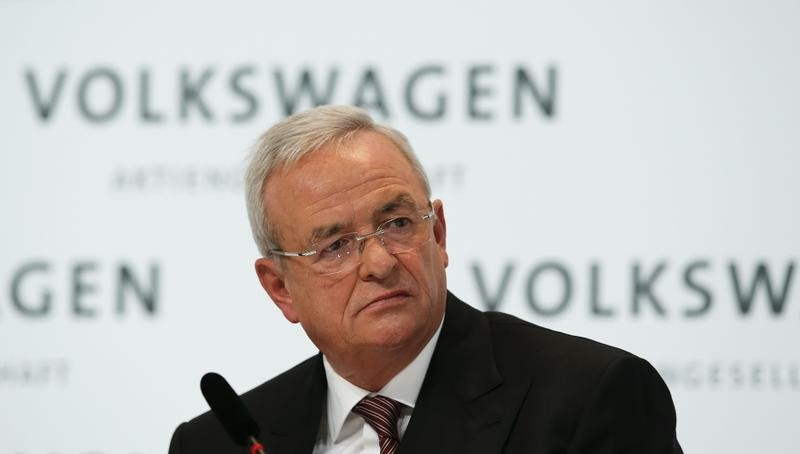
Ex-VW boss to pay 10 mln euros in dieselgate damages, reports Business Insider

Volkswagen had said in March it would claim damages from Martin Winterkorn over the scandal as it tries to draw a line under its biggest-ever crisis. — Reuters pic

Follow us on Instagram and subscribe to our Telegram channel for the latest updates on news you need to know.


FRANKFURT, June 1 — Former Volkswagen chief Martin Winterkorn has agreed to pay around €10 million (RM50.4 million) in damages to the carmaker over the diesel emissions scandal, Business Insider reported yesterday.

Volkswagen had said in March it would claim damages from Winterkorn over the scandal as it tries to draw a line under its biggest-ever crisis.

Business Insider, citing a draft contract, reported that an agreement between the carmaker, Winterkorn and other former executives could be signed this week.

Volkswagen’s supervisory board is scheduled to discuss an agreement over the weekend, two sources with knowledge of the matter told Reuters. An annual general meeting of shareholders in July would then need to sign off on it.

Volkswagen declined to comment. A spokesman for Winterkorn didn’t answer the phone when called for comment.

The German company had said in March that following a far-reaching legal investigation it had concluded Winterkorn had breached his duty of care. Winterkorn has denied being responsible for the scandal.

Volkswagen in 2015 admitted using illegal software to rig diesel engine tests in the United States. The scandal has cost it more than 32 billion euros in fines, refits and legal fees.

Winterkorn resigned as chief executive on September 23, 2015, a week after the scandal broke. — Reuters


Source: Malay Mail

World stocks set for 4th month of gains, yuan slips

May has proven to be a decent month for asset markets, but policymakers are increasingly faced with the dilemma that inflation is running hot while the underlying structural economy is still struggling to gain traction. — Reuters pic

Follow us on Instagram and subscribe to our Telegram channel for the latest updates on news you need to know.


LONDON, June 1 — World equities were firmly on track to post a fourth straight month of gains yesterday, while the dollar struggled broadly ahead of European and US data this week that will provide a clearer picture on the global economy’s recovery path.

MSCI’s broadest index of world stocks drifted 0.1 per cent higher, putting the gauge on track for a 1.4 per cent gain for May. It is the longest monthly rising streak for the index since August 2020, when it marked a five-month run of gains, according to Refinitiv data.

But US stock futures edged lower and European cash equities trading was subdued yesterday due to holidays in the United States and Britain, with benchmark indexes sticking to well-worn ranges.

May has proven to be a decent month for asset markets, but policymakers are increasingly faced with the dilemma that inflation is running hot while the underlying structural economy is still struggling to gain traction.

The main event of the week will be US payrolls on Friday with median forecasts at 650,000, but the outcome is uncertain following April’s unexpectedly weak 266,000 gain.

Although US inflation data last week was above estimates, another big miss on the jobs front would heap pressure on the Fed to postpone plans to wind down its stimulus.

“The question is, therefore, whether by September the Federal Reserve will be in a position to announce a tapering of its bond purchases starting next year, and the odds are quite decent though it might be delayed to December,” said Sebastien Galy, a strategist at Societe Generale.

The Fed next meets on June 16, and this week will be the last chance for members to discuss policy before a pre-meeting blackout period starts on June 5.

So far, investors have taken the Fed at its word that the labour market needs to improve a lot more before it speaks of tapering. That helped yields on US 10-year notes ease to 1.58 per cent with Fed funds futures pricing in a first rate hike by the first quarter of 2023.

Asian shares edged higher, and in Europe indexes consolidated gains after last week’s record close ahead of manufacturing PMI data today.

Among central banks debating inflation trends, the European Central Bank is perhaps the outlier with both policymakers and investors on the same page when it comes to expecting a return to below-target inflation, according to Ulrich Leuchtmann, head of FX and commodity research at Commerzbank.

That was evident in the bond markets too, where yields on benchmark German debt remained well below recent highs.

Yuan pressure

A dovish Fed has also put the greenback under pressure against its rivals with the dollar recouping some of its losses after hitting a three-year low against the Chinese yuan.

The yuan was the big mover in global currency markets after policymakers directed financial institutions to hold more foreign exchange in reserve, a move that analysts say was aimed at curbing yuan strength.

In the offshore markets, the yuan weakened 0.2 per cent versus the US dollar with analysts at ING saying that Beijing’s latest move will slow the currency’s rise but will not halt it completely.

Concerns about global inflation and slowing growth have proved to be a boon for gold, with prices for the yellow metal rising 8 per cent this month, vaulting comfortably above US$1,900 (RM7,836.55).

Oil prices were firm after gaining more than 5 per cent last week to reach two-year closing highs as expectations of a rebound in global demand outweighed concerns about more supply from Iran once sanctions are lifted.

All eyes will be on Opec this week as it reviews its supply agreement, and any hint of an increase in output could pressure prices.

Brent added 1.4 per cent to US$69.69 a barrel, while US crude rose 39 cents to US$67.28.

Unusually quiet cryptocurrencies showed some signs of volatility in holiday-stricken trading with bitcoin rising 4 per cent to US$37,000 while its smaller rival Ethereum climbed 8 per cent to US$2,578. — Reuters


Source: Malay Mail

31 May 2021

OECD sees higher world GDP growth but fears ‘headwinds’

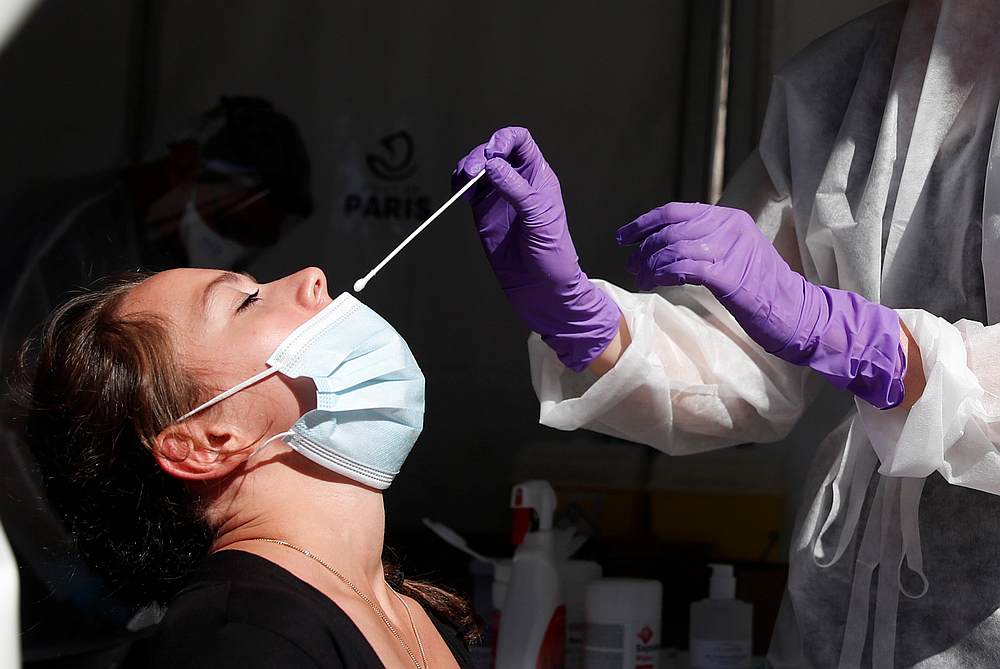
A health worker prepares to administer a nasal swab to a patient at a testing site for Covid-19 in Paris, France, September 14, 2020. — Reuters pic

Follow us on Instagram and subscribe to our Telegram channel for the latest updates on news you need to know.


PARIS, May 31 — The OECD raised its 2021 global GDP growth forecast today but warned that “too many headwinds persist” as not enough Covid vaccines are reaching emerging economies, making the world vulnerable to variants.

The world economy will expand by 5.8 per cent this year, up from a previous estimate of 5.6 per cent, the Paris-based Organisation for Economic Co-operation and Development said in a report.

This follows a massive global recession last year that was caused by lockdowns and travel curbs imposed by governments to slow the spread of Covid-19. 

“It is with some relief that we can see the economic outlook brightening, but with some discomfort that it is doing so in a very uneven way,” OECD chief Laurence Boone said in the report.

The recovery is uneven so far, with the United States and China returning to pre-pandemic levels and forecast to have much stronger growth than other major economies such as Japan and Germany.

The 38-nation organisation, whose members account for 60 per cent of global gross domestic product, applauded the rapid reaction of governments to prop up the economy.

“Never in a crisis has policy support—be it health, with the record speed of vaccine development, monetary, fiscal or financial—been so swift and effective,” Boone said.

“Yet, too many headwinds persist,” she warned.

Boone said it was “very disturbing” that not enough vaccines were reaching emerging and low-income economies.

“This is exposing these economies to a fundamental threat because they have less policy capacity to support activity than advanced economies,” she said.

The warning comes as the emergence of more contagious coronavirus variants has raised concerns around the world, with India battling a strain that has caused a surge in cases and deaths.

“As long as the vast majority of the global population is not vaccinated, all of us remain vulnerable to the emergence of new variants,” Boone said.

‘Vigilance is needed’

New lockdowns would hurt confidence while companies, which are saddled with more debt than before the pandemic, could go bankrupt, she said.

Another risk to global GDP is how financial markets could react to concerns about inflation, the OECD said.

Analysts have voiced concerns that rising inflation will prompt central banks to withdraw their easy-money policies to prevent the economy from overheating.

The OECD said the price increases are only temporary and linked to the economic recovery.

“What is of most concern, in our view, is the risk that financial markets fail to look through temporary price increases and relative price adjustments, pushing market interest rates and volatility higher,” Boone said.

“Vigilance is needed.” — AFP


Source: Malay Mail

Public Mutual declares distributions of RM614m for 10 funds

Malay Mail Social Logo

KUALA LUMPUR, May 31 — Public Bank’s wholly-owned subsidiary, Public Mutual has declared distributions of more than RM614 million for 10 funds for the year ended May 31, 2021.

The company said a gross distribution of five sen per unit has been declared for Public Global Select Fund, 4.2 sen per unit for Public Select Bond Fund, three sen per unit for Public Ittikal Fund, and 2.75 sen per unit for Public Balanced Fund.

The other funds are Public Regional Sector Fund (two sen per unit), Public Islamic Equity Fund and PB Asean Dividend Fund (one sen per unit each), Public Far-East Select Fund (0.8 sen per unit), Public China Titans Fund (0.75 sen per unit), and Public Dividend Select Fund (0.15 sen per unit).

Public Mutual is Malaysia’s largest private unit trust company with more than 160 funds under its management. As at end-April 2021, the fund size managed by the company was above RM100 billion. — Bernama


Source: Malay Mail