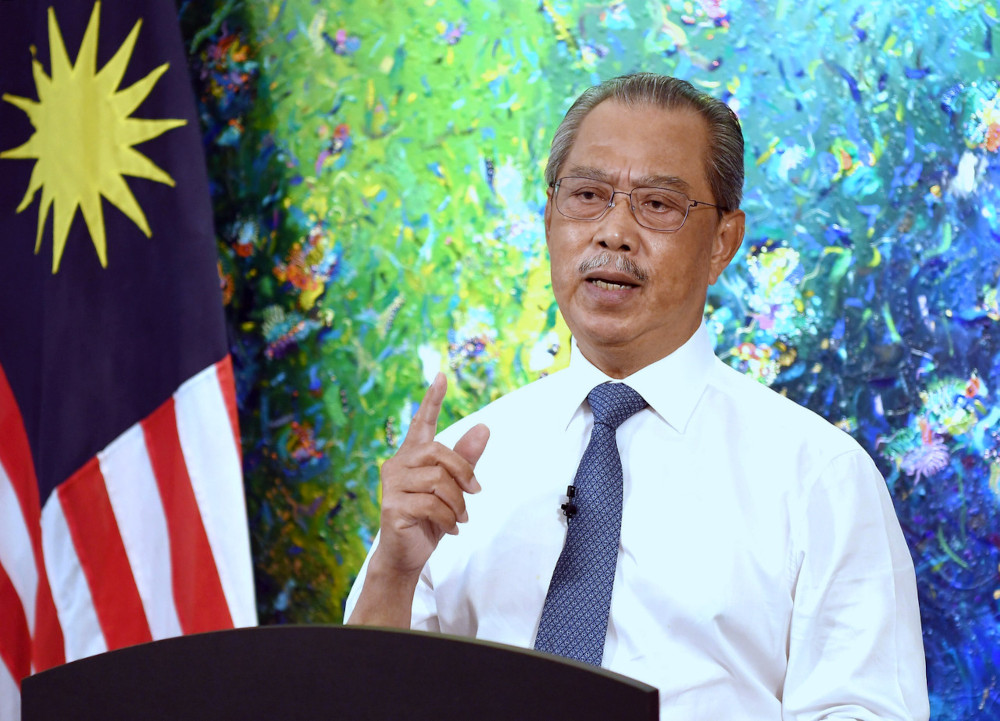
01 June 2021

Opec and allies set for another crude output increase

The Opec+ alliance, consisting of 23 countries, implemented sharp output cuts to support prices after the coronavirus pandemic crushed the global economy last year. — Reuters pic

Follow us on Instagram and subscribe to our Telegram channel for the latest updates


LONDON, June 1 — The Opec group of oil-producing countries and its allies look set to boost production further when they meet today, as pandemic-hit demand for crude recovers.

The Opec+ alliance, consisting of 23 countries, implemented sharp output cuts to support prices after the coronavirus pandemic crushed the global economy last year.

But since early May the cartel has started implementing more generous production increases as oil prices have recovered and the health situation improves in developed economies.

Currently the production roadmap for Opec+ members consists of a series of increases between May and July adding up to some 1.2 million barrels per day (bpd).

On the agenda at today’s meeting, expected to start at 1100 GMT, will be whether this can be extended into August.

“Opec+ currently finds itself in a very favourable situation,” said Eugen Weinberg of Commerzbank.

Among Opec’s allies, Russia has been pushing for faster rises in output but traditional Opec kingpin Saudi Arabia supports a much more cautious note, pointing to the surge of coronavirus infections in parts of Asia.

“As always, the key flashpoint is likely to be tensions between Russia and Saudi Arabia,” said Matthew Weller, global head of market research at FOREX.com.

Vicious Indian third wave

“Russia will undoubtedly push for a more rapid increase in production to support its economy, whereas Saudi Arabia is expected to favour the more conservative path agreed upon last month,” Weller said.

Riyadh could point to how markets have been shaken by a vicious third wave of the virus that has swept through India, the world’s third-biggest consumer of crude after the US and China.

Several other Asian countries have also had to adopt virus-related restrictions, representing a brake on demand.

Opec has remained optimistic in its predictions for 2021, expecting demand to reach 96.5 million bpd, an increase of six million on 2020 levels.

This, combined with Opec’s previous policy of production restraints, means analysts expect the market to tighten sufficiently by August for demand to start outstripping supply.

This has been reflected in recent movements in crude prices, which have climbed back to pre-pandemic levels.

Iranian enigma

Aside from demand, the other factor Opec and its allies must take into account are the actions of other oil-rich states such as the world’s number one producer, the United States.

Changes among the alliance’s members themselves will no doubt also be on the agenda.

After facilities in war-torn Libya began producing again from the end of 2020, eventually adding a million bpd to the market, all eyes will be on Iran.

If negotiations in Vienna on the full revival of the 2015 nuclear deal are successful, it could lead to many economic sanctions on the Islamic republic being lifted, including the US embargo on Iranian oil exports.

If Iran were able to get back to its level of exports three years ago — when then US president Donald Trump withdrew from the nuclear deal and reimposed sanctions — it could mean an extra 1.5 million bpd coming to the market. — AFP


Source: Malay Mail
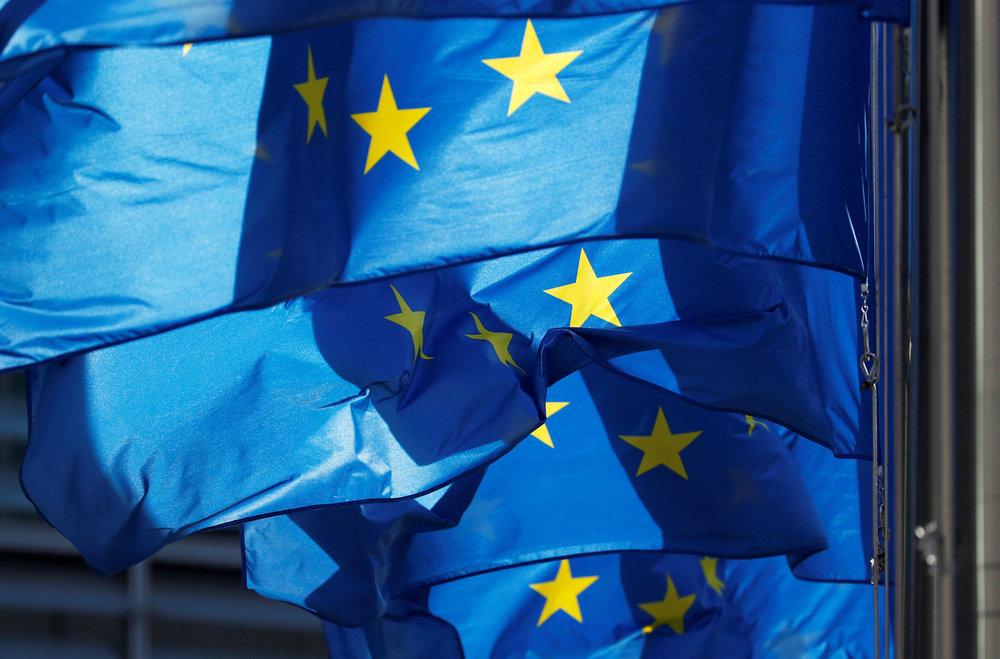
EU set to unveil plans for bloc-wide digital wallet, reports Financial Times

The app will allow citizens across the EU to securely access a range of private and public services with a single online ID, according to the FT report today. — Reuters pic

Follow us on Instagram and subscribe to our Telegram channel for the latest updates


LONDON, June 1 — The European Union (EU) is set to unveil plans for a bloc-wide digital wallet tomorrow, following requests from member states to find a safe way for citizens to access public and private services online, the Financial Times (FT) reported.

The app will allow citizens across the EU to securely access a range of private and public services with a single online ID, according to the FT report today.

The digital wallet will securely store payment details and passwords and allow citizens from all 27 countries to log onto local government websites or pay utility bills using a single recognised identity, the newspaper said, citing people with direct knowledge of the plans.

The EU-wide app can be accessed via fingerprint or retina scanning among other methods, and will also serve as a vault where users can store official documents like the driver’s licence, the newspaper reported.

EU officials will enforce a structural separation to prevent companies that access user data from using the wallet for any other commercial activity such as marketing new products.

Brussels is engaged in talks with member states to provide guidelines on technical standards for rollout of the digital wallet, which is expected to be fully operational in about a year, according to the newspaper. — Reuters


Source: Malay Mail

IHS Markit: Malaysian manufacturing sector continued recovery in May

Williamson said the Malaysia Manufacturing Purchasing Managers’ Index continued to suggest that the second quarter would see the strongest manufacturing upturn, despite an easing of growth in May. — Picture by Sayuti Zainudin

Follow us on Instagram and subscribe to our Telegram channel for the latest updates


KUALA LUMPUR, June 1 — The Malaysian manufacturing sector continued to recover in May as firms reported a second consecutive expansion of new orders but stricter measures to combat a renewed surge in Covid-19 infections had an adverse impact on production volumes, American-British information provider IHS Markit said.

Chief business economist Chris Williamson said May saw a welcome upturn in new orders received by manufacturers and new business has now increased for two consecutive months as global demand continues to revive from the worst of the pandemic.

“However, the recent rise in Covid-19 cases both at home and in many key overseas markets led to further disruptions in May, which dampened production growth and led to further supply chain delays,” he said in a statement today.

Williamson said the Malaysia Manufacturing Purchasing Managers’ Index (PMI) continued to suggest that the second quarter would see the strongest manufacturing upturn, despite the easing of growth in May, but the concern is that the virus could continue to weaken growth in coming months.

“Future growth expectations took a knock in May as the renewed wave of infections served as a reminder that the virus remains a significant risk to the outlook,” he said.

He said the headline PMI, a composite single-figure indicator of manufacturing performance, eased to 51.3 in May from a record high of 53.9 in April, signalling a further improvement in the health of the sector and the first time back-to-back monthly improvements that have been reported since mid-2018.

He added that the historical relationship between the PMI and official statistics suggested that gross domestic product (GDP) broadly stabilised at the start of the year, supported by improved manufacturing output but the impact of the latest tightening of restrictions is yet to feed through to official statistics although the latest PMI data suggested that the sector has stagnated in May. — Bernama


Source: Malay Mail

Investment banks say Pemerkasa+ direct fiscal injection manageable

Investment banks said the direct fiscal injection of Pemerkasa+ was only at RM5 billion, the smallest thus far compared to Pemerkasa worth RM11 billion and the Permai package (RM6.6 billion). — AFP pic

Follow us on Instagram and subscribe to our Telegram channel for the latest updates


KUALA LUMPUR, June 1 — The direct fiscal injection from the RM40 billion stimulus package Pemerkasa+ is set to widen the fiscal deficit for the year but it can be managed without hurting the fiscal bottom line, research firms said.

They said the direct fiscal injection of Pemerkasa+ was only at RM5 billion, the smallest thus far compared to Pemerkasa worth RM11 billion and the Permai package (RM6.6 billion).

In a note, MIDF Amanah Investment Bank Bhd expects the size of fiscal deficit to be around 6.1 per cent of gross domestic product (GDP) this year.

“This takes into account the direct fiscal impact from the fiscal stimulus packages introduced this year, such as both Pemerkasa and Pemerkasa+.

“Despite the limited fiscal space, an increase in fiscal spending is needed to strengthen the national healthcare system and mitigate the impact of lockdown on the economy,” it said, citing the plan for fiscal consolidation could be resumed later when the pandemic is under control and the economic recovery is more stable and sustainable.

Pemerkasa+, announced yesterday, was the seventh support package to help mitigate the adverse impact from the latest wave of Covid-19 infections and reimposition of stricter movement controls.

This brought the government’s overall aid tally to RM380 billion, equivalent to around 23 per cent of GDP.

Public Investment Bank Bhd meanwhile pointed out that there were no details given by the government on how Pemerkasa+ would be financed, whether through an increase in borrowing or a re-prioritisation in spending like in Permai.

It said the government stated that its fiscal resources are stretched amid a continuous rollout of fiscal aids since last year which has already entered its seventh tranche.

“The latest package is less generous than before though we think the government is prioritising its resources towards accelerating the Covid-19 vaccination programme which is the safest bet to revive the economy.

“The government is expected to hasten the community vaccination programme, and if all goes well — herd immunity is a reasonable target by year-end, if not earlier,” it said.

Meanwhile, RHB Investment Bank Bhd said Pemerkasa+ would have limited impact on its fiscal deficit projection and is thus maintaining it at 6.0 per cent of GDP for 2021.

While the government admits that the fiscal space is becoming more limited, the investment bank believes there are still avenues for the government to shore up its finances.

It identified several ways the government could do so, such as repurpose some of the 2021 budget allocation towards Covid-related measures.

“The RM69 billion development expenditure, the highest ever, can be redirected. Similarly, the unused allocation from other Covid-19 measures under Budget 2021 can be repurposed,” it said.

The government could also utilise the rest of the Kumpulan Wang Amanah Negara fund which has a balance of RM15 billion left for any extreme measures, after RM5 billion have been tapped so far for vaccine procurement. — Bernama


Source: Malay Mail

Top Glove’s US$1b Hong Kong listing delayed amid US ban imbroglio, say sources

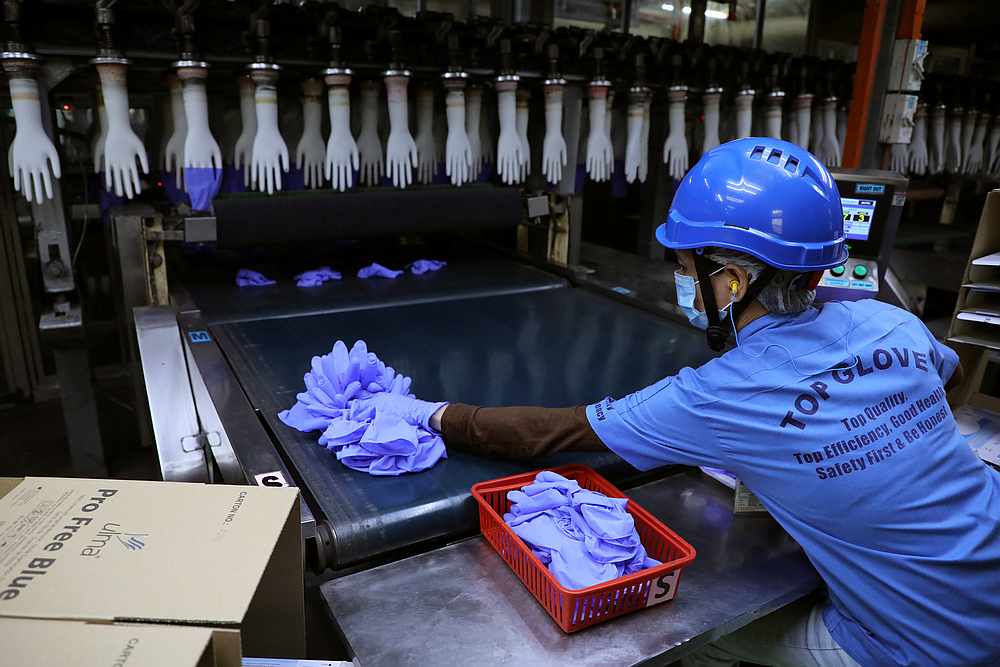
Top Glove flagged in late April it would sell 793.5 million shares in the listing, half what the company proposed in its application to the Hong Kong Stock Exchange in February.— Reuters pic

Follow us on Instagram and subscribe to our Telegram channel for the latest updates


HONG KONG, June 1 — Top Glove Corporation’s plan to list in Hong Kong and raise up to US$1 billion (RM4.12 billion) has been delayed as the world’s largest rubber glove maker seeks to resolve a US import ban on its products, sources with direct knowledge of the matter said.

The Malaysian firm, which is already listed in Kuala Lumpur and Singapore, flagged in late April it would sell 793.5 million shares in the listing, half what the company proposed in its application to the Hong Kong Stock Exchange in February.

However, the deal has stalled as the company awaits indications from US Customs and Border Protection (CBP) on whether an imports ban would be lifted any time soon, the sources told Reuters.

Potential investors questioned Top Glove and its advisers on the sanctions during preliminary briefings ahead of the listing, they said.

Top Glove had hoped to complete the listing by the end of the second quarter in 2021, the sources said.

Top Glove did not respond to a request for comment. The sources could not be named as the information was not yet made public.

US Customs prohibited the import of Top Glove products last year, saying it had found reasonable evidence at the company’s production facilities across Malaysia indicative of forced labour practices.

Customs said in March it had found evidence of multiple forced labour indicators in Top Glove’s production process, including debt bondage, excessive overtime, abusive working and living conditions, and retention of identity documents, and directed its officials to seize goods from the manufacturer.

Earnings forecasts

The North American market accounts for 22 per cent of Top Glove’s total sales volume, according to its latest accounts.

Analysts had largely kept their earnings forecasts for the company intact and said diversion of trade to other markets could cushion the impact of sales loss in the US market, as the pandemic continued.

CBP, in an emailed response to Reuters, said the length of the review process varies with the individual facts and circumstances of each case.

“CBP will not modify or revoke a Forced Labour Finding until it has information that all indicators of forced labour identified by the agency have been fully remediated and it is demonstrated that forced labour is no longer being used to produce the goods targeted,” it said.

Top Glove said in April it has resolved all indicators of forced labour in its operations and that this had been verified by the London-based ethical trade consultant Impactt Limited.

The company has argued a Hong Kong listing is not urgent as it has RM2.36 billion cash on its balance sheet, the sources said.

Instead, a listing is being pursued to diversify the firm’s shareholder base and take advantage of the increased liquidity in Hong Kong’s markets compared to Kuala Lumpur and Singapore, one of the sources added. — Reuters


Source: Malay Mail

Bursa Malaysia ends morning session in red on profit-taking

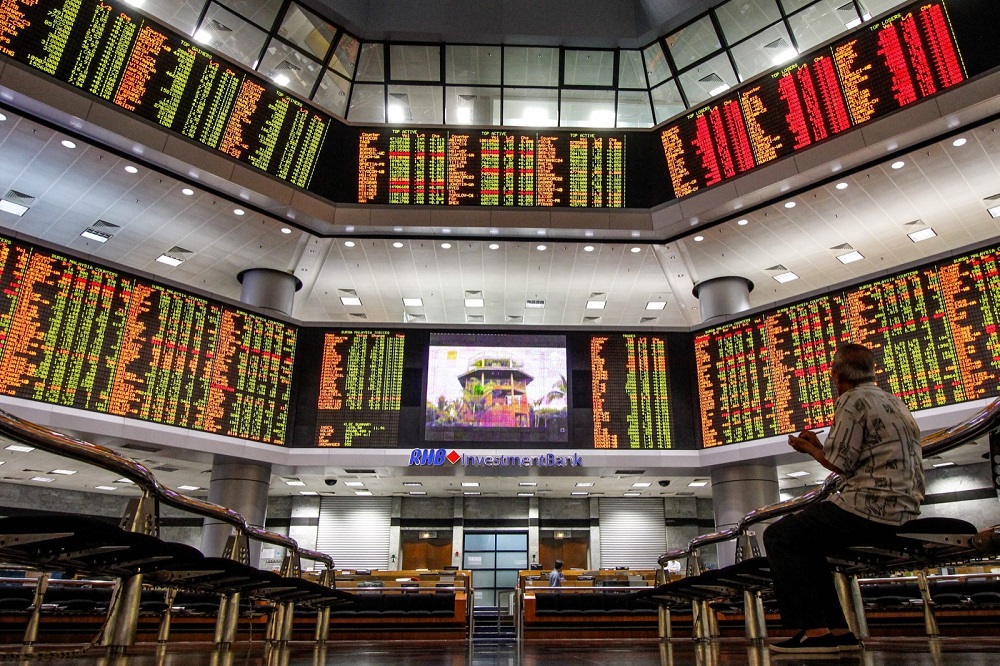
Market breadth was negative with losers outpacing gainers 573 to 376, while 399 counters were unchanged, 785 untraded, and nine others suspended.— Picture by Hari Anggara

Follow us on Instagram and subscribe to our Telegram channel for the latest updates on news you need to know.


KUALA LUMPUR, June 1 — Bursa Malaysia ended the morning session in the red on mild profit-taking after recording modest gains at the opening following the RM40 billion PEMERKASA+ package announcement.

However, buying support emerged for index-linked counters in banking, healthcare, consumer products and services, as well as telecommunications sectors to support the index from declining further.

At 12.30pm, the benchmark FTSE Bursa Malaysia KLCI (FBM KLCI) slipped 2.88 points, or 0.18 per cent, to 1,580.67 from 1,583.55 at Monday’s close.

The index opened 2.19 points higher at 1,585.74 and moved between 1,580.10 and 1,588.30 throughout the morning trading session.

Market breadth was negative with losers outpacing gainers 573 to 376, while 399 counters were unchanged, 785 untraded, and nine others suspended.

Total volume stood at 5.71 billion units worth RM3.26 billion.

Some banking heavyweights posted gains at mid-day today, mainly buoyed by their positive corporate earnings released recently.

For example, CIMB Group, which posted RM2.46 billion in net profit in the first quarter on improved operating income, saw its shares jump 14 sen to RM4.42 today, followed by RHB which added three sen to RM5.33, and Hong Leong Financial Group gained two sen to RM17.56.

Maybank however, lost four sen to RM8.14.

The gains in banking stocks drove the financial services index 17.21 points higher to 15,027.01.

A dealer said although the government’s announcement to extend the targeted moratorium to the B40 group, the banking sector is expected to do well.

“The moratorium is for targeted segment therefore the banks will be okay, but if it is for blanket moratorium it might be difficult for them to sustain their balance sheets,” he said.

Meanwhile, Kenanga Research in its note said that the larger banks would be among the first beneficiaries once the country’s economy recover after having experienced some headwinds due to the re-implementation of lockdown.

“With vaccination drives along the way, we are more optimistic for a progressive economic recovery in the second half of 2021 which could make up for the shortfalls expected in the coming months.

“We foresee the months of May and June 2021 to only experience headwinds, especially the latter as a lockdown is being re-implemented, and we suspect further extension to the two weeks period could follow based on past trends and this would undoubtedly affect the demand for loans until movement restrictions are eased,” it said.

Among the 30 index-linked heavyweights, Public Bank erased two sen to RM4.19, PChem slipped two sen to RM8, and Top Glove dropped 10 sen to RM5.08.

Of the top losers, BAT declined 88 sen to RM14.88, Pharmaniaga decreased 60 sen to RM5.97, and Sedania Innovator was 30 sen weaker at RM1.08.

Of the actives, Serba Dinamik, which has removed KPMG PLT as the group’s external auditor, saw its shares fall 24 sen to 89 sen, while its warrants was up four sen to 12 sen, while Ucrest slipped half-a-sen to 43 sen.

On the index board, the FBM Emas Index fell 26.54 points to 11,469.27 and the FBMT 100 Index skidded 26.10 points to 11,172.49.

The FBM Emas Shariah Index dwindled 55.67 points to 12,717.24, the FBM 70 weakened 56.78 points to 14,706.12, and the FBM ACE gave up 71.52 points to 7,609.74.

Sector-wise, the Financial Services Index rose 17.21 points to 15,027.01, the Industrial Products and Services Index edged down 0.38 of-a-point to 190.48, and the Plantation Index slipped 39.56 points to 6,842.84. — Bernama


Source: Malay Mail

Bursa Malaysia turns lower at mid-morning on profit-taking

Market breadth was negative with losers overwhelming gainers 539 to 330, while 396 counters were unchanged, 868 untraded and nine others suspended. — Bernama pic

Follow us on Instagram and subscribe to our Telegram channel for the latest updates on news you need to know.


KUALA LUMPUR, June 1 — Bursa Malaysia turned lower at mid-morning on profit-taking after recording slight gains in early trade as investors digest the impact of the RM40 billion PEMERKASA+ aid package announced yesterday.

Nevertheless, losses were capped by mild buying in index-linked counters, including banking stocks, thanks to their positive earnings.

CIMB Group, for example, which posted RM2.46 billion in net profit in the first quarter on improved operating income, saw its shares jump 18 sen to RM4.46 today.

Among the indices, the financial services index recovered 83.06 points to 15,09286.

At 11am, the benchmark FTSE Bursa Malaysia KLCI (FBM KLCI) eased 0.80 of-a-point, or 0.51 per cent, to 1,582.75 from 1,583.55 at Monday’s close.

The index opened 2.19 points higher at 1,585.74, moved to a high of 1,588.30 and subsequently fell to a low of 1,580.10 in the morning trade.

Market breadth was negative with losers overwhelming gainers 539 to 330, while 396 counters were unchanged, 868 untraded and nine others suspended.

Total volume stood at 4.24 billion units worth RM2.36 billion.

A dealer said that despite the government’s announcement to extend the targeted moratorium to the B40 group, banking sector is expected to do well.

“The moratorium is for targeted segment therefore the banks will be okay, but if it is for blanket moratorium it might be difficult for them to sustain their balance sheets,” he said.

Meanwhile, Kenanga Research via its note today said even though Bank Negara Malaysia still has some room to manoeuvre, with a higher probability now of another rate cut due to the implementation of a full-scale movement control order, it expects the central bank to maintain status quo on the monetary policy front due to the global economic recovery narrative.

“Various measures introduced by the government and the expectation of faster domestic vaccination rates are expected to boost the economic growth in the second half of 2021,” it said.

Following the announcement of a total nationwide lockdown last Friday, Prime Minister Tan Sri Muhyiddin Yassin announced a new stimulus package worth RM40 billion (2.6 per cent of Gross Domestic Product) on Monday to bolster the country’s economy and assist the people amid a total national movement control order.

Among other heavyweights, Maybank fell three sen to RM8.15, PChem lost four sen to RM8.01, Tenaga slipped three sen to RM9.92, while Public Bank was flat at RM4.21.

Of the actives, Serba Dinamik fell 20 sen to 93 sen and its warrants was up five sen to 13 sen, while Ucrest added half-a-sen to 44 sen.

The top losers list was led by BAT which dipped 82 sen to RM14.94, Pharmaniaga declined 32 sen to RM6.25, and Sedania Innovator was 16 sen weaker at RM1.22.

On the index board, the FBM Emas Index slid 15.43 points to 11,480.37 and the FBMT 100 Index slipped 13.74 points to 11,184.85.

The FBM Emas Shariah Index decreased 61.82 points to 12,711.09, the FBM 70 weakened 49.56 points to 14,713.34, and the FBM ACE fell 25.78 points to 7,655.48.

Sector-wise, the Financial Services Index rose 83.06 points to 15,092.86, the Plantation Index declined 26.19 points to 6,856.21, and the Industrial Products and Services Index edged down 1.01 points to 189.85. — Bernama


Source: Malay Mail

Maybank IB Research: Sales tax exemption for auto sector a catalyst to combat disruptions

In presenting the Pemerkasa+ aid package yesterday, Prime Minister Tan Sri Muhyiddin Yassin announced sales tax exemption for CKD and CBU passenger vehicles is extended until December 31, 2021 from June 30, 2021. — Bernama pic

Follow us on Instagram and subscribe to our Telegram channel for the latest updates on news you need to know.


KUALA LUMPUR, June 1 — The sales tax exemption, which has been extended for the automotive sector until end-December 2021, is a strong catalyst to combat disruptions to production and sales during the movement control order (MCO) and amid global chip shortage.

Maybank IB Research said the decision has a positive impact on the local automotive sector, though it was not entirely surprised by move to extend the sales tax incentives.

“The sales tax on passenger cars will remain as zero per cent for completely knocked-down (CKD) models and secondly five per cent for completely built-up (CBU) models and/or imported cars.

“Timeline-wise, this is the second extension mooted (first extension in December 2020) and represents 18 months of an sales and services tax (SST) holiday since June 2020,” it said in a note today.

In presenting the Pemerkasa+ aid package yesterday, Prime Minister Tan Sri Muhyiddin Yassin announced sales tax exemption for CKD and CBU passenger vehicles is extended until December 31, 2021 from June 30, 2021.

The research house said the move would help absorb much of the sales and production disruptions, especially in June 2021, which would likely mirror the poor performance in April 2020 due to the multiple lock-downs/ MCOs and global chips shortage during this period.

The research firm said for 2021, it expects the total industry volume (TIV) of 600,000 to remain unchanged, with January-April 2021 vehicle sales of 199,600 units having met its expectation.

“We expect stronger May 2021 figures (April 2021: 57,900 units) but June will be admittedly much weaker due to the lockdown.

“Otherwise, we still await the government to roll out the much anticipated but much delayed electric vehicle (EV) policy, which is expected to be announced in June/July 2021, according to Malaysia Automotive, Robotic and IOT Institute’s (MARii) chief executive officer Datuk Madani Sahari,” it added. — Bernama


Source: Malay Mail

MIDF maintains ‘buy’ call on CIMB Group with higher target price of RM4.60

MIDF said CIMB’s core earnings for Q1 more than doubled, growing 156 per cent year-on — year (yoy) due to a combination of higher net income as well as lower provisions. — Reuters pic

Follow us on Instagram and subscribe to our Telegram channel for the latest updates on news you need to know.


KUALA LUMPUR, June 1 — MIDF Research has maintained its “Buy” call on CIMB Group Holdings Bhd with a higher target price (TP) of RM4.60 from RM4.50 previously.

In a note today, the research house said the group had a tremendous start to the year, reporting above expectation with a net profit of RM2.46 billion in the first quarter of 2021 (Q1 FY2021), due to one-off deconsolidation gain of Touch ‘n Go Digital amounting to RM1.16 billion.

“However, discounting this, its core net profit was above MIDF and consensus’ expectations at 42.9 per cent and 34.1 per cent of respective full-year estimate. The variance was due to continued lower-than-expected provisions,” it said.

MIDF said CIMB’s core earnings for Q1 more than doubled, growing 156 per cent year-on — year (yoy) due to a combination of higher net income as well as lower provisions.

“Net income increased 5.9 per cent yoy on higher trading and foreign exchange income and wealth management fees.

“One of the factors for the lower provisions was the absence of lumpy provisions in Q1. Recall, that Q1 FY2020 saw the group having to take loan provisions from a single impairment in Singapore from the oil and gas sector amounting to around RM430 million,” it said.

On loan growth, the group saw a tepid gross loans growth for Q1, which grew marginally by 0.7 per cent yoy to RM366.6 billion due to the de-risking of its loans book while total customer deposits grew 3.3 per cent yoy to RM412.2 billion.

The growth in deposit was led by Current Account Saving Account (CASA) expanding 19.8 per cent yoy to RM174.5 billion while fixed deposits and other deposits declined by 6.2 per cent yoy to RM237.7 billion, said MIDF.

It said it is worth noting that CIMB Group still made Covid-19 related and management overlay provisions amounting to RM182 million and RM103 million respectively in Q1 FY2021.

“Moving forward, CIMB Group expects gross loans growth of 4-5 per cent for FY2021.

“All-in, we believe that FY2021 will see better performance from the group as the situation improves given the vaccine rollout and rebound in Gross Domestic Product.

“We view the reimposition of movement control order in Malaysia as a minor dent where the situation will stabilise with the acceleration of the national vaccination programme,” MIDF added. — Bernama


Source: Malay Mail