01 September 2021

Euro settles near one-month high after inflation jolt

Data yesterday showed euro zone inflation increased to 3 per cent year-on-year in August, the highest in a decade. — AFP pic

Follow us on Instagram and subscribe to our Telegram channel for the latest updates.


LONDON, Sept 1 ― The euro consolidated gains below a near one-month high today as a higher-than-expected inflation reading pumped up bond yields, forcing investors to cover their bearish bets on the single currency.

Data yesterday showed euro zone inflation increased to 3 per cent year-on-year in August, the highest in a decade, above the European Central Bank's 2 per cent target and a 2.7 per cent forecast in a Reuters poll. The reading sent yields on German benchmark debt to their highest levels since late July.

The jump in bond yields forced traders to halt their multi-month streak of US dollar purchases versus the euro. Net short bets against the greenback versus the single currency have fallen to their lowest levels since March 2020, according to latest positioning data.

Implied volatility gauges on the single currency also flickered to life, with one-month maturities rising to their highest levels since early July as expectations grew that the ECB might signal a policy shift at a meeting next week.

Robert Holzmann, governor of Austria's central bank, said the ECB was in a situation where it could think about reducing emergency bond purchases, and added he expected the issue to be discussed at the meeting.

But despite the hawkish comments and the data, the single currency failed to make much progress above the US$1.18 (RM4.89) level. In early London trading, the euro held at US$1.1803, below an August 5 high of US$1.1842 hit yesterday following the data.

Analysts believe the lack of sustained euro strength is based on the current ECB forward guidance that suggests asset purchases will continue until rate hikes are necessary, indicating the stimulus programme might be expanded next year.

“Unless euro area economic data post consistent upside surprises in coming months, it is hard to get excited about the idea of persistently rising euro area rates, and by extension a strong upward trend in euro/dollar,” Credit Suisse strategists said in a daily note, sticking to their year-end forecast of US$1.16.

Elsewhere, the dollar was marginally higher versus its rivals, thanks to a mix of weak Asian factory activity data and firmer US Treasury yields.

The dollar index, which measures the greenback against six rivals, edged up to 92.777 from yesterday, when it dipped as low as 92.395 for the first time since August 6. ― Reuters


Source: Malay Mail

Check out our online courses and coaching program on Personal Financial Management at iLearnFromCloud.com

The homes you get for RM800,000 around the world

WHAT does an RM800,000 home look like around the world? We searched the markets that are most popular with Malaysian buyers to find out.

Right here in Kuala Lumpur, you can buy a 1,210 sq ft, four-bedroom, two-bathroom residence for RM808,300. The 46-storey, single-tower project is D’Clover Residences by renowned developer Exsim Group. Among the luxurious amenities that the 593 serviced apartments will enjoy are a half basketball court, badminton court, karaoke room, jacuzzi, swimming pool, a gymnasium and more.

In the Western Australian city of Perth, about the same amount of money buys you a 614 sq ft apartment with one bedroom and one bath. It is a generously sized apartment with engineered timber flooring, granite kitchen benchtops, a covered car bay and a personal storeroom. The building is secure and has a remote security gate and intercom system.

You might not think you can get anything in London for about RM800,000, but you can — just barely. For the equivalent of RM810,000, you can purchase a secondhand 179 sq ft studio apartment. The downsides? It’s small. The finishings are anything but luxurious, and you won’t own the apartment freehold but will instead own a 125-year lease, which you can resell if you like. The positives are that it is close to shops and the major transport hubs of Kings Cross & St Pancras International. And prospects for capital gains are good in an area seeing massive investment in new infrastructure and housing. This studio is about the cheapest way to own a full-time home in London.

In Bangkok, you can obtain a brand new luxury apartment that, at 377 sq ft, has more than twice the floor area as the London studio. This one-bedroom, one-bath apartment is located in an attractive 44-storey building with a garden, rooftop swimming pool, fitness room, sauna/steam room, playground and more. It is convenient, being close to two train stations, shopping and more.

In Vietnam’s southern metropolis Ho Chi Minh City, RM791,000 will buy you an exciting two-bedroom, two-bathroom apartment in the Masteri Centre Point project. This spacious 754 sq ft residence is being built by one of Vietnam’s most trusted developers. Through floor-to-ceiling windows, it offers sweeping views of Dong Nai River. It is outfitted with wooden floors and with fixtures from such leading brands as Kohler (USA), Hafele (Germany) and Daikin (Japan). The apartment is located in a new, landscaped township with parkland, sports areas and playgrounds and close to Ho Chi Minh City’s largest shopping mall, international schools and a 36ha riverside park.

In the US, just 10 minutes from downtown Dallas, Texas, you can buy an entire new house on its own land for just RM736,000. The house is 1,400 sq ft and sits on 4,489 sq ft of land. It has three bedrooms and two bathrooms. As for finishes, there are laminated wood floors, granite countertops, and stainless steel appliances. The master bedroom includes its own walk-in closet and master bath suite. Outside, there is an attached garage and a private fence around the yard.

Kuala Lumpur offers relatively affordable homes by global standards. Here, you can obtain a home in an excellent location with luxury fixtures and amenities for RM800,000.

Whether you are moving overseas or just investing, for about the same price, you can obtain desirable homes in other global cities. You might be surprised at how much you can get in other countries for about RM800,000.

In London, however, you can only afford a small studio apartment. It’s not by any means new or luxurious, but it is close to major transport hubs. You can have a toehold in London for the price of a family home in Kuala Lumpur.

We looked at Singapore but couldn’t find a single viable home for sale to Malaysian buyers in that city for about RM800,000.

In the US city of Dallas, you can obtain a three-bedroom landed house. In Perth, Australia, you can purchase a generously sized apartment with engineered timber flooring and granite kitchen benchtops in a secure complex with a remote gate and intercom system.

In both cases, there are tradeoffs. The Dallas home is in a zone with flood risks. Given the worsening weather patterns, the chance of being flooded might increase in the years to come. The Perth home is everything a person would need, but it’s across the river from downtown Perth and is at the lower end of the market there.

The best buys are in Kuala Lumpur, Bangkok and Ho Chi Minh City. At the Master Centre Point project in Ho Chi Minh City, IQI Vietnam can help you buy a brand new luxury two-bedroom, two-bath apartment with sweeping views of Dong Nai River through floor-to-ceiling windows. You will live in a new neighbourhood packed with outdoor play areas, sports fields and parks.

This article was contributed by Juwai IQI co-founder and group CEO Kashif Ansari.


Source: The Sun Daily

Check out our online courses and coaching program on Personal Financial Management at iLearnFromCloud.com

German retail sales slump signals weak start to third quarter

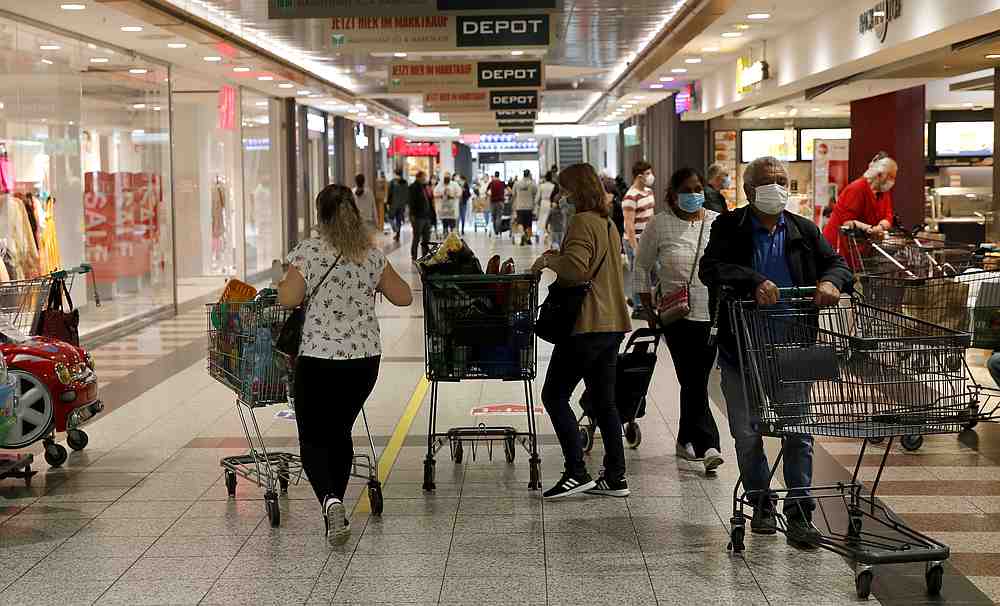
People are seen at the Rhein Centre shopping mall in Weil am Rhein, Germany June 15, 2020. — Reuters pic

Follow us on Instagram and subscribe to our Telegram channel for the latest updates.


BERLIN, Sept 1 ― German retail sales fell by far more than expected in July after two months of sharp increases, data showed today, in a first sign that a consumer-driven recovery in Europe's largest economy might be losing steam in the third quarter.

The Federal Statistics Office said retail sales dropped 5.1 per cent on the month in real terms after a revised jump of 4.5 per cent in June and an increase of 4.6 per cent in May. The July reading missed a Reuters forecast for a fall of 0.9 per cent.

The monthly comparison was distorted heavily by the lifting of Covid-19 restrictions on shopping in most parts of the country in June, the statistics office said.

Retail sales - a volatile indicator often subject to revisions ― edged down by 0.3 per cent in real terms year on year, it added. Compared with February 2020, the month before the coronavirus crisis hit Germany, retail sales were up 3.8  per cent.

The German economy returned to growth in the second quarter but bounced back less strongly than other euro zone countries as supply chain bottlenecks slowed industrial output.

Supply problems with raw materials and intermediate goods, coupled with rising Covid-19 cases because of the more contagious Delta variant, are driving companies to take a dimmer view of the coming months.

Bankhaus Lampe analyst Alexander Krueger believes that retail sales are likely to recover in the comings months, with the labour market strong and more companies scaling back short-time work schemes introduced during the pandemic.

However, overall support for the economy from household spending could be less strong in the third quarter than many had hoped for, he added. ― Reuters


Source: Malay Mail

Check out our online courses and coaching program on Personal Financial Management at iLearnFromCloud.com

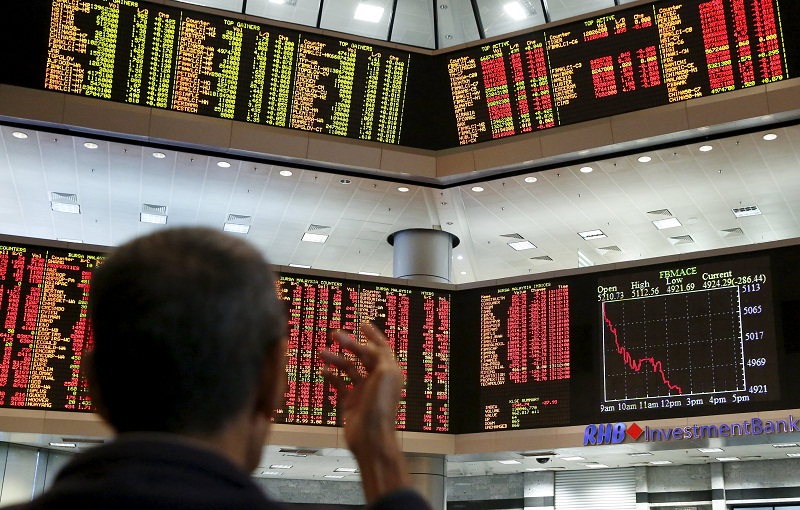
Bursa Malaysia ends morning session lower

At 12.30pm, the benchmark FTSE Bursa Malaysia KLCI (FBM KLCI) declined by 0.58 per cent or 9.32 points to 1,592.06 compared with Monday’s close of 1,601.38. — Bernama pic

Follow us on Instagram and subscribe to our Telegram channel for the latest updates.


KUALA LUMPUR, Sept 1 ―  Bursa Malaysia remained lower at the end of the morning trading session due to increasing profit-taking activities in selected heavyweights, dealers said.

At 12.30pm, the benchmark FTSE Bursa Malaysia KLCI (FBM KLCI) declined by 0.58 per cent or 9.32 points to 1,592.06 compared with Monday’s close of 1,601.38.  

The index opened 2.05 points better at 1,603.43 and moved between 1,590.87 and 1,604.98 throughout the session.

On the broader market, losers surpassed gainers 582 to 414, while 371 counters were unchanged, 851 untraded and six others suspended.

Turnover stood at 2.72 billion units worth RM1.71 billion.

Meanwhile, in a research note today, Rakuten Trade said major indices on the Wall Street closed flat as traders are pondering on fresh impetus amidst the United States Federal Reserves’ imminent tapering of easy money.

“The Dow Jones Industrial Average was in negative territory for the whole session and ended 36 points lower,” it said.

On the domestic front, it said the FBM KLCI recorded yet another impressive performance on Monday as it remained above the 1,600-mark.

“Foreign funds have continued to pour into the local bourse with more than RM1.1 billion of net inflows over the last three days.

“We expect the momentum to continue, as such, we expect the index to chart higher although some correction is anticipated. For today, we reckon the index to oscillate within the 1,595-1,605 range,” it added.

Of the heavyweights, Maybank and Public Bank slipped 8.0 sen each to RM8.32 and RM4.10, respectively, Tenaga Nasional fell 6.0 sen to RM10.40, IHH Healthcare went down 7.0 sen to RM6.33, while Petronas Chemicals was flat at RM8.30.

Among the actives, Borneo Oil earned half-a-sen to 3.5 sen, Bintai Kinden advanced 8.0 sen to 56 sen, Kanger International rose 1.5 sen to 6.0 sen, while Avillion declined 1.5 sen to 13 sen.

On the index board, the FBM Emas Index weakened 42.18 points to 11,585.69, the FBMT 100 Index was 46.60 points lower at 11,295.31, and the FBM Emas Shariah Index was 34.73 points weaker at 12,715.73.

The FBM 70 perked 14.39 points to 15,037.85, while the FBM ACE dipped 64.62 points to 7,180.28.  

Sector-wise, the Plantation Index increased 33.32 points to 6,784.57 and the Industrial Products and Services Index gained 1.02 points to 199.36, while the Financial Services Index reduced 59.81 points to 15,497.46. ― Bernama


Source: Malay Mail

Check out our online courses and coaching program on Personal Financial Management at iLearnFromCloud.com

IHS Markit: Malaysia’s manufacturing sector still struggling but doing better than in July

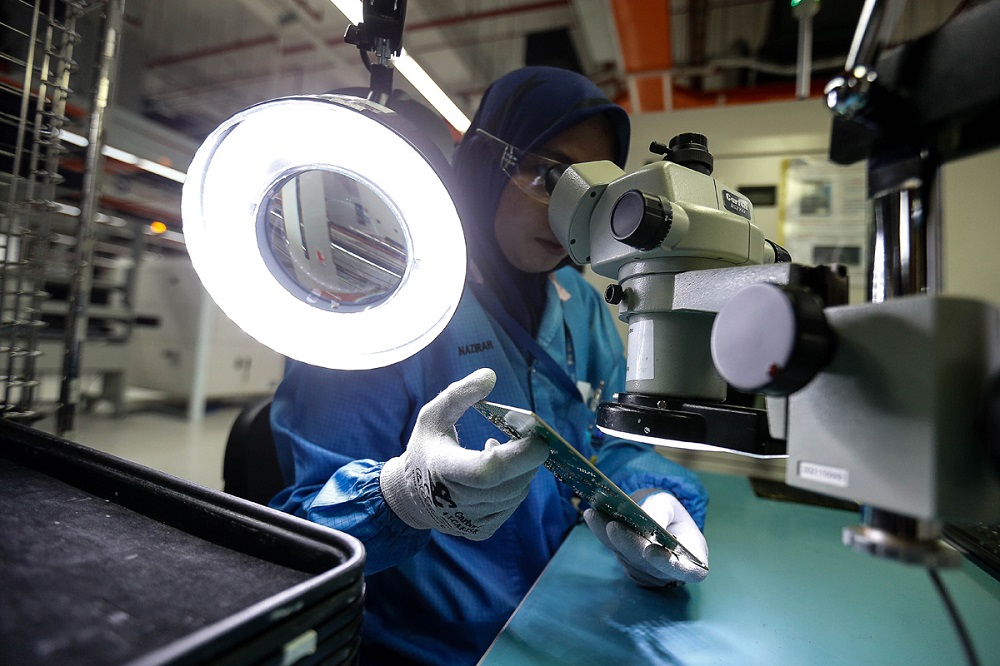
According to a survey, the Malaysian manufacturing sector did not recover in August, although its contraction moderated compared to in July. — Picture by Sayuti Zainudin

Follow us on Instagram and subscribe to our Telegram channel for the latest updates.


KUALA LUMPUR, Sept 1 — The Malaysian manufacturing sector did not recover in August, although its contraction moderated compared to in July, according to a survey.

IHS Markit, reporting on its Malaysia Manufacturing Purchasing Managers’ Index (PMI), said today that production levels and new orders were facing “sustained reductions”, although the decline was at the softest rates in the past three months.

It attributed the loss to an increase in Covid-19 cases, saying the pandemic has “hampered output and sales”.

The lack of demand has also reportedly pushed manufacturers to scale down their workforces in August, with employers also noting a reduction in foreign work permits being issued, due to Covid-19 restrictions.

“Although marginal, the August decline means staffing levels have now fallen in four of the last five months,” it said.

However, IHS Markit said businesses were increasingly optimistic regarding their outlook for the year ahead, and were hoping that the end of the pandemic would drive a broad recovery in supply chains and demand.

IHS Markit said its Malaysia Manufacturing PMI rose from 40.1 in July to 43.4 in August. A score below 50 denotes contraction while a score above 50 signals expansion.

The firm said that while this indicated continued deterioration in the sector, it was still improved from the two preceding months.

IHS Markit chief business economist Chris Williamson said an easing of some Covid-19 lockdown measures helped take some of the pressures off Malaysian manufacturing in August.

“Conditions remain tough for producers, however, with order books continuing to decline, supply chain delays widely reported and raw material prices rising sharply again.

“Encouragingly, business expectations for the coming year improved during the month, as more companies grew optimistic that the worst of the pandemic has passed.

“Concerns over the spread of the Delta variant nevertheless meant the outlook remains more uncertain than earlier in the year, keeping a lid on the overall degree of optimism,” he said.

According to IHS Markit, its Malaysia Manufacturing PMI compiles responses from purchasing managers in a panel of around 400 manufacturers, with survey responses collected in the second half of each month.


Source: Malay Mail

Check out our online courses and coaching program on Personal Financial Management at iLearnFromCloud.com
CGS-CIMB: Budget 2022 to combine pro-growth, inclusive agenda

Malay Mail Social Logo

KUALA LUMPUR, Sept 1 ― Budget 2022 is expected to be a combination of a pro-growth and inclusive agenda to ensure a sustainable economic recovery from the Covid-19 crisis, said CGS-CIMB.

In a note today, it said the budget will focus on three objectives ― protecting and driving the recovery of lives and livelihoods, rebuilding national resilience and catalysing reforms.

It said targeted fiscal support would be extended to protect vulnerable segments of society and businesses in sectors worst hit by the pandemic, such as tourism and retail.

Fiscal spending would also be directed to strengthening the public health system, continuing the development of physical infrastructure and enhancing digital and technological infrastructure, implying that development expenditure would likely remain sizeable next year.

“That said, we expect high vaccination rates, economic re-opening and targeted fiscal measures to mark the start of fiscal consolidation in 2022,” it said in a note today.

Given the need to sustain the economic recovery, there has been no indication of a major tax overhaul, such as the introduction of the Goods and Service Tax (GST).

“We think the first hints of a GST plan may surface in a comprehensive report on Medium-Term Revenue Strategies, which is targeted to be published in 2022,” said CGS-CIMB.

It said the government is looking to enhance tax revenue collection though increased tax compliance.

Measures under consideration include the implementation of a Special Voluntary Disclosure Programme for indirect taxes administered by the Customs Department, introduction of a Tax Compliance Certificate as a pre-condition for tenderers to participate in government procurement, and implementation of the Tax Identification Number, as well as reviewing tax treatment to address revenue leakages.

Yesterday, the Ministry of Finance (MoF) issued its maiden Pre-Budget Statement, providing an update on the nation’s fiscal performance in 2021 and a preliminary view of the direction for Budget 2022 that is scheduled to be tabled in the Parliament on Oct 29, 2021.

For 2021, the MoF estimated the fiscal deficit to increase to 6.5-7.0 per cent of the gross domestic product, versus initial target of 5.4 per cent, led by tax revenue shortfall, continued fiscal support and a weaker-than-expected economic rebound due to the implementation of Movement Control Order.

The estimated target for tax revenue is RM162.1 billion ― 12.3 per cent lower than the initial target of RM174.4 billion.

Meanwhile, the direct fiscal injection under the four fiscal stimulus packages announced this year (Permai, Pemerkasa, Pemerkasa Plus, Pemulih) translates into increased Covid-19 funds of RM27 billion against RM17 billion previously.

The allocation for operating expenditure is reduced by 7.1 per cent to RM219.6 billion, while development expenditure remains relatively steady at RM68.2 billion. ― Bernama


Source: Malay Mail

Check out our online courses and coaching program on Personal Financial Management at iLearnFromCloud.com
Bursa Malaysia turns lower at mid-morning

At 11am, the benchmark FTSE Bursa Malaysia KLCI (FBM KLCI) declined 7.99 points to 1,593.39 from Monday’s close of 1,601.38. — Reuters pic

Follow us on Instagram and subscribe to our Telegram channel for the latest updates.


KUALA LUMPUR, Sept 1 ― Bursa Malaysia turned lower at mid-morning amid mixed regional market sentiment, as investors were concerned over the outlook for central bank stimulus and the resilience of the economic recovery with the spread of the Delta variant of Covid-19.

At 11am, the benchmark FTSE Bursa Malaysia KLCI (FBM KLCI) declined 7.99 points to 1,593.39 from Monday’s close of 1,601.38.  

The market bellwether opened 2.05 points better at 1,603.43.

Market breadth remained negative, with decliners leading gainers 526 to 366, while 369 counters were unchanged, 957 untraded and six others suspended.

Turnover stood at 1.97 billion shares worth RM1.16 billion.

ActivTrades trader Anderson Alves said that Asian stocks traded mixed on Wednesday after a handover from Wall Street that was mired in month-end trade, where all major indices posted their seventh consecutive monthly gain for August.

“On the macro front, there was another blow for Asia-Pacific economies and global emerging markets as China's August Caixin manufacturing Purchasing Managers’ Index (PMI) came in at 49.2 versus expectations of 50.2.

“The mounting downward pressure on economic growth could create another wave of cautious positioning on risk assets, equities, forex and sovereign and high-yield bonds in the region. Markets are now positioning for US employment data and PMIs this week,” he said in a note.

Heavyweights Maybank and IHH Healthcare slipped 6.0 sen each to RM8.34 and RM6.34, respectively, Public Bank fell 8.0 sen to RM4.10, and Tenaga Nasional contracted 2.0 sen to RM10.44; but Petronas Chemicals rose 4.0 sen to RM8.34.

Among the actives, Borneo Oil earned half-a-sen to 3.5 sen, Bintai Kinden added 5.5 sen to 53.5 sen, Kanger International improved 1.0 sen to 5.5 sen while Avillion went down 1.5 sen to 13 sen.

On the index board, the FBM Emas Index fell 39.50 points to 11,588.37, the FBMT 100 Index was 41.90 points lower at 11,301.01, and the FBM Emas Shariah Index weakened 31.68 points to 12,718.78.

The FBM 70 increased 2.22 points to 15,025.68 while the FBM ACE shed 47.58 points to 7,197.32.

Sector-wise, the Plantation Index gained 41.27 points to 6,792.52, the Financial Services Index dipped 61.05 points to 15,496.22 and the Industrial Products and Services Index added 1.08 points to 199.42. ― Bernama


Source: Malay Mail

Check out our online courses and coaching program on Personal Financial Management at iLearnFromCloud.com

Asean manufacturing PMI falls for third straight month in August 2021

In a statement today, IHS Markit said operating conditions declined sharply again amid further rapid falls in factory production and new orders, while sentiment among goods producers towards output over the year ahead slipped to a 13-month low. — Picture by Sayuti Zainudin

Follow us on Instagram and subscribe to our Telegram channel for the latest updates.


KUALA LUMPUR, Sept 1 ― The Asean manufacturing sector remained in a downturn for the third straight month in August 2021, with the headline Purchasing Managers' Index (PMI) easing to 44.5 from 44.6 in July 2021, as rising Covid-19 cases and lockdown measures continued to impact the sector.

In a statement today, IHS Markit said operating conditions declined sharply again amid further rapid falls in factory production and new orders, while sentiment among goods producers towards output over the year ahead slipped to a 13-month low.

IHS Markit economist Lewis Cooper said for the first time since May 2020, contractions were recorded across each of the seven constituent nations last month, highlighting the severe impact of rising Covid-19 cases and stronger lockdown measures across the region.

“The fastest rates of decline were recorded in Myanmar (PMI at 36.5), Vietnam (PMI at 40.2) and Malaysia (PMI at 43.4),” he said.

Cooper noted that the Covid-19 outbreaks and stricter lockdown measures continued to adversely impact the Asean manufacturing sector in August 2021, which remained firmly mired in a downturn.

He said client demand continued to retreat, while factory production declined rapidly again, subsequently, companies cut back on staffing, despite a record upturn in backlogs, while business confidence moderated to a 13-month low.

“Overall, the latest data provided little good news. Companies were still confident overall of higher output in 12 months’ time, however, with firms hopeful that once restrictions are eased the sector will once again rebound,” he added. ― Bernama


Source: Malay Mail

Check out our online courses and coaching program on Personal Financial Management at iLearnFromCloud.com

Google extends remote work option due to pandemic

Returning to Google campuses will remain voluntary globally through January 10, with local offices given the discretion to decide when to require employees to return to their desks, according chief executive Sundar Pichai. — Reuters file pic

Follow us on Instagram and subscribe to our Telegram channel for the latest updates.


SAN FRANCISCO, Sept 1 ― Google yesterday extended the option for its employees to work from home into next year due to the pandemic.

Returning to Google campuses will remain voluntary globally through January 10, with local offices given the discretion to decide when to require employees to return to their desks, according chief executive Sundar Pichai.

“I’m happy to say that a large number of offices globally are already open for business, and we are welcoming back tens of thousands of Googlers on a voluntary basis,” Pichai said.

“The road ahead may be a little longer and bumpier than we hoped, yet I remain optimistic that we will get through it together.”

He promised Google workers 30 days' notice before they would have to return to their offices, and announced they would be able to take off an extra day in October and December as “reset days” to “rest and recharge.”

Google, Facebook and other tech giants have delayed plans for workers to return to the campuses that were abandoned early in the pandemic in an effort to limit the spread of Covid-19.

Tech firms have also instituted vaccine and mask requirements to make offices safer as the Delta variant surges in the US and other countries. ― AFP


Source: Malay Mail

Check out our online courses and coaching program on Personal Financial Management at iLearnFromCloud.com