01 September 2021

European stocks mark seventh straight month of gains

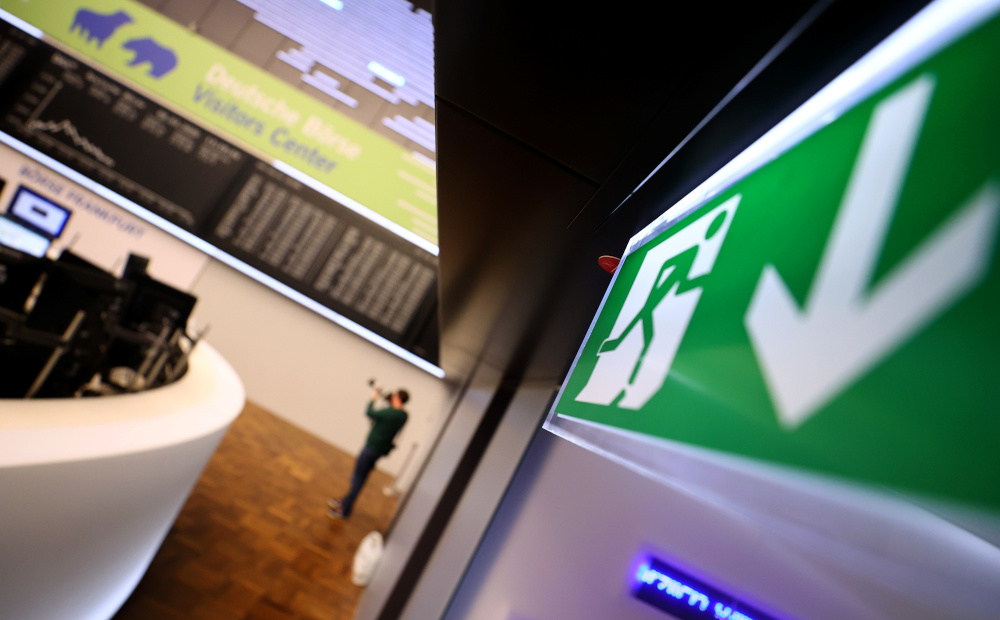
The pan-European STOXX 600 index closed 0.4 per cent lower, but marked a seventh straight month of gains in its best monthly winning streak since 2013. — Reuters pic

Follow us on Instagram and subscribe to our Telegram channel for the latest updates.


FRANKFURT, Sept 1 ― European stocks fell yesterday as a spike in inflation caused jitters about a possible shift in monetary policy, but nevertheless rose nearly 2 per cent in August on strong quarterly earnings and optimism over an economic recovery.

The pan-European STOXX 600 index closed 0.4 per cent lower, but marked a seventh straight month of gains in its best monthly winning streak since 2013.

Technology was the best performing sector in August, up 6 per cent on several strong earnings, while a rise in global Covid-19 cases also pushed investors into sectors most resilient to the pandemic.

Regional stocks had shed early gains yesterday after data showed inflation surged to a 10-year high in August, with further rises likely challenging the European Central Bank's (ECB) benign view on price growth.

Robert Holzmann, governor of Austria's central bank, also sent some shivers through the market when he called on the ECB to start tapering bond purchases.

Concerns about tapering, along with some month-end selling, pulled European stocks away from near record highs.

Basic resources stocks were the worst performers in August, down 4.2 per cent as wild swings in metal prices saw investors pull out of the sector, which has otherwise performed well through the year.

But strong earnings and a relatively high rate of vaccination have boosted European recovery hopes, while the US Federal Reserve's remarks last week reaffirmed views it was in no rush to tighten monetary policy.

“We're still riding the Powell wave,” said Craig Erlam, senior market analyst at OANDA.

“On the China side, it's worth noting that it's been priced in for a while. While the data is quite weak, the situation has evolved over the last couple of weeks,” Erlam said.

Meanwhile, data showed German unemployment fell more than expected in August.

The country's centre-left Social Democrats (SPD) extended their lead over Chancellor Angela Merkel's conservatives, according to a latest poll published on Monday, just weeks ahead of a general election.

Analysts expect European stocks to hold around current record levels for the rest of 2021, supported by stellar earnings, while worries around U.S. monetary policy tightening, German elections and a Chinese regulatory crackdown will cap gains.

Among stocks, Dutch technology investor Prosus NV rose 6.4 per cent after it said it had agreed to buy Indian payments platform BillDesk for US$4.7 billion (RM19.5 billion).

Travel and leisure stocks fell 0.7 per cent after European Union governments agreed to remove the United States from the EU's safe travel list. ― Reuters


Source: Malay Mail

Check out our online courses and coaching program on Personal Financial Management at iLearnFromCloud.com

Wall Street's subdued finish fails to detract from strong August

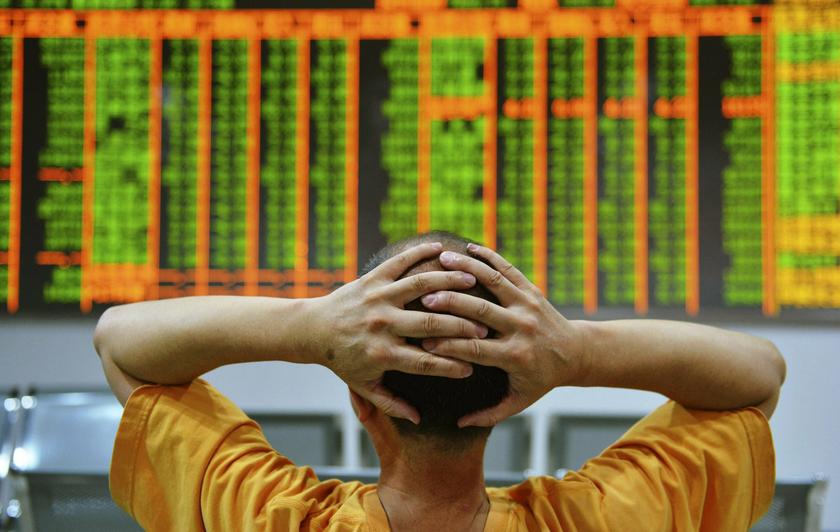
For the S&P, which rose 2.9 per cent in August, it was a seventh straight month of gains, while the Dow and the Nasdaq advanced 1.2 per cent and 4 per cent, respectively, since the end of July. — Reuters pic

Follow us on Instagram and subscribe to our Telegram channel for the latest updates.


NEW YORK, Sept 1 ― Wall Street finished marginally lower yesterday, although the slightly subdued ending to August failed to detract from a strong monthly performance by its three main indexes, in what is traditionally regarded as a quiet period for equities.

Having all posted lifetime highs in the second half of the month, including four record closings in five sessions for the S&P 500 prior yesterday, the three benchmarks were weighed by technology stocks on the final day.

For the S&P, which rose 2.9 per cent in August, it was a seventh straight month of gains, while the Dow and the Nasdaq advanced 1.2 per cent and 4 per cent, respectively, since the end of July.

The performance reflects the level of investor confidence in US equities derived from the Federal Reserve's continued dovish tone toward tapering its massive stimulus program.

“After all the monetary and fiscal interventions, the question is where do we go from here? Does the S&P go to 5,000, and how does it get there?” said Eric Metz, chief executive officer of SpringRock Advisors.

While a strong recovery in economic growth and corporate earnings have boosted US stocks, investors are concerned about rising coronavirus cases and the path of Fed policy.

US consumer confidence fell to a six-month low in August, according to survey data from the Conference Board yesterday, offering a cautious note for the economic outlook.

A Reuters poll last week showed strategists believe the S&P 500 is likely to end 2021 not far from its current level.

“Where's leadership going to come from, for equities to power higher? Is it earnings growth, is it growth versus value, technology or energy? This needs to be defined, but I think the next leg-up for equities will be sector driven,” Metz added.

Technology stocks have continued to garner interest from investors in recent days, given the benefits which lower rates have on their future earnings, although the sector's index was among the worst performers yesterday.

Shares of Apple fell 0.8 per cent after hitting a lifetime high in the previous session, while Zoom Video Communications Inc tumbled 16.7 per cent as it signalled a faster-than-expected easing in demand for its video-conferencing service after a pandemic-driven boom.

Seven of the 11 major S&P sectors retreated. Among those that did not were the real estate and the communications services indexes, which closed at record highs.

Yesterday, the Dow Jones Industrial Average fell 39.11 points, or 0.11 per cent, to 35,360.73, the S&P 500 lost 6.11 points, or 0.13 per cent, to 4,522.68 and the Nasdaq Composite dropped 6.66 points, or 0.04 per cent, to 15,259.24.

Kansas City Southern dropped 4.4 per cent in afternoon trading after the US rail regulator rejected a voting trust structure that would have allowed Canadian National Railway Co to proceed with its US$29 billion (RM120.5 billion) proposed acquisition of its US peer.

Volume on US exchanges was 9.84 billion shares, compared with the 8.98 billion average for the full session over the last 20 trading days.

The S&P 500 posted 43 new 52-week highs and no new lows; the Nasdaq Composite recorded 119 new highs and 23 new lows. ― Reuters


Source: Malay Mail

Check out our online courses and coaching program on Personal Financial Management at iLearnFromCloud.com

Global stocks notch seven straight months of gains, dollar flat

Markets were subdued in quiet end-of-summer trading as investors wait for a US jobs report for August on Friday that could shape how soon the Federal Reserve begins to withdraw its support of the economy when it begins to taper bond buying. — Reuters pic

Follow us on Instagram and subscribe to our Telegram channel for the latest updates.


NEW YORK, ― A gauge of global equities posted its seventh consecutive month of gains and a record closing high yesterday, but stocks and the dollar mostly ended the day little changed after US and Chinese economic data suggested slower growth ahead.

Markets were subdued in quiet end-of-summer trading as investors wait for a US jobs report for August on Friday that could shape how soon the Federal Reserve begins to withdraw its support of the economy when it begins to taper bond buying.

Data yesterday wasn't inspiring. US consumer confidence fell to a six-month low in August as soaring Covid-19 infections and rising inflation dampened the economic outlook, a view that data from China, Canada and the EU also implied.

China's businesses and the broader economy came under increased pressure in August as factory activity expanded at a slower pace and the services sector slumped into contraction. In Canada, the economy unexpectedly shrank 1.1 per cent in the second quarter on an annualized basis.

The Delta variant has cast a shadow on US consumer optimism, which had soared earlier in the year on expectations coronavirus vaccines would bring a return to normalcy, said Jim Baird, chief investment officer at Plante Moran Financial Advisors.

“Consumers are increasingly aware of the near-term risks to the economic recovery created by rising prices and the Covid-19 resurgence,” Baird said in a note. But confidence is relatively high and consistent with solid consumer spending, he said.

Investors are taking some risk off the table after the US and Chinese economies, the world's two largest, showed signs of short-term weakness, said Edward Moya, senior market analyst at foreign exchange brokerage OANDA.

“The Delta variant's impact on the US economy might be greater than initially anticipated and that won't bode well for third-quarter spending,” he said.

Markets mostly shrugged off a surge in euro zone inflation to a 10-year high in August, with further rises likely, as the European Central Bank's narrative of temporary inflation and ultra-easy policy for years remained intact.

MSCI's all-country world index eked out a third straight record closing high, ending up 0.06 per cent at 741.27, and also made August its seventh month of consecutive gains.

The STOXX Europe 600 closed down 0.38 per cent but the broad pan-European index notched its seventh straight month of gains in its best monthly winning streak since 2013. Technology was the best performing European sector in August, up 6 per cent on several strong earnings reports.

On Wall Street, stocks seesawed near breakeven. The Dow Jones Industrial Average fell 0.11 per cent, the S&P 500 slid 0.13 per cent and the Nasdaq Composite slipped 0.04 per cent.

Stocks in emerging markets jumped, with MSCI's EM index rising 1.78 per cent.

Value fell slightly less than growth stocks, a change from Monday when technology shares jumped after Fed Chair Jerome Powell indicated last week that interest rates would remain low well past the date the Fed begins to taper its buying of bonds.

The dollar slipped to its lowest level in more than three weeks against a basket of currencies as investors awaited US jobs data on Friday that could shape future Fed monetary policy. The greenback later pared losses to trade little changed.

The dollar index fell 0.05 per cent to 92.6550, while the euro rose 0.09 per cent at US$1.1809 (RM4.90). The yen traded up 0.09 per cent at US$110.0100.

US Treasury yields rebounded after earlier easing a bit following the US consumer confidence data. The benchmark 10-year yield rose 2.6 basis points to yield 1.3104 per cent.

Benchmark German bond yields rose to the highest in more than five weeks after a higher-than-expected inflation reading and an ECB policymaker called on the bank to reduce its emergency bond purchases as soon as the fourth quarter.

Germany's 10-year bund yield, the benchmark for the euro zone, rose as high as -0.376 per cent.

Oil slipped as the Organisation of Petroleum Exporting Countries and its allies geared up for a meeting today amid calls from the United States to pump more crude, though Brent still traded well above US$70 a barrel.

Brent futures fell 42 cents to settle at US$72.99 a barrel. US crude settled down 71 cents at US$68.50 a barrel.

US gold futures settled up 0.3 per cent at US$1,818.10 an ounce.

Asian shares overnight broadly recovered. MSCI's gauge of Asia Pacific stocks outside Japan gained 1.6 per cent, while Japan's Nikkei 225 bounced back to rise 1.1 per cent despite weak July industrial output data. ― Reuters


Source: Malay Mail

Check out our online courses and coaching program on Personal Financial Management at iLearnFromCloud.com

Mexican economy to grow 6.2pc in 2021, says central bank

In June, the Bank of Mexico had predicted growth of 6.0 per cent for Latin America's second-largest economy in 2021, after a forecast in March of 4.8 per cent. — AFP pic

Follow us on Instagram and subscribe to our Telegram channel for the latest updates.


MEXICO CITY, Sept 1 ― Mexico's economy will grow by 6.2 per cent this year after a deep pandemic-induced recession in 2020, the central bank predicted yesterday, in the latest upgrade to its forecast.

In June, the Bank of Mexico had predicted growth of 6.0 per cent for Latin America's second-largest economy in 2021, after a forecast in March of 4.8 per cent.

The Mexican economy shrank 8.5 per cent in 2020, according to official figures, in the worst slump since the Great Depression some nine decades ago.

In its quarterly inflation report, the central bank said that the latest upgrade was mainly due to a better than expected second quarter, when the economy grew 19.5 per cent year-on-year.

Progress in Mexico's coronavirus vaccination program and the relaxation of restrictions on economic activities helped to boost growth, it said.

The central bank said that this year's growth could miss or exceed its central forecast within a range of 5.7-6.7 per cent.

“Considering the persistence of some disruptions in global supply chains and the recent increase in the number of Covid-19 infections, there is still high uncertainty about the rate of the recovery in economic activity,” it cautioned.

Inflation is expected to remain above 5.0 per cent until early 2022 before moving down towards the official target of around 3.0 per cent in early 2023, the central bank forecast.

Inflation stood at 5.81 per cent in July on an annual basis ― outstripping the target rate for a fourth straight month.

The central bank has raised its benchmark interest rate twice this year, to 4.5 per cent, in an effort to contain growing price pressures. ― AFP


Source: Malay Mail

Check out our online courses and coaching program on Personal Financial Management at iLearnFromCloud.com

Canada economic recovery comes to a surprise halt

The sudden and unexpected slump comes as Prime Minister Justin Trudeau appears to be losing ground in a general election that he was initially favoured to win handily. — AFP pic

Follow us on Instagram and subscribe to our Telegram channel for the latest updates.


OTTAWA, Sept 1 ― Canada's economic recovery came to a surprise and screeching halt in the second quarter, casting a pall over snap elections called by Justin Trudeau to set a new post-pandemic course for the nation.

The economy, after nine months of strong growth that followed the lifting of initial Covid lockdowns last year, contracted by an annualised rate of 1.1 percent in the April to June period, according to government data released yesterday.

Economists were expecting continued growth, but increases in business and government spending were insufficient to offset a decline in exports and a shock slowdown in housing resales, according to Statistics Canada.

“It seems that the Canadian economy wasn't on as strong a footing as we had believed, and with the fourth (Covid) wave now seemingly here, the economy faces another storm to navigate through,” CIBC analyst Royce Mendes said in a research note.

“It's disappointing,” commented Derek Holt, vice president of Scotiabank Economics. He told AFP: “It's definitely a setback” as many believed businesses and consumers had adapted to operating amid Covid, but the data clearly shows “we're not out of the woods yet.”

Analysts had forecast growth of up to 2.5 per cent from April to June, after growth in the previous quarters of 5.5 per cent, 9.3 per cent and 41.7 per cent.

Those came as the economy roared back from a 38 per cent plunge in gross domestic product in the early months of the pandemic, when most of the country was ordered locked down.

June figures were in line with expectations, but downward revisions to data for April and May “wrongfooted economists' predictions,” Mendes explained.

Early indications suggest the third quarter “also didn't get off to as hot a start as anticipated... despite public health restrictions continuing to ease,” he said.

Bad economic news for Trudeau

The sudden and unexpected slump comes as Prime Minister Justin Trudeau appears to be losing ground in a general election that he was initially favoured to win handily.

The economy had been humming along, most of the jobs lost at the onset of the pandemic had been recouped, and with nearly all public health restrictions lifted, a sense of normalcy was setting in.

Voters simply had to decide which party and policies they favoured to complete the pandemic pullout.

But two weeks into the campaign, Trudeau's Liberals are now neck and neck with Erin O'Toole's Conservatives, according to the latest public opinion polls.

Ahead of the September 20 ballot, Covid infections are also rising once again.

“The economy will be at the heart of debates in the last weeks of the campaign,” predicted Jean-Marc Leger, president of Leger polling firm, noting that Trudeau is suddenly facing “a lot of headwinds.”

“It would have been better for the Liberals if this economic news did not come out now,” University of Ottawa politics professor Genevieve Tellier told AFP.

According to Statistics Canada, exports fell four percent while imports were flat in the second quarter.

Since the third quarter of 2020, housing investment emerged as the “predominant contributor” to the economy, the government agency said.

Both new construction and renovations of homes continued at a brisk pace in the second quarter of this year. But home resale activity, which had been a key economic driver, plunged.

Household spending, meanwhile, was flat after edging up in the first quarter. Outlays for durable goods declined as higher prices constrained demand.

Business investment in machinery rebounded. But shortages of microchips curtailed sales of passenger cars and trucks, and hit auto assembly lines, resulting in a drop in exports of motor vehicles and parts.

BMO chief economist Douglas Porter said early indications are that July will also be weak, but that could turn around in August.

“We're still looking for a bump in activity as things erratically reopen in coming months/quarters, but this weak (Q2) report will leave a mark,” he concluded. ― AFP


Source: Malay Mail

Check out our online courses and coaching program on Personal Financial Management at iLearnFromCloud.com

NetEase says less than 1pc of its revenue comes from minors

The logo of internet technology company Netease is seen at the China Digital Entertainment Expo and Conference, also known as ChinaJoy, in Shanghai July 30, 2021. — Reuters pic

Follow us on Instagram and subscribe to our Telegram channel for the latest updates.


BEIJING, Aug 31 — Chinese gaming firm NetEase Inc said today that less than 1 per cent of its revenue comes from minors, a day after China’s new rules forbid under-18s from playing online games for more than three hours a week.

US-listed shares of NetEase, which also posted second-quarter results earlier in the day, rose about 5 per cent to US$94.08 (RM391).

The comments came after China published new rules yesterday to curb growing gaming addiction in the country.

The new rules place the onus of implementation on the gaming industry and are not laws per se that would punish individuals for infractions.

Young Chinese gamers took to social media to express their outrage at new rules that limit their gaming time, while investors fretted about the long-term impact on the industry. — Reuters


Source: Malay Mail

Check out our online courses and coaching program on Personal Financial Management at iLearnFromCloud.com

S&P 500, Nasdaq slip on tech weakness, but set for monthly gains

The Nasdaq logo is displayed at the Nasdaq Market site in New York, November 14, 2015. — Reuters pic

Follow us on Instagram and subscribe to our Telegram channel for the latest updates.


NEW YORK, Aug 31 — The S&P 500 and the Nasdaq slipped today, led by heavyweight technology shares, but were still on course to notch another month of gains following the Federal Reserve’s dovish stance on its massive asset purchases.

Seven of the 11 major S&P sectors declined in early trading, with technology and energy shares among the top losers.

Shares of Apple fell 1 per cent after hitting a record high in the previous session, while Microsoft, Amazon and Google-owner Alphabet Inc and chipmaker Nvidia Corp dropped, knocking the Nasdaq off its record peak.

Zoom Video Communications Inc tumbled 16.7 per cent as it signalled a faster-than-expected easing in demand for its video-conferencing service after a pandemic-driven boom.

Still, the benchmark S&P 500 was headed for its seventh consecutive month of gains, with a near 3 per cent rise in August, after Fed Chair Jerome Powell last week signalled no rush to tighten its monetary policy, helping equities continue their rally.

“There continues to be a positive bias towards US equities and investors are just holding back as we near the anticipated labour market data,” said Arthur Weise, chief investment officer of Kingsland Growth Advisors.

“Expectations are for tech stocks to continue to perform better on the back of strong fundamentals and as there still remains some uncertainty around the effect of the coronavirus on economic growth.”

While a strong recovery in economic growth and corporate earnings have put the S&P 500 on pace for its longest monthly winning run since 2018, investors are concerned about rising coronavirus cases and how quickly the Fed will tighten monetary policy once it begins tapering.

A Reuters poll last week showed strategists believe the S&P 500 is likely to end 2021 not far from its current level.

Investors will also focus on the US monthly jobs data later in the week, which could feed into the Fed’s decision at its September policy meeting.

At 10.17am ET, the Dow Jones Industrial Average was up 13.74 points, or 0.04 per cent, at 35,413.58, the S&P 500 was down 4.53 points, or 0.10 per cent, at 4,524.26, and the Nasdaq Composite was down 56.68 points, or 0.37 per cent, at 15,209.21, on pace to end higher for the third straight month.

Among other stocks, Textron Inc rose 1.4 per cent after Cowen upgraded the Cessna business jet maker’s stock to “outperform” from “market perform” and raised its price target to Street-high of US$95 (RM394).

Advancing issues outnumbered decliners by a 1.15-to-1 ratio on the NYSE. Advancing issues outnumbered decliners by a 1.13-to-1 ratio on the Nasdaq.

The S&P index recorded 28 new 52-week highs and no new low, while the Nasdaq recorded 62 new highs and 15 new lows. — Reuters


Source: Malay Mail

Check out our online courses and coaching program on Personal Financial Management at iLearnFromCloud.com

31 August 2021

European stocks on course for seventh straight month of gains

The German share price index, DAX board, is seen at the stock exchange in Frankfurt October 30, 2017. — Reuters pic

Follow us on Instagram and subscribe to our Telegram channel for the latest updates.


BERLIN, Aug 31 — European stocks edged higher today, on track for their seventh straight month of gains, as hopes for more policy support overshadowed economic risks from the Delta variant of the coronavirus.

The pan-European STOXX 600 index rose 0.1 per cent, with Asian stocks reversing earlier losses as fresh signs of a slowdown in China’s economy spurred hopes of more stimulus.

Technology, industrial, chemical and mining stocks were the top gainers.

The trade-heavy German DAX outperformed its regional peers with a 0.5 per cent rise, while UK’s internationally focussed FTSE 100 dipped 0.2 per cent after a long weekend as the sterling rose.

The benchmark STOXX 600 was on course to end August with gains of more than 2.6 per cent, in what could be its longest monthly winning run since 2013.

Strong earnings and a relatively high rate of vaccination have boosted European recovery hopes, while US Federal Reserve’s remarks last week reaffirmed views they were in no rush to tighten monetary policy.

“We’re still riding the Powell wave,” said Craig Erlam, senior market analyst at OANDA.

“On the China side, it’s worth noting that it’s been priced in for a while. While the data is quite weak, the situation has evolved over the last couple of weeks,” Erlam said.

Meanwhile, data showed German unemployment fell more than expected in August.

The country’s centre-left Social Democrats (SPD) extended their lead over Chancellor Angela Merkel’s conservatives, according to a latest poll published on Monday, just weeks ahead of a general election.

Analysts expect European stocks to hold around current record levels for the rest of 2021, supported by stellar earnings while worries around US monetary policy tightening, German elections and a Chinese regulatory crackdown will cap gains.

Among stocks, Dutch technology investor Prosus NV rose 4.6 per cent after it said it had agreed to buy Indian payments platform BillDesk for US$4.7 billion (RM19.5 billion).

Airlines including EasyJet, British Airways-owner IAG, Ryanair and Lufthansa were down between 1.2 per cent and 3.2 per cent, after European Union governments agreed to remove the United States from the EU’s safe travel list.

Rate-sensitive banks were also among the top losers, including Denmark’s Danske Bank, ahead of euro zone inflation data for August that is due later in the day.

Early readings due at 0900 GMT are expected to show prices rose 2.7 per cent year-on-year, according to a Reuters poll, up from 2.2 per cent in July. On Monday, data showed German inflation at a 13-year high, but failed to move markets, as most analysts expect it to be temporary. — Reuters


Source: Malay Mail

Check out our online courses and coaching program on Personal Financial Management at iLearnFromCloud.com

Australian state rejects Posco’s bid to build new coal mine, rail line

The logo of Posco is seen at the company’s headquarters in Seoul, South Korea, July 20, 2016. — Reuters pic

Follow us on Instagram and subscribe to our Telegram channel for the latest updates.


MELBOURNE, Aug 31 — New South Wales’s planning regulator today rejected a plan by a unit of South Korea’s Posco to develop a coking coal mine and rail line in the Australian state, saying that the environmental and social impacts would be too great.

The Independent Planning Commission (IPC) declined to grant planning permission to Hume Coal for the project, citing the potential impact to groundwater stores and Sydney’s drinking water catchment.

“The Commission finds the issues relating to the impact on water resources and social impacts significant enough to warrant refusal,” it said in a statement explaining the decision.

In an accompanying report, the IPC said the mine’s potential greenhouse gas emissions had also been taken into consideration.

“The project’s greenhouse gas emissions make it inconsistent with regional objectives for the promotion of sustainable development and, when weighted against the project’s relatively minor economic benefits, greenhouse gas emissions contribute to the land-use incompatibility of the project.”

The refusal comes as new coal mine approvals in the world’s biggest coal exporter face increasing regulatory hurdles.

Australia’s federal court ruled in May that its environment minister had an obligation to the next generation to consider the harm caused by climate change when approving the expansion of a new coal mine.

The Australian government has challenged the decision.

Hume Coal said it was disappointed with the IPC’s decision and would consider its future steps. “We now need to take stock and review the report,” Project Manager Rod Doyle said.

Hume Coal had sought permission to mine 50 million tonnes of steelmaking coal over 23 years from near the town of Moss Vale, some 175km south-west of Sydney.

A rail loop had also been earmarked for the site so that coal could be transported to Port Kembla on the east coast.

Key issues raised by those opposed to the project included mine design, subsidence, groundwater drawdown, risks to Sydney’s drinking water catchment, impacts to local biodiversity, greenhouse gas emissions and impacts to Aboriginal and historic heritage, the IPC said in its ruling. Australian Prime Minister Scott Morrison has said Australia in on a path to net zero carbon emissions but has stopped short of committing to a timeline. Most other developed countries have signed up to a zero emissions target by 2050. — Reuters


Source: Malay Mail

Check out our online courses and coaching program on Personal Financial Management at iLearnFromCloud.com