30 October 2020

Amazon sees pandemic boosting holiday sales and investment in delivery

An Amazon worker delivers packages amid the Covid-19 outbreak in Denver, Colorado April 22, 2020. — Reuters pic

NEW YORK, Oct 30 — Amazon.com Inc yesterday forecast a jump in holiday sales — and costs related to Covid-19 — as consumers continued to shop more online during the pandemic.

A company executive added that heightened spending on delivery infrastructure would likely continue over years, and shares fell 2 per cent in after-hours trading.

Since the start of the virus outbreak in the United States eight months ago, consumers have turned increasingly to Amazon for delivery of groceries, home goods and medical supplies. Brick-and-mortar shops closed their doors; Amazon by contrast moved to recruit over 400,000 workers and earned US$6.3 billion (RM26.18 billion) in the just-ended quarter, its second consecutive record profit.

That has kept the world's largest online retailer at the center of workplace and political tumult. Democratic politicians this month accused Amazon of holding “monopoly power” over merchants on its platform, which the company disputes. Meanwhile, more than 19,000 of Amazon's US employees contracted Covid-19, and some staff protested for site closures.

Amazon's response now includes an estimated US$4 billion in costs related to Covid-19 this holiday, up from US$2.5 billion last quarter. It is testing employees for the virus and getting protective gear for new hires.

It also is working less productively because of social distancing at its warehouses, which accounts for a big part of its pandemic expense, Chief Financial Officer Brian Olsavsky said on a call with reporters.

Amazon forecast operating profit to be between US$1.0 billion and US$4.5 billion, short of US$5.8 billion analysts were looking for, according to research firm FactSet.

Competition this holiday remains fierce for the company in retail — and in the cloud. A traditional bright spot, cloud computing division Amazon Web Services (AWS) is dueling with smaller rival Microsoft Corp for business with a big potential during the pandemic, from remote work to cloud-based gaming.

In the just-ended third quarter, AWS sales grew 29 per cent, while Microsoft reported a 48 per cent rise in revenue for its Azure cloud.

'Tight on capacity'

Still, Amazon's sales are shaping up to hit a record level. Jeff Bezos, Amazon's chief executive and richest person in the world, said in a press release, “We’re seeing more customers than ever shopping early for their holiday gifts, which is just one of the signs that this is going to be an unprecedented holiday season.”

The company reported that customers in its loyalty club Prime were shopping more often, renewing their membership at higher rates and, internationally, turning to Amazon much more for video entertainment. Merchants also expanded their budgets for advertising on Amazon in the third quarter versus a contraction during the pandemic's spring peak.

The question for some analysts has been whether Amazon's consumer division can keep up with still-growing purchases during the pandemic.

The company has long worked to avoid a repeat of the 2013 season when delays left some without presents on Christmas Day. Amazon now handles more deliveries in house, and this year it moved its marketing event Prime Day — usually in July — to October, letting customers place holiday orders early.

CFO Olsavsky told reporters that the company is “not totally insulated” from challenges its delivery partners may be facing this quarter, though the online retailer feels ready for the holiday season.

“We do think it will be tight on capacity industry-wide, and we’re no exception to that,” he said. “It does behoove shoppers to shop early.”

Olsavsky said on a call with analysts that Amazon's fulfillment and logistics square footage would be 50 per cent higher this year. He said the company already has spent heavily on expanding its transport capability, part of some US$30 billion in capital expenditures and leases through the third quarter. The heightened transportation investment will likely continue over years to come, he said.

For the fourth quarter, Amazon said it expects net sales of US$112 billion to US$121 billion. That would mark the company's first over US$100 billion and follows a third-quarter revenue beat that analysts such as eMarketer's Andrew Lipsman did not expect.

“While it was clear that the pandemic-driven shift to e-commerce would keep Amazon's topline elevated, it surprised by easily surpassing an already high bar,” Lipsman said. — Reuters


Source: Malay Mail

Activists urge 'Big Pharma' to be transparent on Covid-19 vaccine costs

Sanofi and GlaxoSmithKline (pic) say on October 28, 2020 they would supply 200 million doses of their Covid-19 candidate vaccine to the global Covax vaccine facility. — Reuters pic

GENEVA, Oct 30 — Activists called on pharmaceutical companies yeterday to be transparent about the costs and terms of providing Covid-19 vaccines, saying they must be available and affordable for all.

French drugmaker Sanofi and Britain's GlaxoSmithKline said on Wednesday they would supply 200 million doses of their Covid-19 candidate vaccine to the global Covax vaccine facility backed by the World Health Organisation (WHO) and the Gavi vaccine alliance.

Medecins Sans Frontieres (Doctors Without Borders) demanded the two companies provide details around price, supply and distribution of any vaccine proven safe and effective.

“Pharmaceutical corporations Sanofi and GSK must sell their vaccines at-cost and open their books to show the public exactly how much it costs to make the vaccine,” said Kate Elder, senior vaccines policy adviser at MSF's Access Campaign.

“There is no room for secrets during a pandemic and past experience tells us that we can't take pharma at their word without data to back up their claims,” she said in a statement.

Sanofi spokesman Nicolas Kressmann said in a response to Reuters: “Sanofi and GSK will apply a tiered pricing for Covax, whereby lower income countries are intended to pay significantly lower prices for the adjuvanted vaccine than higher income countries.

“The details of the contracts and discussions we are engaged in are confidential,” he added.

No company has shared information on research and development, clinical trials or manufacturing costs of potential Covid-19 vaccines, MSF said, adding this was vital for the public to assess prices set.

More than half of the expected volume of doses of leading candidate vaccines has been bought up by 13 per cent of the world, mainly high-income countries, the medical charity said.

Human Rights Watch, in a separate report, said governments funding vaccines with public money should be transparent about terms and conditions attached.

The New York-based group urged states to back a proposal by India and South Africa to wave some aspects of intellectual property (IP) rules on patents to enable large-scale manufacturing and affordability.

A temporary IP waiver was debated this month in the World Trade Organization (WTO), but was opposed by the United States, European Union, Britain, Switzerland and others.

“In these difficult times the best health technologies and discoveries cannot be reserved only for a few, they must be available to all,” WHO director-general Tedros Adhanom Ghebreyesus said at a Unesco event on “Open Science” on Tuesday.

“Sharing data and information that is often kept secret or protected by intellectual property could significantly advance the speed at which technologies are developed,” Tedros added. — Reuters


Source: Malay Mail

29 October 2020

Oil giant Shell logs quarterly net profit of US$489m

Earnings after tax compared for the July-September period, aided by steadier oil prices, contrasted with a vast net loss of US$18.13 billion in the second quarter when it was slammed by Covid-19 fallout. — Reuters pic

LONDON, Oct 29 — Anglo-Dutch oil titan Royal Dutch Shell today logged net profit of US$489 million (RM2.03 billion), rebounding from the previous quarter’s vast loss that had been sparked by coronavirus.

Earnings after tax compared for the July-September period, aided by steadier oil prices, contrasted with a vast net loss of US$18.13 billion in the second quarter when it was slammed by Covid-19 fallout. — AFP


Source: Malay Mail

As Covid-19 persists and US election nears, China growth lifts Asia

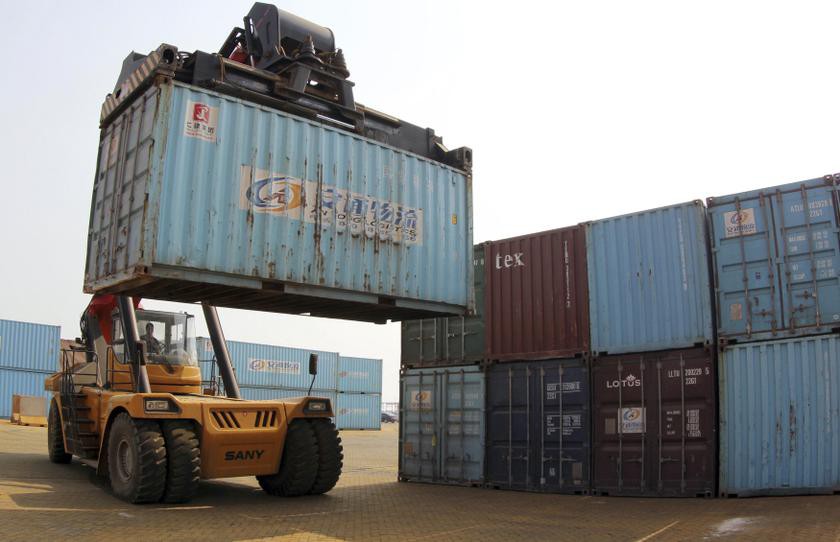
China exports soared 15.6 per cent in the third quarter, the biggest rise since 1986 and largely reversing a 16.1 per cent contraction in the second quarter. — Reuters pic

BEIJING, Oct 29 ― Asia is starting to see signs of economic recovery as it rides on the back of an upturn in China, which is entering a new expansion phase less than a year after it recorded the world's first cases of Covid-19.

While international attention has been focused on the looming US election and the struggle to halt the spread of the coronavirus in the Americas and Europe, China has quietly been clocking up improvements in several key sectors.

After imposing some of the world's strictest lockdown measures early in the pandemic, China is now the only major economy forecast by the International Monetary Fund to report growth ― of 1.9 per cent ― this year.

Official data showed China's economy grew 4.9% in the September quarter from a year earlier, following 3.2 per cent growth in the second quarter and a 6.8 per cent contraction at the start of the year when the domestic coronavirus outbreak was at its peak and lockdowns were imposed.

“The underlying details ... make clear that the new expansion phase China is entering will prove strong and resilient,” Westpac senior economist Elliot Clarke said.

“As the world contracts by 4 per cent in 2020, China is set to grow around 2 per cent. And come 2021, a key support for world growth of around 6% will be near-10 per cent growth in China.”

For China's neighbours, that growth is increasing demand for their exports and supporting activity in their own economies.

“China remains the only major commodity consumer where industrial production is now higher than pre-Covid levels,” Commonwealth Bank of Australia analysts said.

China's imports surged 13.2 per cent year-on-year in September, with a 28 per cent rise in semiconductor imports a boon for Taiwan and South Korea in particular.

The flow-on for Seoul is already evident. Data on Tuesday showed South Korea posted its fastest quarterly growth rate in a decade in the September quarter, expanding a seasonally adjusted 1.9 per cent after a 3.2 per cent contraction the previous quarter.

Exports soared 15.6 per cent in the third quarter, the biggest rise since 1986 and largely reversing a 16.1 per cent contraction in the second quarter.

“Exports rapidly improved on the back of recovery in China and other major economies, which spearheaded our third quarter growth,” Finance minister Hong Nam-ki said on Tuesday.

China's early recovery has also been a relief for Japan, as China is the destination for more than 22 per cent of its overall exports, just ahead of the 19 per cent share that heads to the United States.

Japan's exports to China jumped 14 per cent in the year to September, the biggest rise in more than two years, driven by robust demand for nonferrous metals, chip-making equipment and automobiles.

That is giving the Bank of Japan some optimism over the domestic outlook, with industry feedback pointing to improving demand from China.

“Automobile sales in China are increasing from year before levels after economic activity resumed. We're seeing an increase in auto-parts exports to China,” a transport machinery maker in Nagoya was quoted as saying in the BOJ's quarterly report on the regional economies.

Taiwan is also benefiting, even as political tensions with Beijing remain high. Its exports to China rose an annual 22 per cent in September, and export orders, a key leading gauge for global tech demand, rose 9.9 per cent as Chinese orders jumped by almost one-third.

Risks remain

China's renewed growth has been spread across several sectors, including manufacturing, construction, investment and domestic demand.

There are risks to the outlook, however, including the potential that some economies shut down again to tame the coronavirus, a scenario mining giant Rio Tinto flagged in a production report.

While Rio noted strong global activity in the third quarter, it also cautioned that a range of data suggested “the rate of recovery in growth is slowing in most economies, with pent-up demand dissipating, and the rise of renewed lockdowns threatening recovery”.

Further, any escalation of China-US trade hostilities or other geopolitical tensions after the US presidential election would also be a risk for Asia's hopes of sustained economic recovery. ― Reuters


Source: Malay Mail

Tokyo's Nikkei closes down for fourth straight session

The Nikkei 225 index lost 0.37 per cent, or 86.57 points, to 23,331.94, while the broader Topix index was down 0.10 per cent, or 1.62 points, at 1,610.93. — Reuters pic

TOKYO, Oct 29 ― Tokyo's benchmark Nikkei index closed down for a fourth consecutive session today, extending falls on Wall Street on rising concerns over escalating coronavirus cases in the northern hemisphere.

The Nikkei 225 index lost 0.37 per cent, or 86.57 points, to 23,331.94, while the broader Topix index was down 0.10 per cent, or 1.62 points, at 1,610.93.

“Declines in European and US shares on worries over coronavirus infections weighed on the Japanese market,” Toshikazu Horiuchi, a broker at IwaiCosmo Securities, told AFP.

Epidemiologists have been warning for weeks that European governments have lost control of the latest outbreaks, making lockdowns almost inevitable.

Horiuchi also said trading was expected to remain stagnant for now as investors “refrain from taking long positions ahead of the US presidential election”.

The dollar fetched ¥104.36 (RM4.15) in Asian afternoon trade, against ¥104.31 in New York.

The market shrugged off the Bank of Japan's bleak outlook for the Japanese economy due to the impact of the pandemic.

In Tokyo, Central Japan Railway dropped 2.40 per cent to ¥13,000 after it announced a worse-than-expected full-year operating loss forecast.

East Japan Railway was also down 2.37 per cent at ¥5,602 after its second-quarter operating loss was worse than market expectations.

Panasonic gained 1.79 per cent to ¥915.5 ahead of its first-half earnings announcement later today.

Sony rallied 6.69 per cent to ¥8,800 after the electronics and gaming giant revised up its full-year forecast citing growth in key sectors.

Hitachi was up 4.28 per cent at ¥3,699 after it booked a better-than-expected second-quarter operating profit. ― AFP


Source: Malay Mail

FGV says ready to terminate land lease agreement with Felda

FGV Holdings' logo is pictured at its headquarters in Kuala Lumpur October 9, 2019. — Picture by Choo Choy May

JOHOR BARU, Oct 29 — FGV Holdings Bhd today reiterated that it is has yet to receive a written notice from the Federal Land Development Authority (Felda) regarding the termination of the land lease agreement (LLA), but has prepared its businesses and operations for this eventuality.

In a statement, FGV said once it receives an official notice from Felda as required under the LLA, it will follow the procedures outlined in the LLA to start the process of termination and determining the compensation due to FGV, which will take 18 months to complete.

“As LLA termination had always been a much-talked about scenario, FGV has already prepared its businesses and operations for this eventuality,” the country’s largest crude palm oil producer said.

Yesterday, Minister in the Prime Minister's Department (Economy) Datuk Seri Mustapa Mohamed said in a statement that the termination of the LLA and the issuance of a RM9.9 billion worth sukuk by Felda were some of the proposals approved by the Cabinet to ensure FELDA’s recovery. 

FGV said its overall long-term strategy, which is to further grow and strengthen its high value-add business activities focusing on food and branded consumer products, remain intact and may potentially be expedited to provide higher expected returns to shareholders as the result of the LLA termination.

“FGV will at all times safeguard the interests of FGV’s shareholders and we will make the relevant announcements at the appropriate time in the event of material development on this matter,” the company said.

The LLA refers to Felda-owned estates totaling 350,733 hectares that were leased to FGV for 99 years beginning from Nov 1, 2011.

According to FGV, the expected compensation amount due to the company as a result of the LLA termination may range between RM3.5 billion and RM4.3 billion based on internal assessment which will vary depending on FGV’s financial performance for 2020 and 2021 and various other factors.

FGV assured that its plantation supply chain remains intact as the LLA estates only represent 30 per cent of the fresh fruit bunches (FFB) that are processed at the group’s 68 palm oil mills.

“Due to the proximity of the palm oil mill locations to the LLA estates, we do not foresee any changes to the current FFB supply arrangement.

“The rest of FGV’s plantation integrated value chain in the midstream and downstream businesses will remain uninterrupted by the LLA termination exercise,” it added. — Bernama


Source: Malay Mail

Malaysia’s E&E sector set to benefit from China’s 14th Five-Year Plan, say economists

According to economists, Malaysia’s exports to China have now risen substantially to 15.5 per cent from only three per cent 20 years ago, making China the largest export destination for Malaysia. — AFP pic

KUALA LUMPUR, Oct 29 ― Malaysia's electrical and electronics (E&E) sector stands to benefit from China's 14th Five-Year Plan (2021-2025), where the world's second largest economy is expected to emphasise on technological innovation amid the unresolved trade spat with the United States (US).

China has kicked off its four-day fifth plenary session in Beijing on Monday.

The fifth plenary session is one of the most important political meetings where the 19th Communist Party of China Central Committee would map out the direction for the 14th Five-Year Plan, focusing on China's economic and social development.

Although full details of the plan will only be unveiled in 2021 at the National People's Congress, or the country’s annual parliament meeting typically held in March, economists believe that aside from technological innovation, the 14th Five-Year Plan would focus on economic self reliance and a cleaner environment.

RHB Investment Bank Bhd Asean economics research head Peck Boon Soon said the focus of the Five-Year Plan could potentially benefit Malaysia, given that E&E exports to China formed a big proportion of Malaysia’s exports.

“More importantly, China is likely to lead the global growth in this new cycle, which would benefit Malaysia’s E&E sector,” he told Bernama.

According to Peck, Malaysia’s exports to China have now risen substantially to 15.5 per cent from only three per cent 20 years ago, making China the largest export destination for Malaysia.

Based on the latest statistics released by the Ministry of International Trade and Industry (Miti), exports to China surged 41.9 per cent year-on-year (y-o-y) to RM15.56 billion in September 2020, mainly on higher exports of E&E products, iron and steel products as well as palm oil and palm oil-based agriculture products. This marked the fourth consecutive month of double-digit growth.

For the first nine months of this year, Miti said exports to China also recorded double-digit expansion of 13.3 per cent y-o-y to RM114.54 billion, boosted by higher exports of iron and steel products, other manufactures (solid-state storage devices), manufactures of metal, as well as palm oil and palm oil-based agriculture products.

Meanwhile, MIDF Amanah Investment Bank Bhd Research (MIDF Research) economist Mazlina Abdul Rahman noted that supply chain security is highly anticipated to be addressed in China’s 14th Five-Year Plan, as the US has been pressuring China for the past few years on trade-related issues.

“The US has also been obstructing China’s technological advancement with restrictions on Chinese companies,” she said.

Regardless of who wins in the upcoming US presidential election on November 3, Mazlina said, risk to China’s economy remains.

“Hence, China is likely to accelerate measures at least to ensure future technological prowess, which will continue to increase its demand for semiconductor,” she said, adding that the economic giant has now emerged as the world’s largest semiconductor importer, with its spending on this segment growing by more than double over the past decade.

“This is expected to continue in the near future, as the economy is still heavily reliant on imports for the materials, which could possibly benefit Malaysia’s semiconductor industry,” she said.

Apart from the E&E sector, Mazlina believed China’s rise post-Covid-19 would continue to boost demand for other products from Malaysia, such as palm oil and palm oil-based agriculture products, refined petroleum, rubber products, as well as iron and steel.

“Malaysia’s total export to China has been trending upwards since April this year, while exports of the products mentioned above to China have also managed to record strong year-to-date expansion.

“Such solid export growth to China has helped mitigate the impact of low demand from Asean and the European countries,” she said. ― Bernama


Source: Malay Mail

Brazil's Petrobras cuts losses to US$236m in Q3

Petrobras posted a net loss of US$236 million (RM980.9 million) for the period from July to September, well below its losses of US$417 million in the second quarter and US$9.7 billion in the first quarter. — Reuters pic

RIO DE JANEIRO, Oct 29 ― Brazil's state-run oil giant Petrobras announced yesterday it reduced its losses in the third quarter of the year, the company's third negative result in a row due to the global economic meltdown caused by the coronavirus pandemic.

The Rio de Janeiro-based firm posted a net loss of US$236 million (RM980.9 million) for the period from July to September, well below its losses of US$417 million in the second quarter and US$9.7 billion in the first quarter.

In the third quarter of 2019, the company posted a profit of US$2.3 billion.

“The fast response to the global recession is starting to pay off,” chief executive Roberto Castello Branco said in a statement.

“Despite the constraints posed by the pandemic and the uncertain environment, our operational and financial performance improved significantly as shown by the rise in oil and natural gas production, capacity utilisation of our refineries and the strong cash flow generation,” he said.

According to the company, third quarter losses occurred due to financial expenses, despite higher sales volumes of oil and oil by-products as well as higher Brent oil prices.

The third quarter was also marked by a recovery in demand for oil derivatives in Brazil, with 18 percent growth in sales volumes over the last quarter.

“The recovery in diesel and gasoline sales stand out. These products were heavily affected by Covid-19 in 2Q20 and their quarterly recovery was the strongest across our portfolio, both in terms of volumes and prices,” the company said.

Petrobras added that a high level of exports was maintained in the third quarter, noting that crude oil exports to China returned to pre-Covid levels.

The company was severely impacted by quarantine measures put in place due to the coronavirus crisis that caused a drop in world demand for crude. According to the company, the sector suffered its worst crisis in 100 years. ― AFP


Source: Malay Mail

Economists: Blowout US GDP report will obscure troubling slowdown

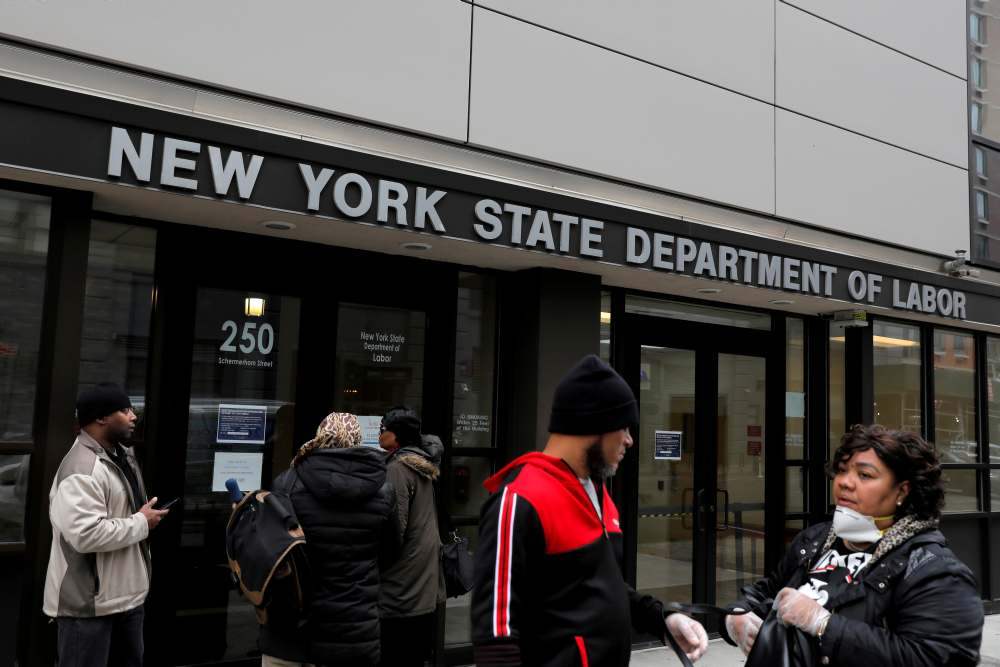
Total US job losses in the early weeks of the pandemic hit 20 million, and only about half have returned, while major corporations have announced tens of thousands of layoffs in recent weeks ― including another 7,000 from Boeing yesterday. ― Reuters pic

WASHINGTON, Oct 29 ― After the worst downturn on record, the US economy is expected to post jaw-dropping growth of between 30 and 35 per cent in the third quarter, but the headline number will obscure potential signs of trouble.

With days before the November 3 election, President Donald Trump will almost certainly seize on the data to be released today by the Commerce Department as proof the recovery he promised from the Covid-19 pandemic is underway.

But economists warn that the rebound in the July-September period, after the 31.4 per cent drop in the second quarter, was driven by consumer spending supported by a massive US$3 trillion (RM12.4 trillion) in government aid, much of which has since expired.

And even that bounce is not nearly strong enough to repair the damage and get the world's largest economy back to where it was pre-pandemic, or where it would have been if the expansion had continued at the same pace.

The gain is “not enough to get out of (the) hole,” Diane Swonk of Grant Thornton told AFP, and the prospects for the fourth quarter are “deteriorating by the day, without life boats.”

Much 'ballyhooed' number

With millions of workers still jobless and coronavirus cases spiking, raising fears of renewed lockdowns in the United States as there have been in Europe, Washington policymakers have failed to agree on a new rescue package to help households and businesses weather the crisis.

David Wilcox, former director of the Federal Reserve's domestic economics division, said it would take a 53 per cent gain just to get GDP back to where it was at the end of 2019, and a 64 per cent surge to return to the trend growth rate.

Worse still, the momentum has weakened, he told reporters.

The gain will be double the next fastest on record from 1947, and “will be ballyhooed as a tremendous accomplishment,” said Wilcox, now a  senior fellow at the Peterson Institute for International Economics.

It represents the rebounding economy of May and June, but, “The pace of recovery has slowed dramatically in the last few months,” he said, noting “there may have been little or no growth in activity in September.”

And the big number says little about the quality of the recovery, who it is reaching, or how lasting it will prove to be.

Job gains slowing

The Commerce Department GDP figures are given at an annual rate ― a measure of the full-year result if the gain was translated over 12 months.

Economist Joel Naroff said he is predicting growth of less than 30 per cent, though would not be surprised by a 35 per cent jump, but he said the result “doesn't matter, except for a few political ads.”

Total US job losses in the early weeks of the pandemic hit 20 million, and only about half have returned, while major corporations have announced tens of thousands of layoffs in recent weeks ― including another 7,000 from Boeing yesterday.

Meanwhile, the weekly tally of new applications for jobless benefits are only slowly coming down, and are forecast to hold above 763,000 in a separate report today covering the week ended October 24.

There have been increasingly urgent calls from the Federal Reserve and others for a new round of federal support aimed at individuals and state and local governments to prevent another wave of job losses and business closures.

But Trump resolutely opposes aid to Democratic-led states.

Wilcox said government aid “did a tonne of good in putting a bunch of foam down on the runway,” even while it didn't reach everybody.

“My fear there is that, millions, possibly tens of millions of households, I think, are coming to the end of their financial lifeline,” he said. Without action “more of those households are going to be going over the financial cliff.” ― AFP


Source: Malay Mail